
Summary
- Galleon Forge Two is operating at a 90,000-square-foot Johnson Controls manufacturing facility in Dublin.
- Fossefall has ordered five Leviathan modules totalling more than 9MW, with deliveries planned by Q1 2027.
- Armada and Johnson Controls are targeting at least 500MW of manufacturing capacity across their programme in 2027, not 500MW of commissioned data centres.
Armada and Johnson Controls have begun continuous production of modular AI data centres in Dublin, completing the first European-built Leviathan unit for Norwegian developer Fossefall.
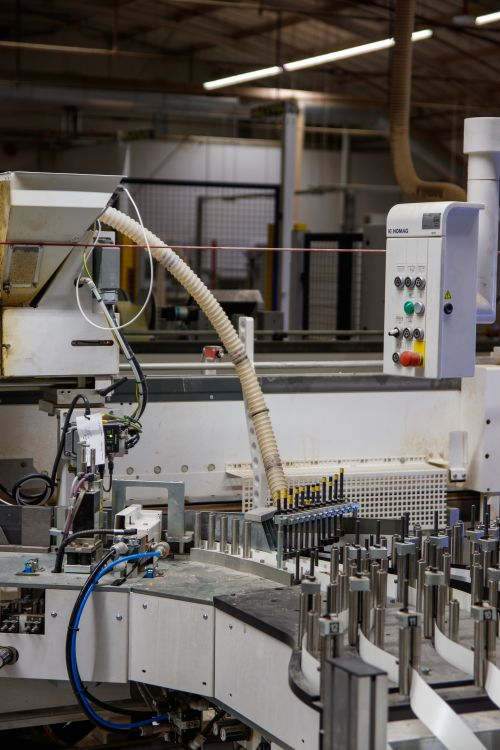
The operation, called Galleon Forge Two, is located within an existing Johnson Controls manufacturing facility covering approximately 90,000 square feet. It is Armada's first European production site and follows Galleon Forge One in Gilbert, Arizona.
Fossefall has placed an initial order for five modular systems with combined capacity exceeding 9MW. Deliveries are scheduled by the first quarter of 2027, although the completion of the first unit in Dublin does not establish that it has been installed or commissioned in Norway.
The manufacturing operation draws on approximately 700 Johnson Controls engineers, technicians, and other skilled workers. That number describes personnel supporting the facility and should not be treated as 700 newly created jobs.
Armada and Johnson Controls are targeting at least 500MW of manufacturing capacity during 2027 across their wider programme. The target describes intended production capability, not equipment already delivered or electricity capacity secured at customer sites.
The Leviathan platform combines computing hardware, thermal management, electrical infrastructure, and software within a modular system. Johnson Controls contributes engineering and manufacturing capabilities spanning coolant distribution units, chillers, and building controls.
Integrating these systems in a factory changes the delivery sequence for high-density computing facilities. Instead of bringing every component together at the destination, manufacturers can assemble and test selected equipment before shipment.
Factory testing reduces some site dependencies
Large AI computing installations need electrical distribution, cooling, networking, and monitoring systems that can operate reliably under substantial and sometimes rapidly changing loads.
In conventional construction, these systems are installed and commissioned through overlapping building and engineering programmes. Delays in specialised components or the completion of mechanical works can prevent computing equipment from entering service even where the data hall structure is finished.
Factory integration allows selected components to be assembled and tested before the destination site is ready. It can reduce some on-site work and provide more consistent manufacturing conditions, although the extent of any schedule improvement depends on the project.
The receiving location still requires adequate electricity supply, prepared foundations or installation space, suitable network connections, security, and site-specific commissioning. A completed modular unit cannot operate without those supporting systems.
Cooling is a particular consideration for AI installations. High-density computing equipment may require liquid cooling and coordinated operation of coolant distribution, pumping, chillers, and heat rejection equipment.
Johnson Controls describes its portfolio as covering that thermal chain. The partners also refer to technologies designed to minimise water consumption, but the water requirements of any completed facility will depend on the configuration selected and its operating conditions.
Armada describes its wider model as supporting customer-controlled computing infrastructure. European manufacture can provide a regional source of hardware integration, but the sovereignty of an operating facility also depends on ownership, management, networking, equipment supply, and legal arrangements.
Norwegian deployment will test the delivery model
Fossefall's order provides the first substantial European customer deployment identified for the Dublin facility. The Norwegian developer is pursuing AI computing infrastructure in the Nordic region, where electricity availability, climate, and suitable industrial sites are among the considerations influencing location decisions.
Those characteristics do not remove the need to secure electrical connections and the necessary permits. The five-module order is a commercial commitment for infrastructure that still needs to be delivered and brought into operation.
The Dublin site forms part of a wider manufacturing expansion. Continuous production at the Arizona facility is expected to begin in early 2027, while further activity is planned at a Johnson Controls site in Edmonton, Canada.
The partners have also identified Australia as a deployment market, with WinDC planning 11MW of modular capacity near renewable energy infrastructure.
Moving more integration work into manufacturing facilities may provide additional options for developers seeking to shorten construction programmes. Its practical success will depend on whether factory output can be matched with powered, connected, and permitted locations.
The next measurable milestone for the Dublin operation is delivery and commissioning of Fossefall's five systems, followed by evidence of the production volume achieved across the wider manufacturing programme.

