
Summary
- Fossefall's first Armada order covers five modular data centres with combined capacity above 9MW.
- The units will be manufactured in Dublin and are scheduled for delivery by Q1 2027.
- Closed-loop cooling and incrementally installed power infrastructure are central to the modular design.
Fossefall has ordered five modular data centres from Armada with combined capacity of more than 9MW, establishing the first deployment under a wider plan to build more than 1GW of Nordic-owned AI infrastructure by 2030.
The systems are scheduled for delivery by the first quarter of 2027 and will be deployed across Fossefall’s future AI-factory programme in Norway, Sweden and Finland. Armada said the initial agreement is worth several hundred million Norwegian kroner.
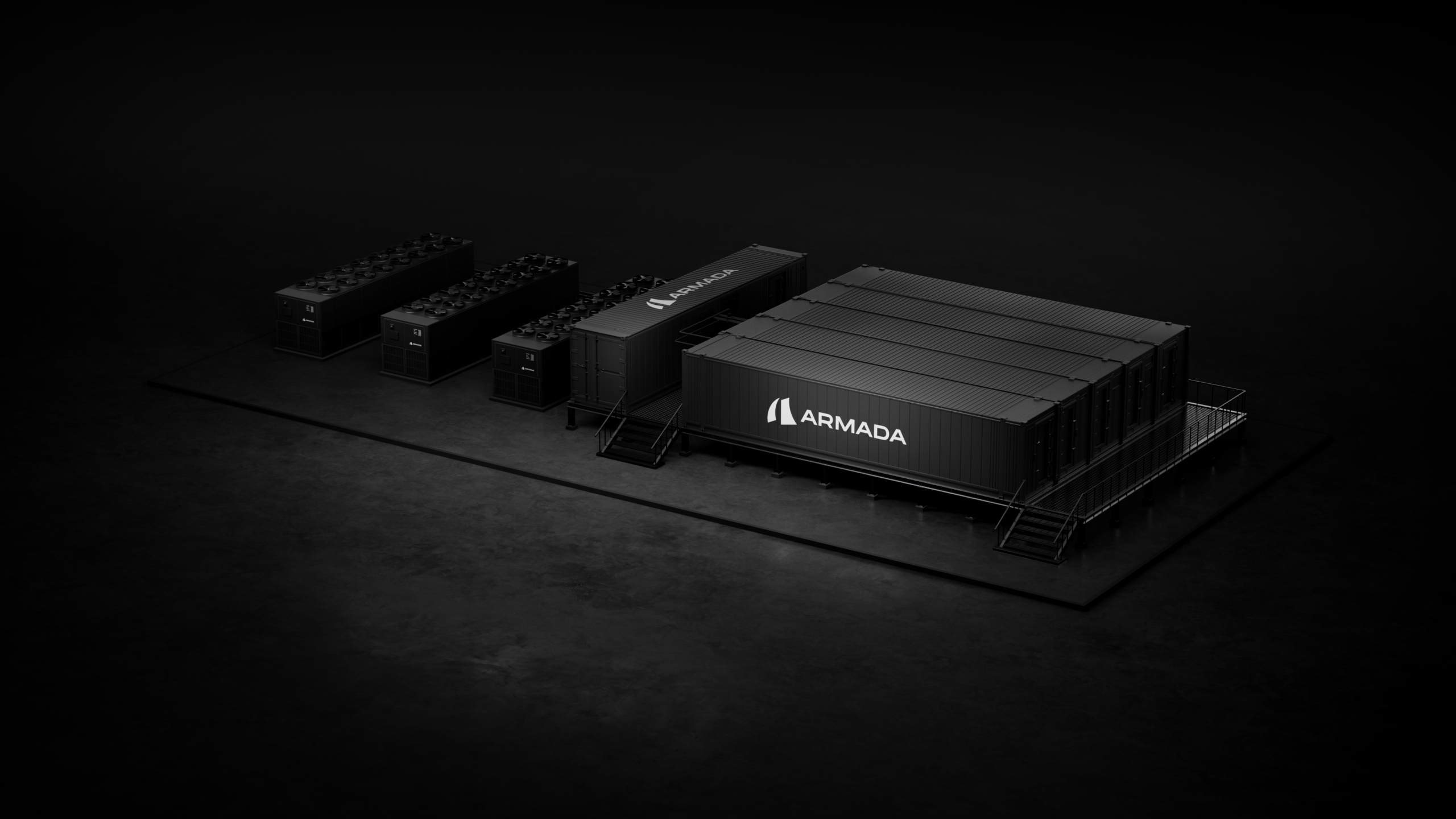
The order covers Armada’s Leviathan modular data centre platform, part of its Galleon product family. The units are manufactured in Dublin and designed around Nvidia reference architecture, with Fossefall planning to own and operate the GPU infrastructure installed inside them.
That approach puts the data centre module, compute hardware and operating model into a relatively integrated package. Fossefall says it also controls the development chain from energised land through construction and operations to AI services, although individual sites will still need the local infrastructure and permissions required to accept the modules.
The modular strategy is intended to reduce the amount of site-specific construction needed before compute can be installed. Factory-built systems can shift a greater share of assembly and testing away from the final site, but they do not remove the need for civil works, electrical connections, network capacity, security and local commissioning.
Power delivery is being designed incrementally rather than built for the entire eventual campus envelope from the outset. Armada says infrastructure can be added alongside each deployment, reducing the need to construct electrical systems well ahead of live demand.
That is particularly relevant where AI projects are trying to move from an available power allocation to operational GPU capacity quickly. Large conventional builds can require substantial capital to be committed to shell, electrical and mechanical infrastructure before racks arrive. Modular construction can shorten some of those sequences if the site itself is ready.
Cooling is another significant part of the specification. Armada says the Leviathan systems use closed-loop cooling and do not require daily water consumption. Higher-density AI hardware has made the thermal system a defining part of new data centre design, rather than an engineering package that can be settled after the IT configuration.
The first order is modest compared with Fossefall’s stated 1GW ambition. More than 9MW across five modules represents less than 1% of that eventual target, leaving a very large development gap between the initial contract and the capacity the company wants to establish by the end of the decade.
Closing that gap would require a pipeline of sites with credible power access across several Nordic markets as well as repeatable procurement of GPUs, modules, networking equipment and local construction capacity. The programme’s scale therefore depends as much on energy and development execution as on the speed with which individual modular units can be manufactured.
Fossefall is framing the programme around sovereign AI infrastructure, with European ownership of both the physical compute estate and the processing capability running inside it. Sovereignty has become a stronger procurement theme across Europe, but capacity still has to compete with hyperscale and cloud developments for suitable land, electricity and network access.
The Dublin manufacturing component also gives the project a European equipment-supply angle. Factory production can offer consistency between sites and reduce some on-site labour requirements, although transport, installation and commissioning still have to be coordinated across Norway, Sweden and Finland.
The first five units will provide an early test of that model. Delivery by Q1 2027 would give Fossefall an initial operational building block, while the much larger question is how quickly it can secure and prepare enough powered Nordic sites to turn a 9MW order into a portfolio measured in hundreds of megawatts.

