
Summary
- The development agreement covers a proposed 1.6MW heat recovery system, potentially expanding to approximately 20MW.
- Calentix will lead technical, commercial, and financial development, with atNorth providing access to surplus heat.
- A heat purchase agreement is targeted for 2027, followed by an investment decision and potential first heat delivery in 2029.
atNorth and Swedish energy developer Calentix have signed a development agreement for a potential heat recovery system at the proposed SWE04 data centre in Sollefteå, with plans to supply surplus thermal energy to a nearby district heating network.
The first phase would recover approximately 1.6MW of heat for the Långsele network, operated by utility Adven. A later expansion could increase recovery to around 20MW and potentially extend supply to the larger district heating system serving Sollefteå.
The project remains at the development stage. The companies have not yet concluded a heat purchase agreement or taken a final investment decision, and the planned thermal capacity does not represent energy already being delivered.
Calentix is responsible for developing the technical, financial, and commercial arrangements for the recovery system. atNorth will provide access to surplus heat generated by SWE04, together with the interfaces needed to integrate the equipment with the data centre.
An initial feasibility study found that heat recovery was technically possible and identified interest among local stakeholders. Further work will determine whether a commercially sustainable arrangement can be established between the data centre, the heat recovery developer, and the district heating operator.
The partners are targeting a heat purchase agreement in 2027, after which a final investment decision could follow. Construction of the recovery infrastructure is planned from 2028, with the first heat deliveries targeted for the second quarter of 2029.
SWE04 is planned for Hamre Industrial Park in Långsele, approximately 490 kilometres north of Stockholm. atNorth has outlined a 50-hectare development with potential site power capacity of up to 300MW and infrastructure designed to accommodate high-density computing equipment.
The proposed data centre capacity and the heat recovery figures describe different systems. The 300MW figure relates to the wider electrical capacity planned for the campus, while the initial 1.6MW concerns heat that could be delivered to an external customer under the proposed recovery arrangement.
Pipeline distance affects commercial viability
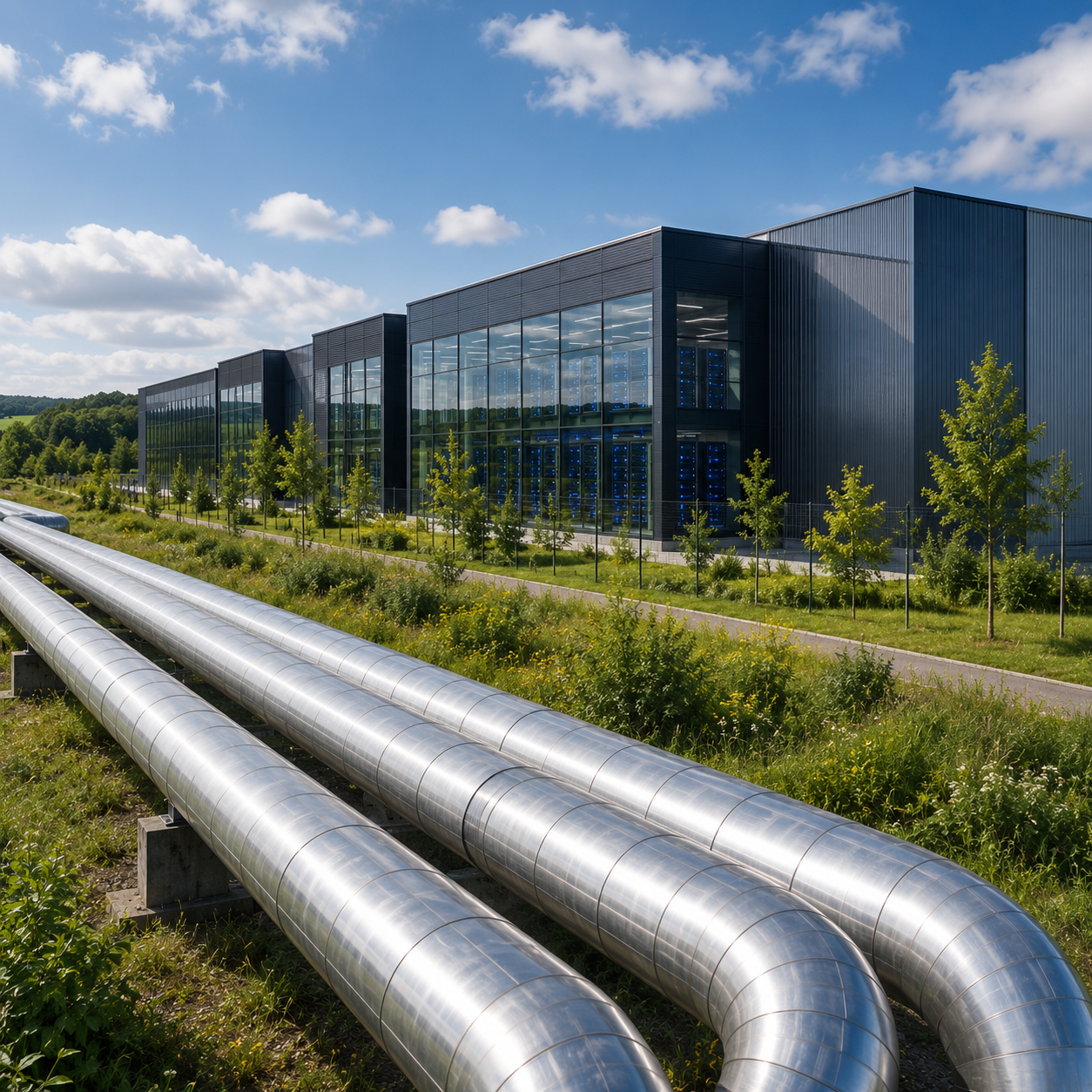
The planned recovery system would need to connect the data centre to existing heating infrastructure. The Långsele network is approximately two kilometres from the site, while a potential extension to Sollefteå would require a route of around ten kilometres.
That difference has substantial engineering and commercial consequences. Longer pipelines require more materials, civil engineering, installation work, and potentially additional pumping capacity. They can also introduce greater thermal losses between the heat source and its customers.
The shorter Långsele connection is consequently the initial development priority. Calentix has indicated that the proposed Sollefteå extension would involve considerably greater investment, particularly in the connecting pipeline.
The company is developing a model under which it could finance and operate the heat recovery infrastructure as an independent heat producer. This would separate the business of delivering heat to district heating customers from the operation of the computing facility itself.
Under that arrangement, the data centre operator would make surplus heat available, while Calentix would manage the infrastructure and agreements needed to convert it into a saleable heating service.
However, the available thermal energy must meet the receiving network’s requirements. Data centre cooling systems may reject heat at temperatures below those needed by district heating customers, particularly during colder periods when networks require higher supply temperatures.
Depending on the final design, heat pumps may be needed to increase the temperature to a usable level. These consume additional electricity and introduce equipment and operating costs that must be considered against the revenue from recovered heat.
The temperature and quantity of heat available will also depend on the computing equipment operating at SWE04. Heat production is related to electrical consumption, but actual recovery potential varies with the cooling architecture, workload utilisation, and operating conditions.
atNorth intends SWE04 to support direct liquid cooling. This provides a potential route for collecting heat through coolant circuits, although the usefulness of that heat still depends on its temperature and the design of the external recovery system.
District heating demand follows a different pattern from data centre operation. A heating network may require substantial energy during winter but considerably less during warmer months, creating a need to assess how much recovered heat can be sold throughout the year.
The commercial agreement will consequently need to address heat availability, delivery conditions, pricing, operational responsibilities, and the relationship between the data centre’s development programme and the heating infrastructure.
atNorth has previously developed heat reuse arrangements with partners in Sweden, Finland, and Denmark. These demonstrate different potential uses for recovered thermal energy, but the economic case at Sollefteå must still be established against local network conditions.
The companies are now progressing detailed engineering, site planning, and commercial negotiations. A viable 1.6MW connection to Långsele would establish the first phase, while expansion towards 20MW remains dependent on additional investment, infrastructure, and demand.
First deliveries are planned for 2029, subject to completion of the data centre infrastructure and the separate heat recovery scheme. Until the necessary agreements and investment decisions have been completed, the project remains a proposed use of surplus heat rather than an operating district heating supply.

