
Summary
- WWF Austria says Google’s Kronstorf development exposes a gap in national environmental law.
- The group wants power, water, land, grid impacts, and expansion phases assessed cumulatively.
- Clearer thresholds could lengthen early permitting while reducing later legal and infrastructure uncertainty.
WWF Austria has called for large data centres to become a specific category under national environmental impact assessment law after Google’s expanding Kronstorf campus was found not to require a full EIA.
WWF Austria wants the law to assess electricity demand, water use, land consumption, grid effects, and all planned stages of a campus together. The organisation argues that the existing framework can examine individual buildings without capturing the cumulative infrastructure required by a phased development.
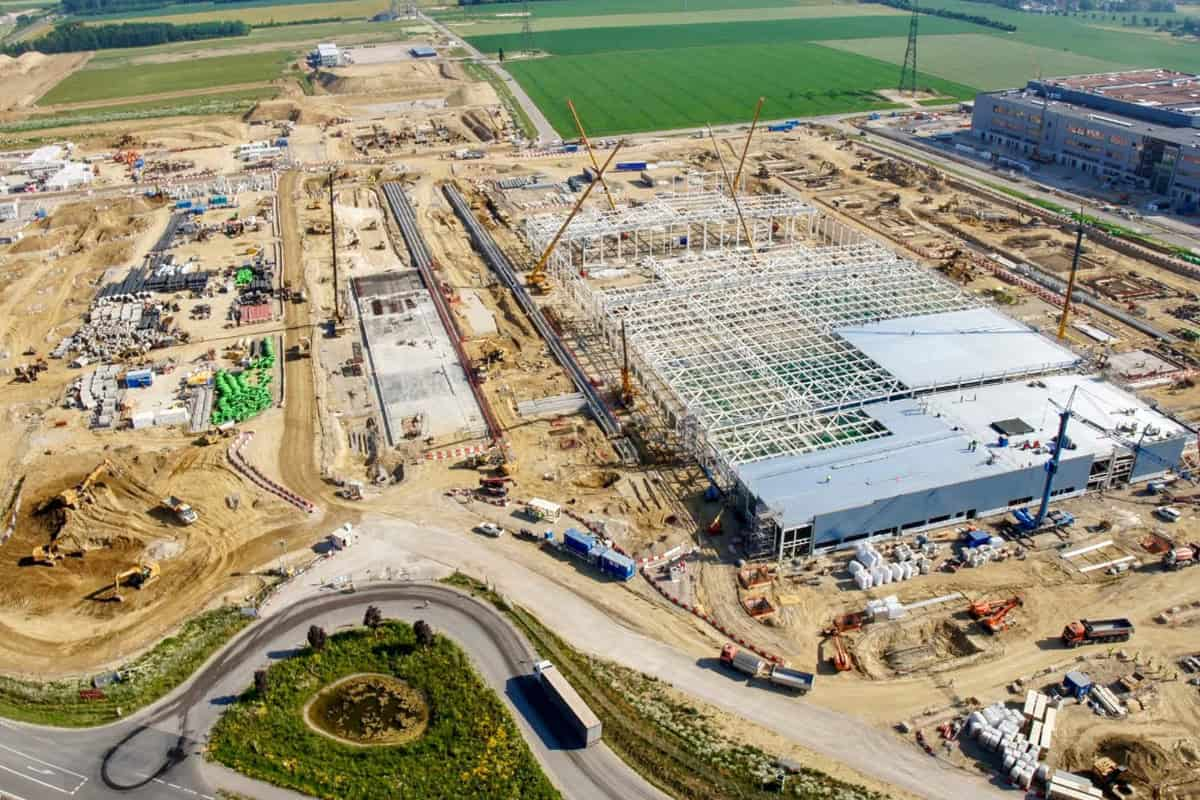
Google began work on its first company-owned Austrian data centre in Kronstorf in April 2026. A further expansion is moving through the authorities, prompting demands for the total project footprint to be disclosed before additional approvals are issued.
Phased campuses strain building-led assessments
Data centres often pass through several separate processes covering land use, construction, water, emissions, grid works, and operations. Each application may be technically complete, yet the combined effect of several halls, a substation, cooling plant, emergency generators, access roads, and associated utility infrastructure can remain difficult to see.
Modular development adds to that problem. An operator may secure permission for an initial hall, bring it into service, and add buildings as customers commit. The first phase can appear modest in isolation even when the masterplan eventually requires hundreds of megawatts and substantial regional infrastructure.
WWF’s reform proposal would establish dedicated thresholds for data centres and require all expansion stages to be considered together. It also calls for transparent assessment of who pays for any grid and public-infrastructure upgrades needed by the project.
The threshold itself would need careful design. IT load, total connection capacity, floor area, water demand, backup-generation capacity, and land take each describe a different part of the impact. A rule based on only one measure could encourage developers to divide a campus among smaller applications or corporate entities.
Cumulative provisions would therefore need to capture buildings that share a substation, water system, access route, cooling installation, or operating organisation. Without them, the assessment process could still treat the components of one campus as unrelated schemes.
Heat reuse and efficiency do not replace scrutiny
Google says the Kronstorf facility will be ready to recover waste heat, with supply possible once a suitable customer and network are available. The design also includes a green roof, solar panels, and funding for environmental work around the Enns river.
Heat-recovery readiness does not guarantee that useful heat reaches another building. A functioning scheme needs an offtaker, pipe route, temperature match, financing, and demand that aligns with the data centre’s operating profile. Where those elements are absent, the heat continues to be rejected at the site.
Rooftop solar can supply a portion of auxiliary demand, although its output remains small against the continuous electrical load of a large computing campus. Grid demand, system reinforcement, and long-term power procurement therefore remain central to the environmental assessment.
A dedicated EIA route could slow early development, yet it may reduce the risk of court challenges or new conditions after land, connection rights, and equipment have been committed. Developers would gain a clearer view of the evidence required, while authorities would assess the completed campus rather than repeatedly revisiting the same regional impacts.
Operational reporting under European energy-efficiency rules will provide more data after facilities open, but reporting cannot replace pre-construction assessment. Regulators still need credible forecasts for capacity, cooling design, water use, utilisation, and future expansion when deciding what infrastructure the project requires.
Grid planning also depends on seeing the full development. A campus that doubles after its first phase may trigger transmission reinforcement beyond the site boundary. When later stages are not considered early, utilities and nearby customers face changing assumptions over connection capacity and cost.
Google’s current construction can continue under its existing permissions. The political question is whether Austria changes the law before the next large campus follows the same route, or waits until environmental and grid pressures are tested through further project-by-project disputes.

