
Summary
- The approved scheme replaces 17 industrial and warehouse units at Ridgeway Distribution Centre.
- It includes a roughly 30,525m² data centre, substation infrastructure, and 27 backup generators.
- Planning approval is separate from environmental controls governing the site's emergency generation.
Amazon Web Services has secured planning approval for a data centre at Ridgeway Distribution Centre in Iver, moving another large infrastructure project forward on the western edge of the London market.
Buckinghamshire Council approved the scheme on 28 September, subject to conditions and a legal agreement.
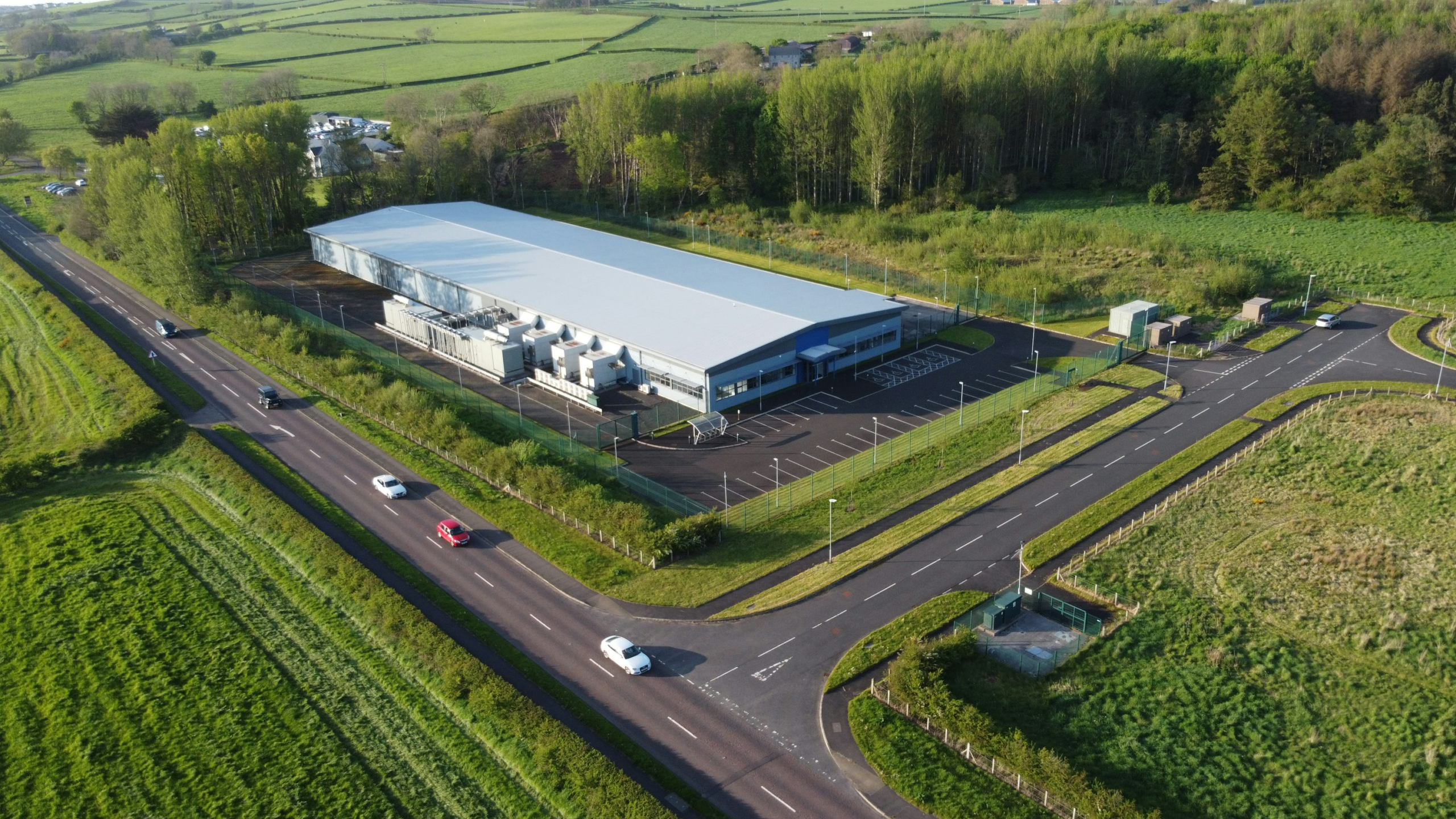
The project will replace 17 industrial and warehouse units with a two storey data centre building covering approximately 30,525m².
Supporting infrastructure includes an MV building, a substation compound with two switchrooms, associated electrical systems, and a generator yard containing 27 backup units.
No formal megawatt capacity has been published for the approved scheme.
Planning officers concluded that the benefits of the development, including demand for data centre capacity and employment, outweighed the identified landscape harm.
The agreement requires Amazon to provide £600,382 towards measures addressing air pollution impacts and to monitor emissions from the generator installation.
A further £73,000 is to be invested in improvements to nearby public rights of way.
Additional information is still required on construction traffic, drainage, and water use.
Planning approval and environmental regulation of the backup generation remain separate processes. The generator installation is subject to its own environmental permit requirements covering emissions and pollution control.
Large generator arrays are receiving greater scrutiny as individual data centre loads increase.
Emergency generators may run for relatively few hours, but a hyperscale facility can contain substantial installed combustion capacity to support critical load during a grid failure.
Local air quality, fuel, testing regimes, and cumulative emissions can therefore become material permitting issues even when the plant is intended mainly for emergency use.
Iver sits close to Slough, one of Europe’s most concentrated data centre markets, and within an area already carrying major logistics and infrastructure uses.
Further expansion increases demand for substations, backup generation, cooling plant, road access during construction, and large permanent electricity connections.
The redevelopment also changes the infrastructure profile of the site.
Warehouses can generate substantial vehicle movements with relatively modest electrical demand. A large data centre reduces some of that activity after construction but introduces a far greater permanent power requirement and much more intensive electrical plant.
The application proposes outside air for direct evaporative cooling during much of the year, with adiabatic cooling used in warmer conditions. Rainwater is intended as the primary water source for that mode, with mains water available as backup.
The planning decision removes the main land use hurdle but does not establish an operating date.
Utility connections, environmental permits, final planning conditions, equipment procurement, construction, and commissioning still have to align before the facility can carry customer load.
The pace of those remaining works will determine when the consented building becomes usable AWS capacity.

