
Summary
- Everllence’s 175D generator set provides up to 2.4MWe, or 3MVA, for 50Hz data centre applications.
- The engine and key components are manufactured in Germany and Denmark, with containerised installation and electrically driven cooling supported.
- HVO capability and future methanol configurations widen the fuel pathway, while permitting, storage, emissions, autonomy, and load response remain site-specific.
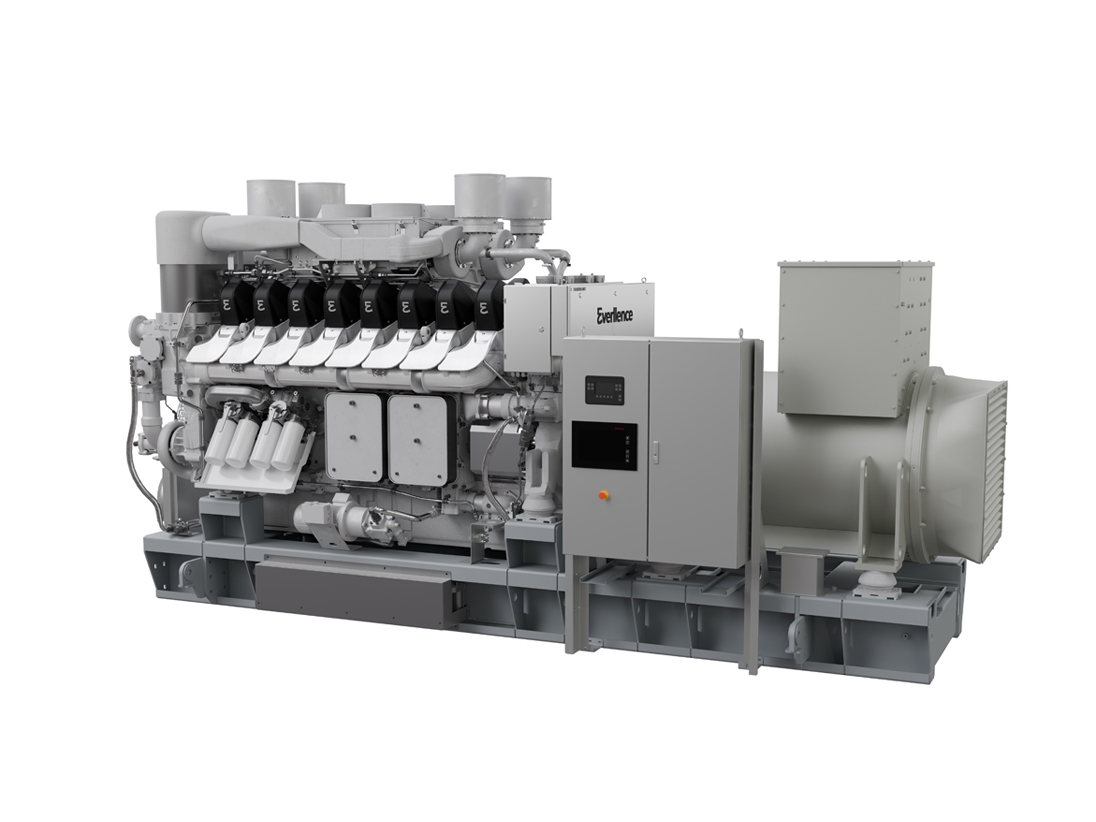
Everllence has introduced a 3MVA standby generator set for European data centre applications, built around its 175D high-speed engine platform.
The unit provides up to 2.4MWe of standby electrical output and is configured for 50Hz markets. Containerised integration is supported, while the engine is designed to meet the load-acceptance requirements of ISO 8528-5.
Engine blocks, turbochargers, cylinder heads, and other key components are produced through Everllence’s German and Danish manufacturing network. The company’s technical release also identifies support for hydrotreated vegetable oil and a platform capable of accommodating methanol in future configurations.
Three megavolt-amperes in a modular power block
The rating sits within the range used for modular data centre backup systems, where several generators can be arranged as N+1, N+2, distributed redundant, or catcher configurations. The final topology depends on the size of each electrical block, the UPS architecture, and the amount of mechanical plant carried during an outage.
Maximum output alone does not establish suitability. A data centre generator must accept rapid load changes after a utility failure while keeping voltage and frequency inside the limits required by UPS rectifiers, cooling equipment, controls, and other critical loads.
The interaction between generator controls, UPS systems, static transfer equipment, and large motors can determine whether the emergency sequence remains stable. Factory tests and site load-bank work must therefore examine transient behaviour rather than only steady-state operation.
Everllence uses its SaCoS 5000 control platform and says the system has been designed around current cyber requirements. Generator controls now connect with building-management, electrical-monitoring, and remote-service systems, creating an operational technology boundary that requires access control, logging, patching, and support arrangements.
Electrically driven cooling gives integrators more freedom over the position of radiators and heat-rejection equipment, particularly where space, noise, or airflow constraints complicate a conventional package. The fans, pumps, and controls still need a resilient electrical supply within the emergency system.
Containerised packages can move more assembly and testing into the factory, although the site still requires foundations, fuel systems, exhausts, ventilation, acoustic treatment, fire protection, cabling, and maintenance access. A campus with dozens of containers also presents a sizeable planning and environmental footprint.
Fuel options meet local permits
HVO can reduce lifecycle greenhouse-gas emissions where certified supply is available and sourced appropriately. Its compatibility with diesel-derived equipment makes it easier to introduce than a complete change of engine technology, although price, availability, storage stability, and supplier contracts vary by market.
The fuel does not remove local air-quality controls or the need for routine testing. Nitrogen oxides, exhaust arrangements, testing hours, and aggregate installed thermal input can determine the permit conditions for a large generator fleet.
Methanol readiness describes a future engineering pathway rather than a standard fuel option on every delivered unit. Commercial deployment would require different storage, fire protection, fuel handling, materials, ignition, emissions treatment, and local approval.
Everllence cites compliance with US EPA Tier II nitrogen oxide requirements, while European projects remain governed by national and local rules. Planning authorities often assess the full campus installation, including the number of engines and their test regime, rather than the performance of one set.
Fuel autonomy has also moved higher on the resilience agenda. A tank sized for a defined number of operating hours only provides useful protection when delivery contracts, road access, pumping systems, and replenishment plans remain workable during a wider power disruption.
The platform is supported through more than 140 PrimeServ locations. Standby engines spend most of their service life idle, so maintenance, starter batteries, heaters, fuel quality, controls, and regular load testing determine whether installed redundancy will start when required.
Everllence’s 175D adds another European-manufactured option to a market serving larger campuses and denser electrical blocks. Its performance inside a complete data centre power system will depend on the generator package, controls, fuel installation, cooling arrangement, and maintenance regime surrounding the engine.

