
Summary
- Generac has signed a global supply agreement to provide backup generators to an undisclosed hyperscale data centre operator.
- The qualification process included factory visits, performance reviews, quality-system checks, and vendor-base audits.
- Standby generation remains central to hyperscale resilience despite emissions, permitting, and fuel-strategy pressure.
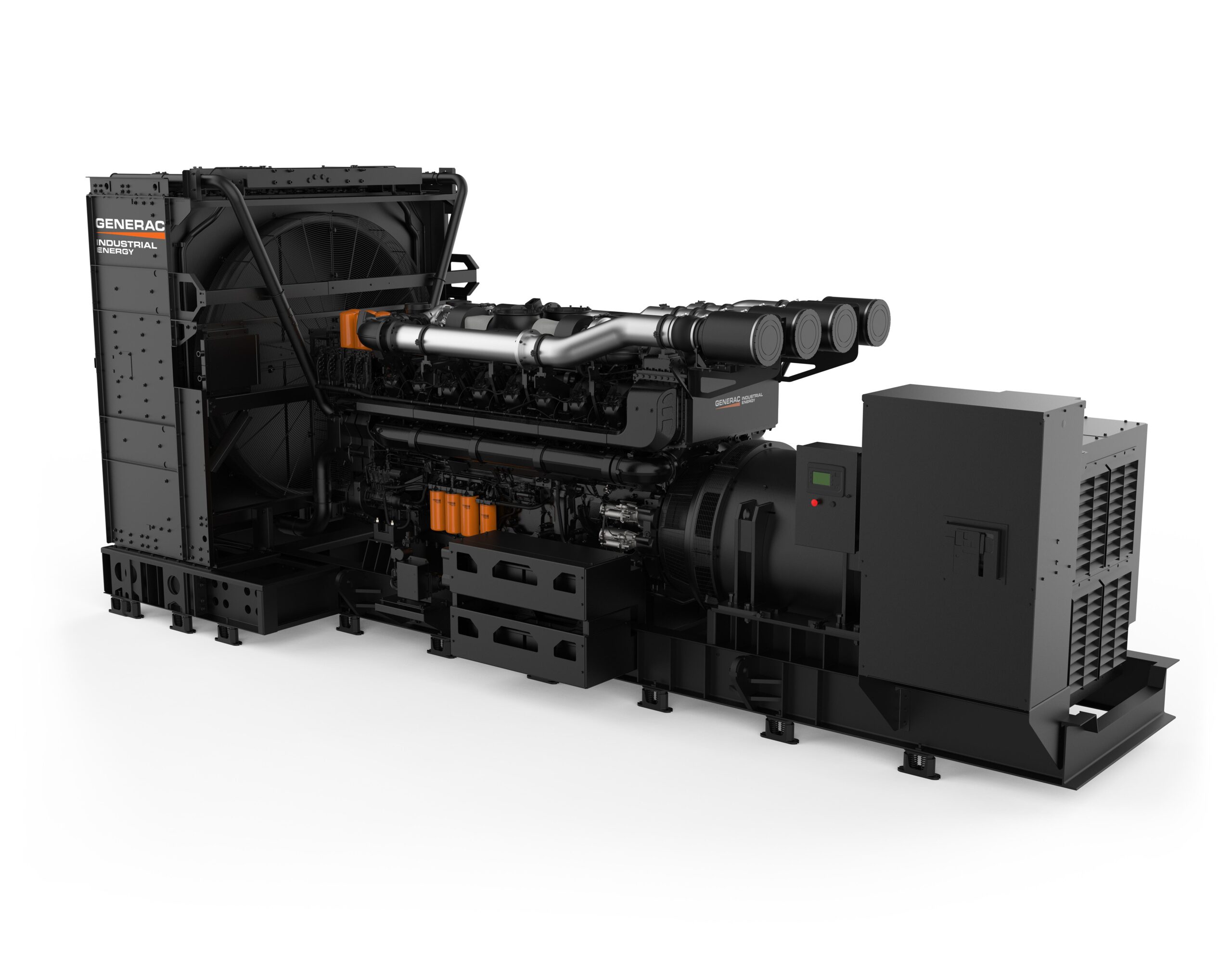
Generac has signed a global supply agreement with an undisclosed hyperscale data centre operator to supply backup power generators for the customer’s data centre infrastructure.
The company has not disclosed the customer, the contract value, or the total generation capacity covered by the agreement. The qualification process included factory visits, performance reviews, quality-system assessments, and audits across Generac’s wider vendor base.
The agreement places Generac deeper into the hyperscale data centre supply chain at a time when backup power availability, generator packaging, switchgear, and fuel strategy are under rising pressure. The company has been building a portfolio aimed at hyperscale, colocation, enterprise, and edge facilities, including large-format units in the multi-megawatt range.
Generac has also expanded its data centre capabilities through vertical integration. Its acquisition of Enercon added generator enclosures and switchgear capability, while investor materials have pointed to manufacturing capacity expansion to support larger industrial and data centre demand.
Resilience still depends on hardware
Hyperscale operators are under pressure to present cleaner and more flexible power strategies, but the resilience requirement has not softened. Battery systems, grid services, HVO, fuel cells, and microgrids all sit within the wider discussion. Large engine-backed standby power remains a core layer in many data centre designs because a facility still needs a proven path to keep critical loads online when the grid fails.
The harder questions sit around procurement, permitting, and justification. Large generator yards carry air-quality, noise, carbon, fuel-storage, and planning considerations. In constrained European markets, permitting standby plant can be as sensitive as securing the grid connection. A global supply deal with a hyperscale buyer therefore reflects more than product availability; it reflects confidence in supplier quality, repeatability, and delivery control.
Lead times remain a major part of the procurement calculus. Data centre programmes are increasingly shaped by the availability of transformers, switchgear, generators, chillers, and prefabricated modules. Suppliers able to control more of the packaged generator and switching scope are better positioned in a market where late equipment can delay commissioning.
The deal also exposes the gap between public decarbonisation language and facility design reality. Operators may be signing renewable power purchase agreements and trialling lower-carbon fuels, but backup systems still have to satisfy strict availability requirements. Any credible decarbonisation route for data centres has to work through the standby power system rather than treating it as a peripheral issue.
For Generac, the agreement is a supplier-qualification marker in a market where hyperscale customers impose demanding audit and quality requirements. For the wider delivery chain, it is another reminder that AI and cloud capacity growth is pulling not only on land and grid connections, but on the industrial base behind critical power equipment.

