
Summary
- CINECA has inaugurated new quantum and HPC systems at the DAMA Technopole in Bologna.
- Pasqal’s SOL system is a 140 qubit neutral atom quantum processor engineered for integration with Leonardo.
- The deployment strengthens Europe’s hybrid HPC and quantum infrastructure, where facility operations remain central to national compute capability.
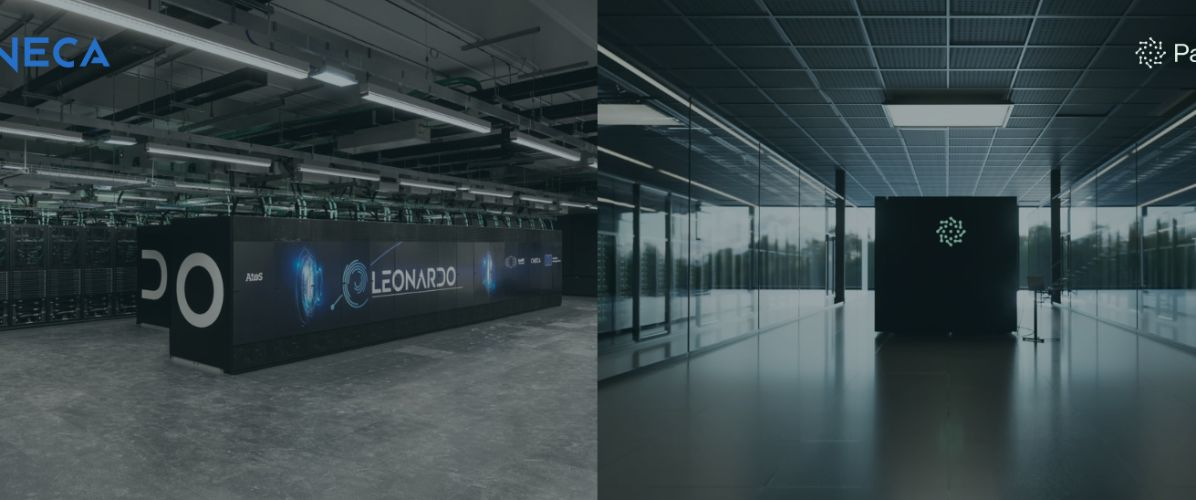
CINECA has added new quantum and high performance computing systems at the DAMA Technopole in Bologna, extending Italy’s advanced computing estate around the Leonardo supercomputer.
The deployment includes SOL, a 140 qubit neutral atom quantum processing unit supplied by Pasqal and engineered for close integration with Leonardo.
Pasqal describes SOL as Italy’s first neutral atom quantum computer and the third Pasqal system in Europe.
At CINECA, the quantum processing unit is exposed as a native resource within the supercomputing environment, allowing hybrid workflows to combine quantum and classical computing through standard HPC scheduling and operating mechanisms.
The Bologna launch forms part of a wider package of HPC and quantum systems procured by the EuroHPC Joint Undertaking and co-financed with Italy’s Ministry of University and Research through ICSC.
Quantum systems are often described through qubit counts and research applications, yet their usefulness depends heavily on the surrounding compute, storage, networking, software, security, cooling, and operations environment.
Bologna already holds an important position in European advanced computing because Leonardo is installed at the Technopole and managed by CINECA.
Adding quantum capacity to the same site turns Bologna into a more complex hybrid compute platform, where scientific users can work across classical and quantum resources rather than separate facilities.
Hybrid compute depends on facility discipline
The infrastructure requirements behind HPC and quantum systems differ from commercial colocation, but they still involve demanding electrical, mechanical, and operational conditions.
Scientific computing sites need high power density, controlled environments, resilient power, specialist cooling, physical security, and support teams able to maintain hardware close to the edge of current technology.
Hybrid HPC and quantum architecture adds another operating layer, because users need workflows that pass between classical processors and quantum resources without bespoke integration for each job.
That requires scheduling, orchestration, resource management, data movement, access control, and facility reliability beneath the research software stack.
Europe’s sovereign compute agenda depends on sites such as Bologna being able to expand and operate advanced systems reliably over long periods.
Public supercomputing infrastructure supports climate modelling, materials science, drug discovery, industrial simulation, AI development, and quantum algorithm research, all of which depend on physical capacity rather than policy ambition alone.
As advanced computing systems become more powerful, power distribution, heat rejection, equipment lead times, and maintenance capacity will place practical limits on expansion.
Co-locating new systems with an established supercomputing operator can reduce some of that risk, since CINECA already has operational teams, user programmes, security frameworks, and infrastructure around Leonardo.
The Bologna deployment should be read as digital infrastructure as well as scientific procurement, because the facility and integration stack are what turn the quantum hardware into a usable national and European resource.

