
Summary
- Cyanis AI has raised more than €250,000 for software development and initial commercial deployment work.
- The company proposes distributing compute across rooftop solar, industrial, energy, and third-party data centre sites.
- Its 10MW target remains subject to site engineering, infrastructure finance, connectivity, cooling, security, and customer demand.
Cyanis AI has raised more than €250,000 in pre-seed finance to continue developing its orchestration platform and prepare an initial commercial deployment targeting 10MW of distributed AI-compute capacity across Europe.
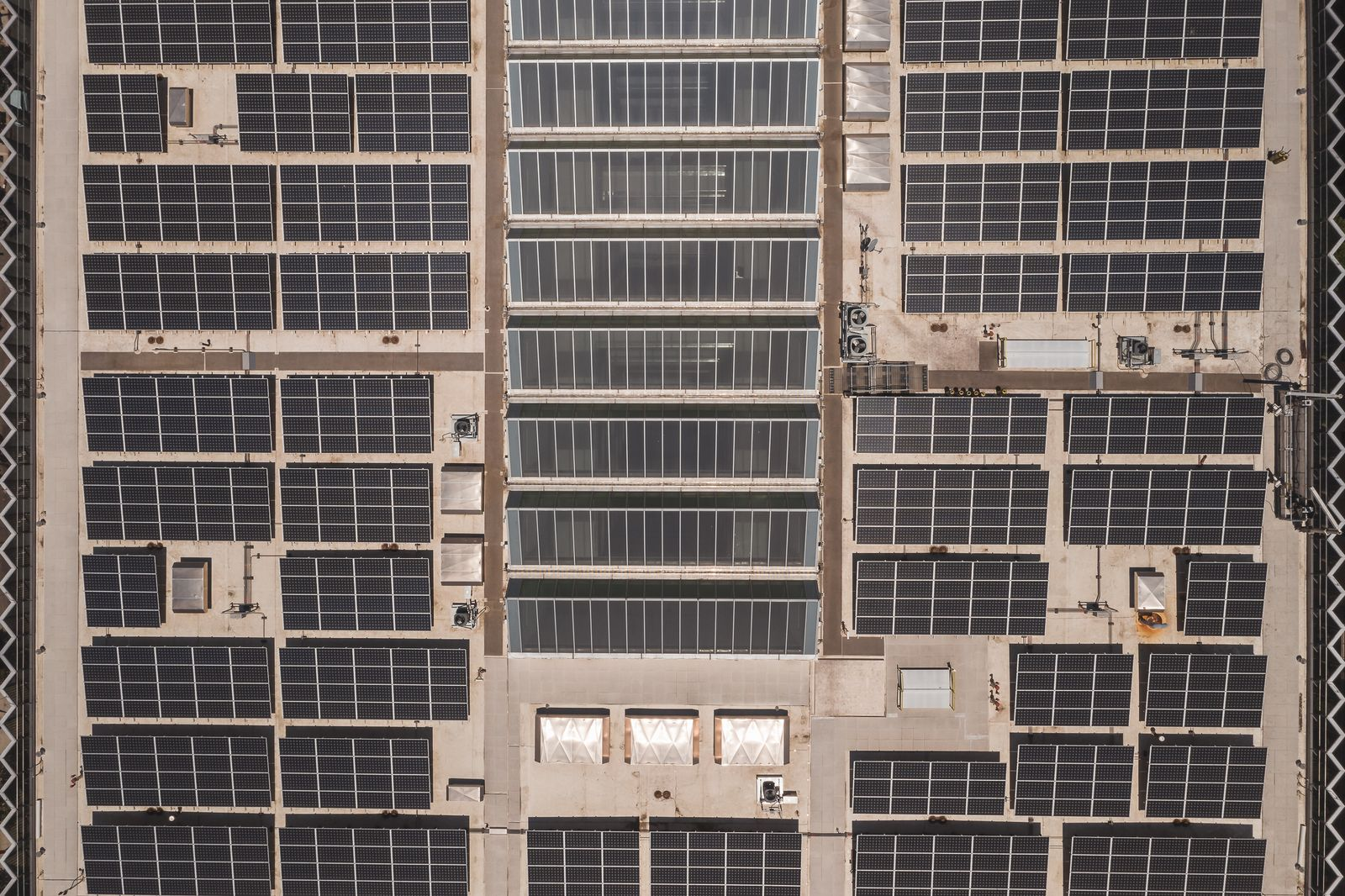
The Hamburg-based company proposes locating compute nodes at household solar installations, commercial and industrial rooftops, larger energy sites, and existing third-party data centres, with software coordinating workloads across the distributed estate.
Equity investment will support the software and orchestration business, while Cyanis intends to finance servers and physical infrastructure separately through asset-backed project structures. The model divides the software platform from the capital-intensive equipment that provides the compute.
Distributed nodes pursue smaller pockets of power
Cyanis argues that multiple nodes can be deployed in parallel at sites with existing energy infrastructure, reducing exposure to the lengthy planning and grid processes attached to large centralised campuses. It also proposes locating compute closer to renewable generation and retaining workloads within Europe.
The approach is more naturally suited to inference and other workloads that can be divided between locations than to tightly coupled training clusters, which require large numbers of accelerators linked by low-latency, high-bandwidth networks.
Smaller nodes may fit behind existing grid connections where generation, storage, or industrial demand leaves usable electrical capacity. That opportunity is highly site-specific, since network limits, existing loads, export arrangements, and the variability of local generation will determine the power actually available.
Household rooftop solar presents a particularly demanding engineering environment. Individual systems are small and intermittent, while most homes lack the cooling, connectivity, security, fire protection, noise control, and maintenance access required by commercial compute infrastructure.
Commercial rooftops and energy sites may provide a more practical starting point because they offer larger electrical connections, controlled access, and room for standardised modular equipment. Even those sites will need surveys covering structural loading, grid capacity, heat rejection, planning, fibre routes, security, and emergency response.
Locating compute beside renewable generation does not provide continuous renewable supply. Wind and solar output varies, while customers may require stable availability, so storage, grid imports, workload scheduling, or tolerance for interruption would be needed to align generation with computing demand.
A distributed estate increases operational complexity
Cyanis describes its platform as a unified orchestration and commercialisation layer. It will need to manage workload placement, customer isolation, energy availability, performance, billing, security, and failure recovery across sites with different electrical, thermal, and network characteristics.
Latency can improve when inference is placed closer to users, but network quality remains decisive. Each node requires sufficient and preferably diverse connectivity, while the cost and delay involved in moving data between sites can restrict which workloads are practical.
Claims around European sovereignty will depend on more than the node’s physical location. Control of the hardware, management platform, encryption keys, support access, subcontractors, and operational data will all affect where jurisdiction and dependency sit.
Maintenance becomes harder when equipment is dispersed. A central campus concentrates engineers, spares, monitoring, security, and procedures, whereas a distributed estate increases travel, access coordination, inventory requirements, and the number of locations at which a physical failure can occur.
Standardised modules can reduce variation but cannot remove the need for local intervention. Filters, pumps, fans, power supplies, cabling, and security systems still require inspection and replacement, while hardware failures need a defined route for removal, repair, and data handling.
The proposed financing structure allows software and infrastructure investors to take different forms of risk, although asset-backed lenders will still require site rights, power arrangements, contracted revenue, hardware collateral, insurance, and a credible residual-value case.
More than €250,000 can fund software and early development, but a 10MW AI estate would require substantially more capital for accelerators, servers, power conversion, cooling, enclosures, network equipment, and construction. Cyanis has not disclosed its first sites, customer contracts, hardware design, power architecture, deployment dates, or infrastructure finance.
Performance at the first commercial nodes will determine whether the model can extend beyond an early-stage proposition. Uptime, energy matching, cooling efficiency, security, maintenance cost, and customer demand will provide a firmer measure than the aggregate 10MW target.

