
Summary
- Cyta has agreed to acquire the RedMax Data Centre in Latsia, with phased expansion and upgrades planned.
- The first phase is expected to enter commercial operation in early 2027, and the completed facility is described as Cyprus’s largest privately owned data centre.
- The deal strengthens Cyta’s cloud, colocation, submarine cable, and regional data hub position in the eastern Mediterranean.
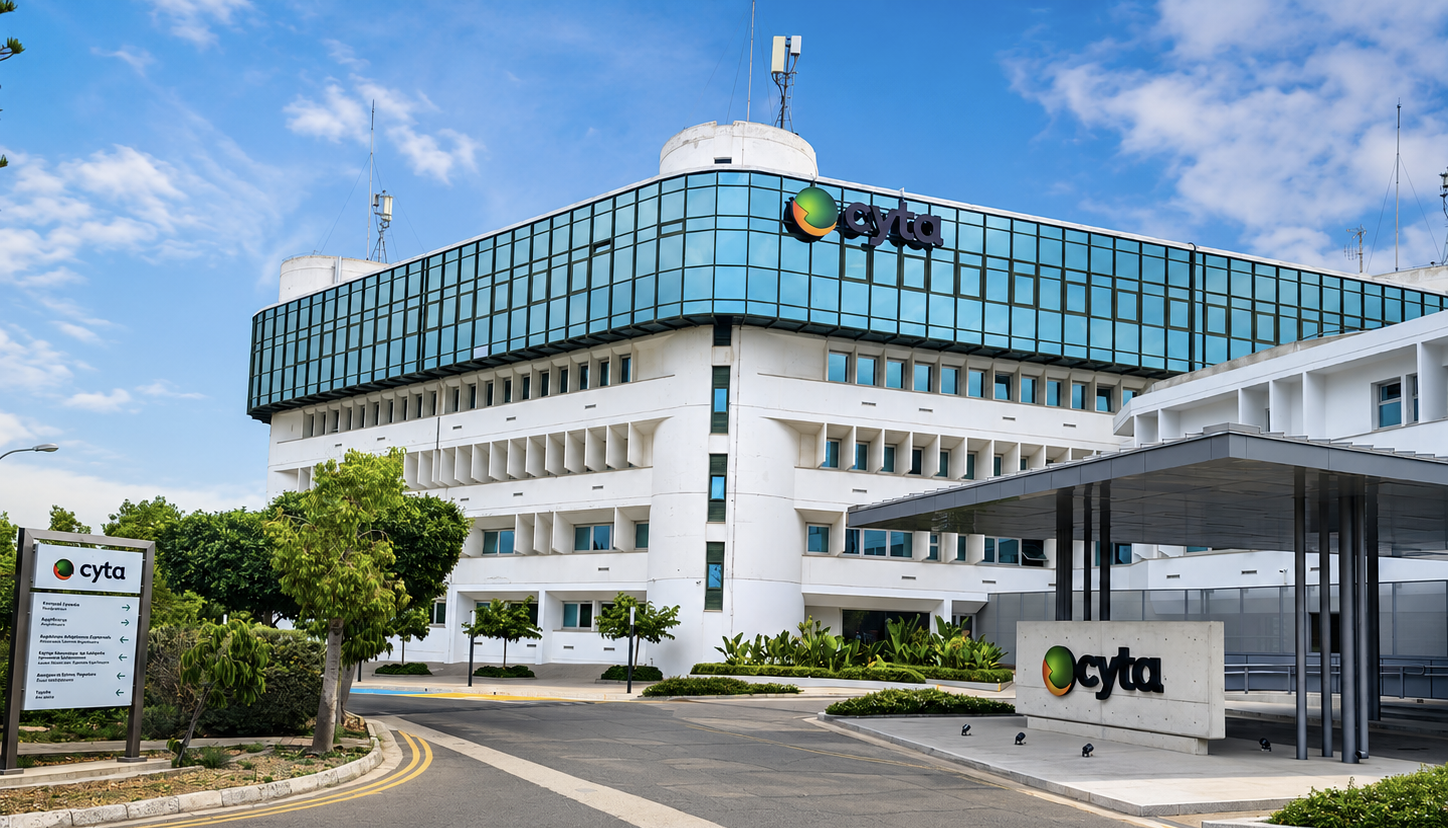
Cyta has agreed to acquire the RedMax Data Centre in the Latsia Industrial Area, giving the Cypriot telecoms provider a larger physical platform for cloud services, equipment hosting, and colocation.
The agreement includes expansion and upgrade work, with development planned in phases. The first phase is expected to enter commercial operation in early 2027, while the completed project is expected to become the largest privately owned data centre in Cyprus.
The investment sits alongside Cyta’s existing data centres and international submarine cable network. That combination is central to the deal. In Cyprus, data centre capacity is tied not only to domestic demand, but also to the island’s position between Europe, the Middle East, and North Africa.
The facility is expected to incorporate advanced physical security and cybersecurity systems, obtain required ISO certifications, and use renewable energy sources for part of its electricity requirement. The available details do not give a total investment figure, but the acquisition points to a broader infrastructure role for Cyta rather than a narrow property transaction.
A regional market, not a mega-campus race
Cyprus does not need to mirror the largest European hyperscale hubs to build data centre relevance. Its role is more likely to be shaped by regional connectivity, public-sector hosting, business continuity, edge capacity, cloud services, and proximity to eastern Mediterranean markets. In that setting, network reach and facility trust carry as much weight as raw megawatts.
That is why submarine cable connectivity sits close to the RedMax acquisition. A data centre in Cyprus becomes more valuable when it is part of a wider network platform. Cyta already operates international connectivity assets, and the RedMax facility gives it more room to pair hosting and colocation with network reach. Enterprise and public-sector customers can use that combination for latency, resilience, and data-location requirements that may not be served by relying only on mainland European hubs.
The phased expansion also fits the economics of a smaller market. Demand may be growing, but capacity has to be staged against customer take-up, power availability, certification work, cooling resilience, and operational maturity. Overbuilding can leave operators with stranded capital, while underbuilding can push customers towards overseas alternatives.
ISO certification, security systems, physical resilience, and renewable power use are therefore part of the trust layer. They allow the facility to serve public bodies, regulated sectors, international businesses, and cloud or managed-service customers. A larger colocation footprint without those controls would be less useful in a market trying to position itself as a regional digital hub.
Power and cooling on an island system
Power strategy will be one of the key questions as the project develops. The published details refer to renewable energy sources covering part of the facility’s electricity requirement. The larger test will be how much capacity can be supported, how backup power is configured, what the grid interface looks like, and how cooling will be maintained during extreme summer conditions.
Data centres in warmer climates face different thermal assumptions from Nordic or northern European facilities. Cyprus’s climate can increase the importance of mechanical cooling efficiency, redundancy, water strategy, and maintenance planning. If the RedMax expansion targets higher-density cloud or AI-adjacent workloads, cooling design will carry more operational and energy-cost significance.
The acquisition also strengthens Cyta’s resilience story. Islands rely heavily on robust connectivity routes, local hosting options, and reliable power systems. Regional geopolitical risk, cable outages, and cross-border service dependencies can all raise the value of domestic facilities with strong operating controls. Cyta’s telecoms position gives it a natural bridge between network resilience and data centre infrastructure.
There is a public-policy angle as well. Cyprus has been seeking to strengthen its role as a regional digital services hub, but data centres require more than favourable geography. They need trusted operators, secure facilities, skilled staff, energy strategy, and credible compliance. The RedMax acquisition gives Cyta a larger physical base from which to pursue that role.
The next useful details will be the scale of the phased expansion, power capacity, cooling design, certification timetable, and customer mix. Those points will determine whether the project becomes a straightforward domestic hosting upgrade or a more substantial eastern Mediterranean infrastructure asset.

