
Summary
- Danfoss inaugurated the 22,500 sq m Tuchom facility on 8 October.
- The factory can initially produce approximately 8,000 heavy-duty thermal interface stations annually.
- The site supports district energy and data centre markets but does not represent commissioning of a new data centre.
Danfoss has inaugurated a 22,500 sq m manufacturing plant in Tuchom, near Gdańsk, increasing its ability to produce thermal energy interface equipment for district heating, cooling and data centre applications. The opening took place on 8 October, with the company announcing the milestone the following day.
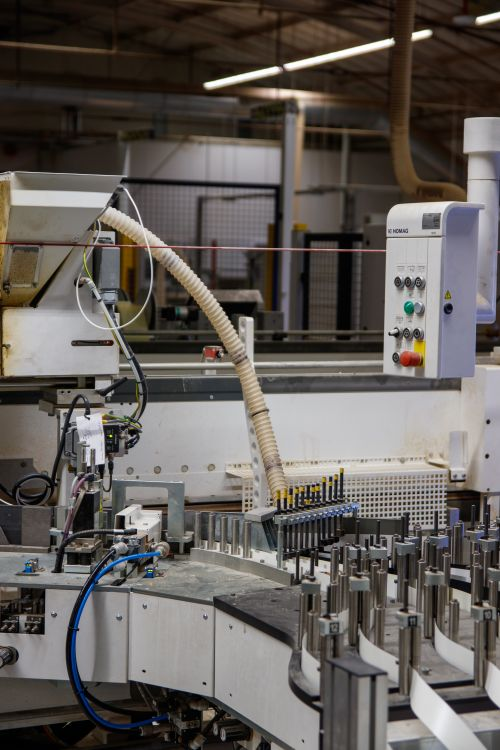
The new production facility brings metal processing, assembly and testing operations together. Danfoss reports an annual capacity of approximately 8,000 heavy-duty stations, describing these as prefabricated units used to control, measure and transfer thermal energy in building and district energy systems.
Factory capacity is not data centre capacity
The 8,000-unit figure measures potential manufacturing output, not the number of data centres that could be cooled or the thermal capacity installed at customer sites. Each project’s required equipment depends on heat loads, flow rates, pressure conditions, network temperatures and the balance between cooling, recovery and heat rejection.
A heat transfer station can provide the controlled interface between energy circuits. In a district heating application, it helps manage how heat passes between the primary network and a building’s heating system. In data centre settings, comparable thermal engineering capabilities can support heat exchange, temperature control and integration with external heat networks, although Danfoss has not disclosed a specific new customer deployment tied to the factory opening.
The company says the site will also act as a centre of excellence for data centre solutions and a demonstration space for original equipment manufacturers. Such facilities can support component selection and technical collaboration, but cannot be described as an independently certified test laboratory without evidence of its accreditation and defined test methods.
Manufacturing capacity can be scaled further
Danfoss reports 250 employees at Tuchom and physical capacity for up to 500. It also indicates that annual production output could be doubled. Those are expansion capabilities, rather than a commitment that the workforce or production volumes have already reached their maximum.
Of the facility’s total floor area, more than 19,000 sq m is allocated to production, warehouse and technical functions, with nearly 3,500 sq m devoted to offices and employee facilities. Consolidating manufacturing and testing within one location can change material flow and quality-control arrangements, although the company has not published measured productivity improvements from the new plant.
The factory builds on 15 years of Danfoss manufacturing activity in Tuchom and coincides with the company’s 35th anniversary in Poland. The company positions it as a response to growth in energy-efficient heating and cooling markets, including equipment needed to integrate complex computing facilities with broader thermal infrastructure.
European data centre expansion is increasing attention on thermal plant availability. Where liquid cooling or heat export is specified, delivery depends on compatible heat exchangers, pumps, controls and the infrastructure that connects them. Supply from a new factory may support those installations, but the number of future deployments is not disclosed in the opening announcement.
The plant is intended to manufacture prefabricated heat-interface units that regulate the transfer of thermal energy between networks and buildings. These products are part of the equipment chain needed for district heating and heat recovery, rather than server-side liquid cooling hardware on their own. A data centre exporting heat would still require a compatible heat source, heat exchangers, pumps, pipework and a receiving customer or network.
The company says the enlarged facility is designed to accommodate future production growth, with workforce capacity above its current staffing. Whether that space is used depends on orders, skills and the production mix. No newly signed supply contract for a named European data centre was disclosed in the opening announcement.
The completed investment is therefore a manufacturing and supply chain development. The next measurable operating outcomes would be production volumes, new customer awards and verified equipment performance at installed data centre or district heating sites.

