
Summary
- Data4 plans a €5bn campus in Escaudain, Northern France, with 700MW of eventual capacity across a 33-hectare brownfield site.
- The project extends Data4’s strategy of converting former industrial land into large-scale digital infrastructure near major European connectivity routes.
- The scheme places French AI capacity growth inside wider questions around power availability, land reuse, construction phasing, and sovereign infrastructure.
Data4 has launched plans for a €5bn data centre campus in Escaudain, Northern France, with the project set to become the operator’s largest development in the country.
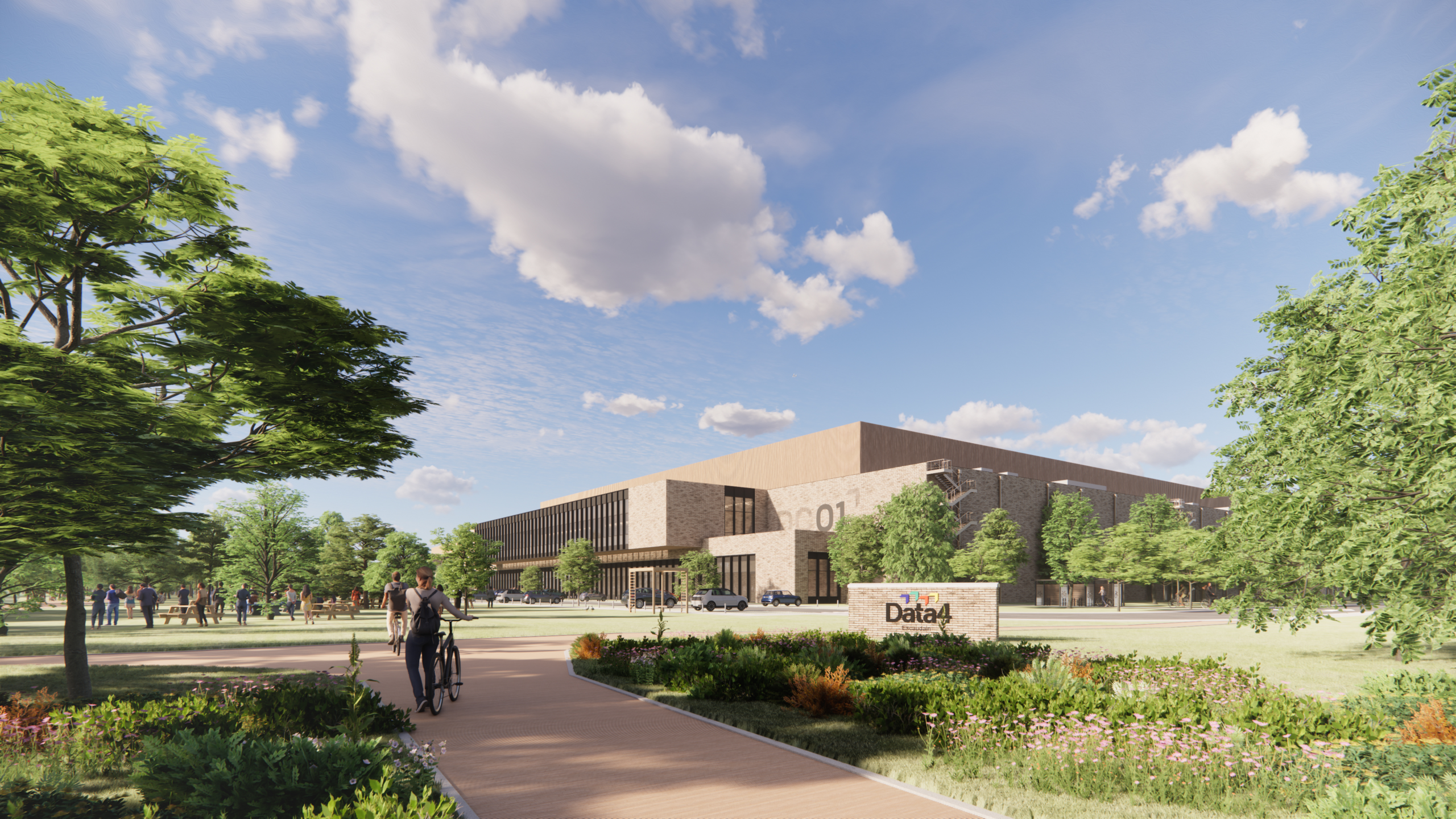
The campus is planned for the former Parc des Soufflantes industrial site and is expected to cover 33 hectares. Once fully built, Data4 says the site will deliver 700MW of capacity, placing it among the largest announced data centre schemes in Europe and adding a major northern French node to the continent’s AI and cloud infrastructure pipeline.
Feasibility studies carried out with public and private stakeholders have cleared the way for the project to move forward. Data4’s official project update frames Escaudain as an extension of the digital corridor around Paris and part of a wider northern European AI infrastructure zone.
Six months after being selected as exclusive partner for the site’s redevelopment, Data4 is using Escaudain to extend a brownfield model already visible around Paris. Former Alcatel and Nokia industrial sites near the capital have been converted into a 500MW data centre hub, giving the company a template for turning legacy industrial land into large digital infrastructure campuses.
Industrial land becomes capacity platform
Escaudain gives Data4 a large development footprint in Hauts-de-France, a region with industrial heritage and a strategic position between Paris, Belgium, the Netherlands, Germany, and the UK. Large AI and cloud campuses need more than proximity to customers; they need land, power, fibre, construction access, and a political route through planning.
Data4 says it operates ten campuses across six European countries and plans to invest more than €20bn across Europe by 2030, including the €5bn allocated to Escaudain. That capital programme reflects the scale now attached to AI-ready capacity, where the site shell, power infrastructure, cooling plant, grid interfaces, and customer fit-out can carry as much weight as the compute equipment itself.
Converting a former industrial site gives the scheme a stronger regeneration basis than a conventional greenfield proposal. Across Europe, data centre planning is becoming more exposed to scrutiny around land take, water use, grid impact, heat rejection, and visual intrusion. Brownfield conversion does not remove those constraints, but it can reduce land-use conflict and align development with established industrial zoning, transport access, and utility corridors.
The delivery challenge will be phasing. A 700MW campus is not a single construction event; it will need staged grid energisation, phased buildings, long-lead electrical and mechanical equipment, and customer commitments robust enough to support capital deployment over several years.
France’s AI buildout moves beyond Paris
France has been working to attract AI infrastructure capital through its nuclear-heavy power mix, industrial land base, and digital sovereignty agenda. Escaudain fits that policy direction while showing how future capacity is likely to spread beyond established Paris-area zones as hyperscale and colocation demand grows.
Northern France offers a practical test of the next stage of European data centre development. It sits close to major cross-border markets, but still requires local power reinforcement, permitting certainty, and a supply chain able to deliver at campus scale. As facilities move from tens of megawatts to hundreds, substations, transmission access, backup systems, heat-rejection design, and construction labour become central commercial risks.
Data4’s Escaudain plan gives the operator control of a large, power-led land position before all final capacity is necessarily committed. That approach is becoming more common as developers compete for sites that can support long-term AI and cloud requirements. The harder work comes after the headline number: turning land and capacity claims into energised, buildable, cooled, and contracted data halls.

