
Summary
- Equinix, ESB, and GeoPura are running a 12-week hydrogen power pilot at DB3 in Blanchardstown, Dublin.
- Two hydrogen-powered units are supporting cooling systems and can provide up to half a megawatt of continuous power.
- The trial links backup generation, PUE, grid constraints, emissions, water reuse, and future heat-reuse potential.
Equinix is trialling hydrogen backup power at its DB3 data centre in Blanchardstown, Dublin, in a 12-week project with ESB and GeoPura that brings fuel-cell generation into a live critical infrastructure environment.
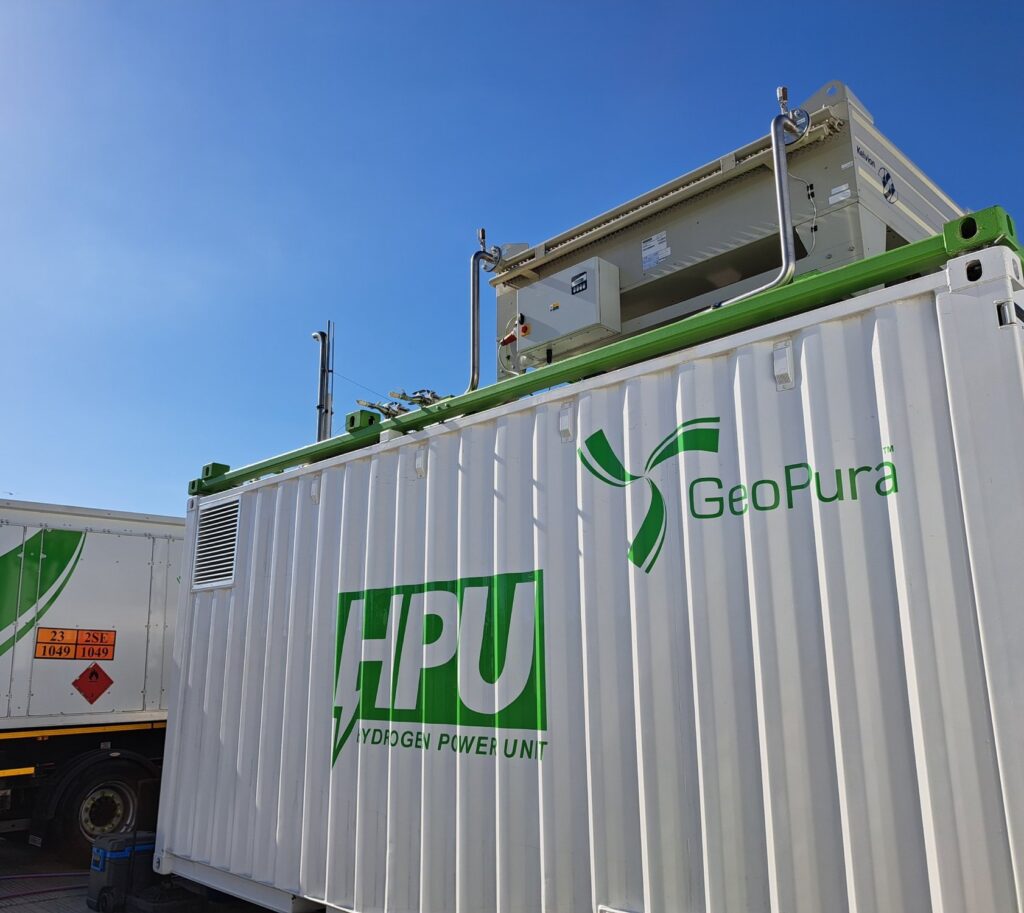
The pilot uses two containerised hydrogen-powered generators developed by GeoPura, one of which is owned by ESB. Installed onsite at DB3, the units are being used to support cooling systems rather than simply running as a detached demonstration beside the facility.
Equinix said the deployment is its first use of a hydrogen power unit for data centre critical backup systems in Ireland, and the first such installation across its global estate. The project gives Dublin’s data centre market a practical test of hydrogen power at a time when new large loads remain under pressure to explain how they will connect, operate, and reduce emissions.
Backup power moves beyond diesel
The hydrogen units are designed to work through uninterruptible power supply systems and respond in real time to changes in grid capacity. Running in parallel, the two units can provide up to half a megawatt of continuous power, with hydrogen supplied from renewable sources by GeoPura.
The system uses PEM fuel cell technology and produces no direct onsite emissions from electricity generation. At the point of use, the principal by-products are water and heat, both of which Equinix says could be used in future operational improvements, including water recycling into cooling systems and potential heat reuse.
DB3’s pilot has also helped bring the facility’s power usage effectiveness below 1.3, according to Equinix. That figure sits inside a wider operational story: hydrogen backup will not be judged only by its emissions profile, but by whether it can fit safely into critical electrical architecture, support cooling loads, and perform predictably when the grid or onsite systems require it.
Traditional backup power remains hard to displace because diesel generators are familiar, energy-dense, widely supported, and deeply embedded in data centre design, insurance, maintenance, and testing regimes. Hydrogen has to earn its place against that installed base through reliability evidence, fuel logistics, safety procedures, permitting clarity, and maintenance routines that operations teams can trust.
Dublin’s grid constraints sharpen the test
Ireland’s data centre sector has become one of Europe’s clearest examples of power becoming the gating condition for digital infrastructure growth. Dublin remains a major cloud and colocation hub, but grid capacity constraints and system-security concerns have changed the terms on which new capacity can be connected.
Large energy users are now expected to show more than demand. They need credible power strategies, flexibility potential, backup design, and evidence that their sites will not add unmanaged stress to an already constrained electricity system. Hydrogen backup does not create grid capacity by itself, but it may help reshape the operating model around critical power, peak support, and lower-emission standby generation.
The strongest evidence from the DB3 pilot will come from operational data rather than headline claims. Equinix and ESB are examining carbon reduction potential, safety, commercial performance, grid peak-shaving, and deployment options. Those findings will be more useful than broad declarations about hydrogen’s role in decarbonisation.
GeoPura’s system is modular, and the company says hydrogen fuel units can scale up to multi-megawatt applications. Scaling inside data centres is a different challenge from running a containerised unit for a defined pilot. Larger deployments would need fuel availability at sufficient volume, refuelling procedures that do not compromise site security, physical space for equipment and storage, and integration with UPS, switchgear, controls, and fire strategy.
The by-products need a route
Heat and water from the fuel-cell process give the trial a broader infrastructure dimension, although neither becomes useful automatically. Waste heat needs a demand source, pipework, temperature compatibility, commercial arrangements, and a district heating or onsite reuse case. Recovered water needs treatment, quality control, and practical integration with the cooling system.
Those questions are increasingly central to data centre sustainability claims. Operators are being asked to move beyond annual renewable energy totals and broad emissions targets towards site-level evidence on power, water, heat, and operational efficiency. Hydrogen backup touches all four, but it also exposes how difficult integrated sustainability can be at a live facility.
DB3’s pilot should therefore be read as an engineering and operations test, not as a finished replacement strategy. It places a lower-emission backup technology next to cooling systems in a grid-constrained market and asks whether it can behave like critical infrastructure rather than like an energy-transition exhibit.
If the trial performs well, hydrogen could gain a more serious role in the data centre backup mix, particularly where diesel emissions, grid constraints, and local planning scrutiny are tightening. If it struggles on cost, logistics, or operational fit, it will still provide useful evidence. Either way, Dublin now has a live-site trial in a debate that has often moved faster than the plant room.

