
Summary
- SoftBank has been selected as preferred bidder for a 400MW data centre at EDF’s Bouchain site.
- Eclairion is lined up for a separate large AI data centre project at Loire-sur-Rhône, near Lyon.
- The projects show power availability and former industrial land becoming central to European AI infrastructure siting.
EDF has selected SoftBank Group and Eclairion to progress large AI data centre projects on former or existing power-generation sites in France, placing grid access and industrial land at the centre of the country’s digital infrastructure build-out.
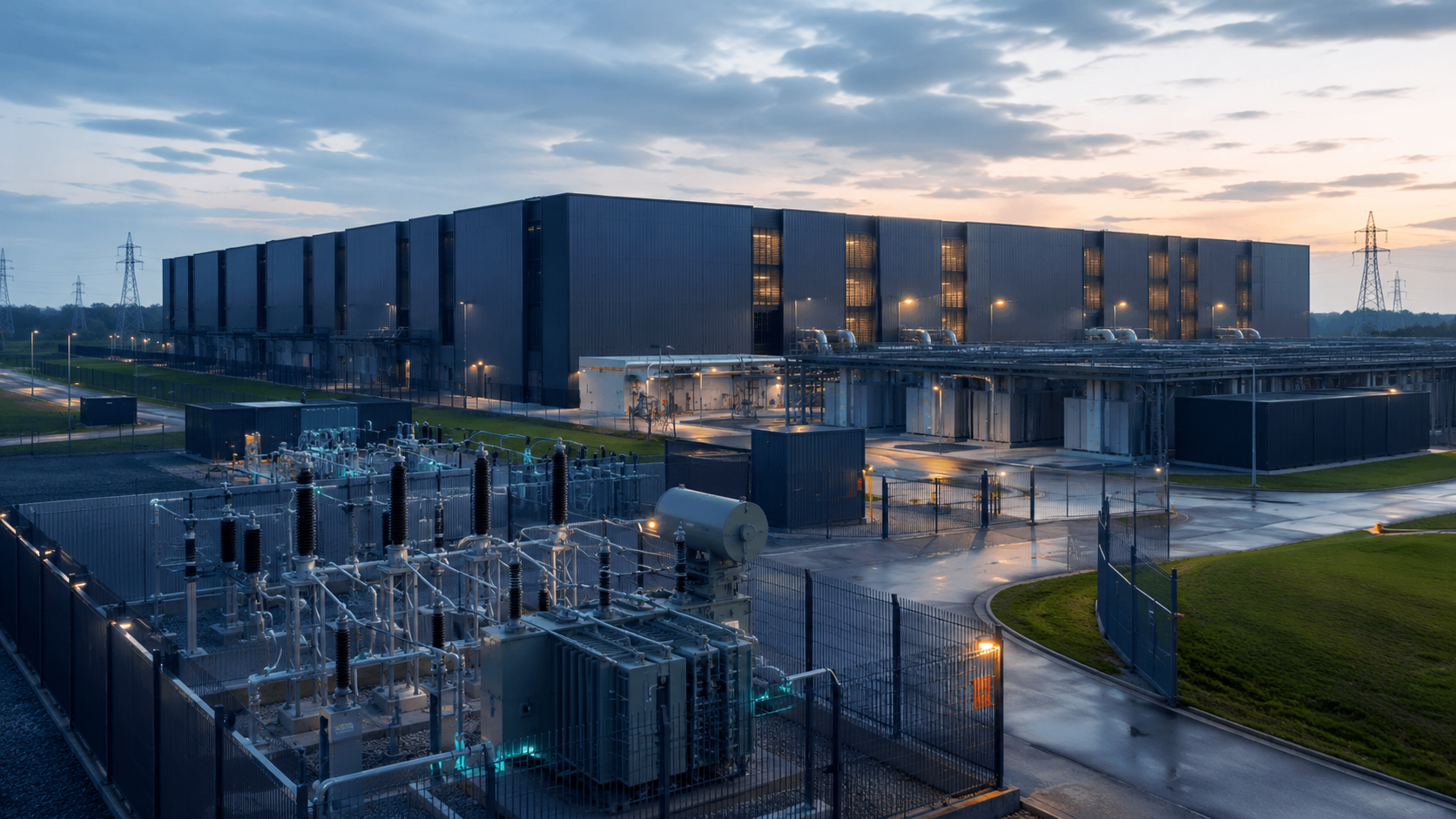
At Bouchain, in northern France, EDF has selected SoftBank Group as preferred bidder for the design, construction, and operation of a 400MW data centre under a construction lease. The site includes EDF’s former Bouchain thermal power plant and offers favourable conditions for connection to the electricity transmission network.
EDF said the project has entered a due diligence phase covering technical, environmental, and administrative studies. A preliminary construction lease is expected during this stage, with the final lease dependent on the required authorisations.
Eclairion has separately been selected for a large AI data centre project at the former Loire-sur-Rhône power-station site, near Lyon. Reported project capacity is around 350MW. The French developer, which focuses on high-density AI infrastructure, will also need to complete feasibility, environmental, and administrative work before the scheme can move from selection to delivery.
Power shapes the site map
The EDF selections underline a shift in European data centre development. The most valuable sites are no longer only those close to carrier-dense metros or established cloud regions. They are increasingly sites where land, planning context, transmission access, and local political support can be assembled quickly enough to match AI-led capacity demand.
Former power-station land carries obvious advantages. It is already industrial, it is often close to high-capacity grid infrastructure, and it can give developers a more credible route to connection than a greenfield site competing for reinforcement in a congested queue. Utilities also gain a way to extract new value from retired thermal assets while retaining a role in energy-intensive industrial development.
The model still carries delivery risk. Data centre electrical demand on the scale proposed at Bouchain and Loire-sur-Rhône will require more than a headline grid position. Developers will need connection agreements, environmental and planning approvals, cooling strategies, noise controls, construction phasing, and local consent. Former industrial land is not frictionless land; it can involve remediation, legacy infrastructure, and strict environmental requirements.
France is trying to turn its electricity system into an advantage for AI infrastructure. Its nuclear-heavy power mix, large industrial regions, and state-backed investment push have made it a focal point for major capacity announcements. EDF’s approach gives that investment campaign a physical route by matching power-intensive digital projects with sites already shaped by the energy system.
For SoftBank, the Bouchain selection fits into a wider French AI infrastructure programme. For Eclairion, the Loire-sur-Rhône selection would expand a domestic AI data centre platform at a time when European policymakers are pressing for more sovereign compute capacity. In both cases, the next test is not ambition but conversion: studies, authorisations, grid agreements, and construction programmes will determine how much of the theoretical site advantage becomes usable capacity.

