
Summary
- Generac reports approximately $4.5bn in data centre equipment backlog.
- Its Amazon agreement includes initial generator deliveries totalling approximately $2.4bn across 2027 and 2028.
- Commercial and industrial sales increased 28% as the company expands production capacity.
Generac has increased its backlog of equipment orders for data centre customers to approximately $4.5bn, following additional commercial commitments including a major supply agreement with Amazon.
The power equipment manufacturer reported the figure alongside its third-quarter financial results, which showed commercial and industrial sales rising approximately 28% to $552m from $432m in the equivalent period of 2025.
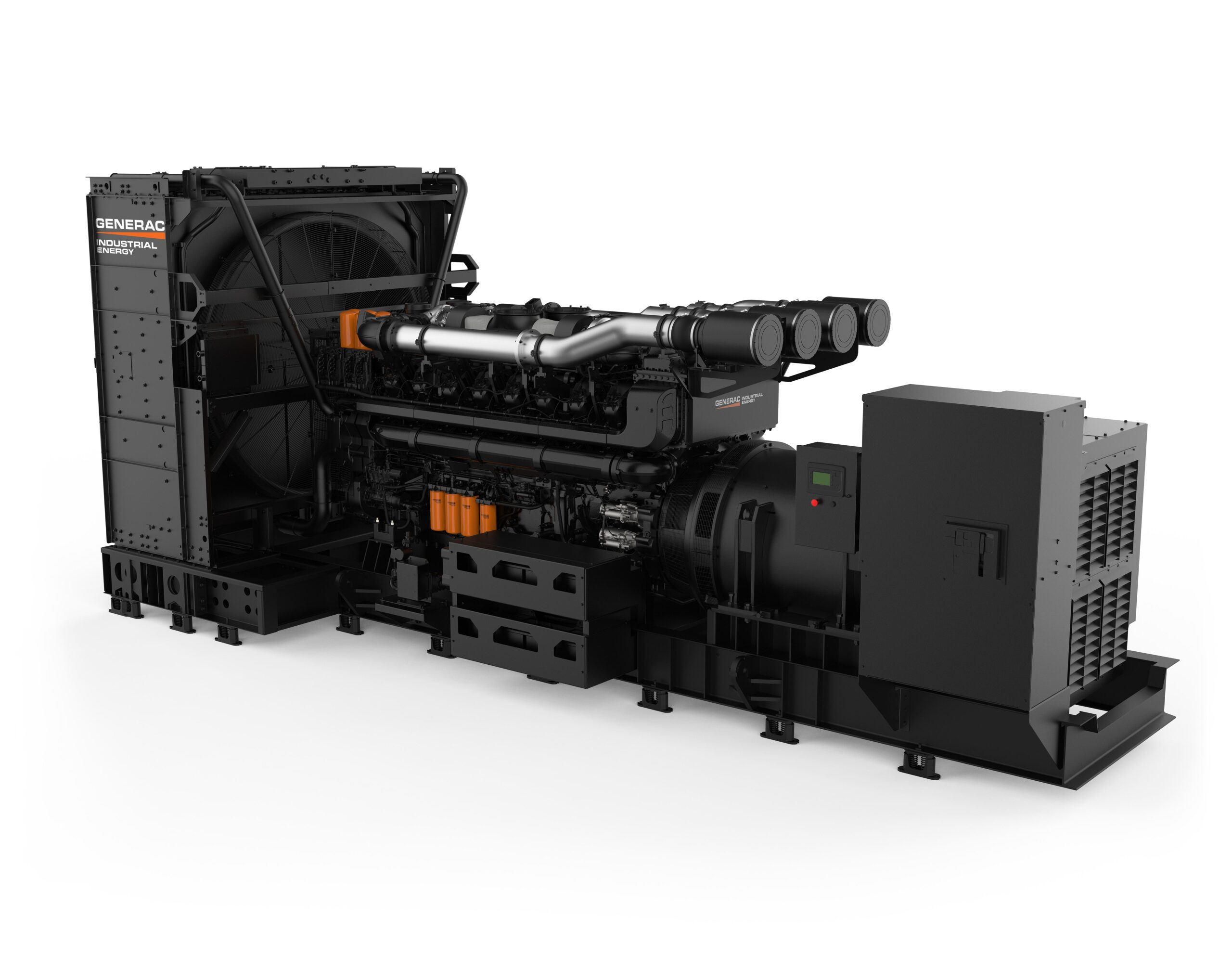
Generac’s agreement with Amazon covers the supply of backup generators for data centres under a long-term arrangement. Initial deliveries associated with the agreement are expected to total approximately $2.4bn during 2027 and 2028.
The delivery timetable reflects the scale of equipment manufacturing and procurement associated with large computing facilities. The figures concern future product deliveries and should not be interpreted as revenue already recognised or computing capacity already commissioned.
Other agreements with existing and new customers have contributed to the increase in Generac’s backlog. The company is expanding manufacturing capability to meet the resulting order pipeline.
Backup generation forms part of the electrical resilience infrastructure of many data centres. Generators are intended to support critical operations when the normal electricity supply becomes unavailable, operating alongside systems designed to manage the transition between power sources.
Uninterruptible power supplies provide short-duration protection against interruptions and disturbances, allowing connected equipment to continue functioning while the broader electrical system changes operating state.
Generator systems provide the longer-duration support needed when a primary supply outage cannot be resolved immediately. Their practical operating period depends on fuel availability, maintenance arrangements, equipment reliability, and the electrical loads they are required to support.
At large campuses, backup generation can involve substantial numbers of machines coordinated through switchgear, control equipment, protection systems, and electrical distribution infrastructure.
These installations require engineering around starting sequences, load acceptance, equipment redundancy, maintenance, and the isolation of faulty components. Design choices must reflect the facility’s reliability requirements and the loads that cannot tolerate interruption.
Higher-density computing can add further demands to the electrical system. Large installations of accelerators and their associated cooling equipment may require considerable power, while operating conditions can change as workloads and supporting systems are adjusted.
The ability of backup equipment to accommodate those conditions depends on the electrical design and the response characteristics of the installed generating equipment.
Generac’s backlog provides a measure of investment entering the supporting equipment supply chain. Computing customers may order processors and servers from one set of suppliers while relying on separate manufacturers to deliver the electrical and mechanical systems required to operate them.
The production of large generator systems also involves complex supply arrangements for engines, alternators, controls, enclosures, and other components. Manufacturing capacity therefore becomes an important consideration when several large customers seek equipment over overlapping construction programmes.
Generator installations also carry environmental and operational obligations. Their use, testing, fuel storage, and emissions may be subject to permits and local restrictions, with requirements differing between jurisdictions.
European data centre developments face these considerations alongside planning and grid constraints. The global Generac backlog does not establish that the same equipment has been ordered for any particular European site, but it demonstrates the scale of demand affecting a category of infrastructure widely used in the sector.
Generac’s total quarterly net sales increased 16% to a record $1.29bn, supported by growth across commercial, industrial, and residential operations.
The company’s backlog has nearly tripled over a 90-day period, according to management’s third-quarter discussion. That pace illustrates how a small number of large commitments can change the order position of a specialist equipment supplier, although it does not identify the number of separate sites to be served.
Generac recorded third-quarter adjusted EBITDA of $256m, equivalent to 19.8% of sales, compared with 17.3% in the previous-year period. The company also generated $171m in operating cash flow and $132m in free cash flow. These figures cover the wider business rather than the data centre equipment programme alone.
The company maintained its forecast of sales growth in the mid-to-high teens for 2026 and raised the lower end of its adjusted EBITDA margin guidance. It continues to expand manufacturing capacity to meet the contracted equipment volumes, while customer schedules and factory throughput will determine the timing of recognised revenue.
Delivery of the company’s data centre order book will depend on expanding production and fulfilling customer schedules during 2027 and subsequent periods. The conversion of those orders into operating equipment will also depend on the progress of the facilities for which they are intended.

