
Summary
- Genoa has submitted six areas of technical and environmental enquiry to Quadrivium.
- The facility's redevelopment of an existing urban building has resulted in a different administrative procedure from that governing new construction.
- A new technical and scientific committee will support the municipality's wider approach to data centre planning.
The Municipality of Genoa has formally requested additional environmental and engineering information from Quadrivium concerning its data centre in the Sturla district, following complaints about persistent noise from rooftop cooling equipment.
Urban planning councillor Francesca Coppola confirmed during a municipal council meeting on 24 November that the administration had submitted six areas of enquiry to the developer before the outstanding administrative procedure progresses.
The questions cover emergency generator thermal ratings and emissions, exhaust outlet locations and specifications, thermal effects on the surrounding environment, electricity network stability, and cooling infrastructure. The municipality is also seeking clarification concerning noise and the environmental authorisation applicable to the development.
Quadrivium’s GEN01 facility occupies the former Carige computing centre on Via Isonzo, within an established urban neighbourhood. The development involves refurbishment and conversion rather than the construction of an entirely new building.
Coppola explained that the project had entered the administrative process through Italy’s certified notification procedure, known as SCIA, and had not undergone a separate environmental impact assessment. Further environmental consideration will involve the Metropolitan City of Genoa.
The municipality previously held a meeting with residents on 19 October. Coppola subsequently met Quadrivium and clarified that the developer had not received an invitation to attend the earlier meeting, addressing concerns about its absence from the proceedings.
Cooling and generation equipment in urban buildings
The reuse of a building previously accommodating computing infrastructure can reduce construction requirements and provide access to established communications networks. However, the mechanical and electrical systems required by replacement computing equipment may differ substantially from those serving the original installation.
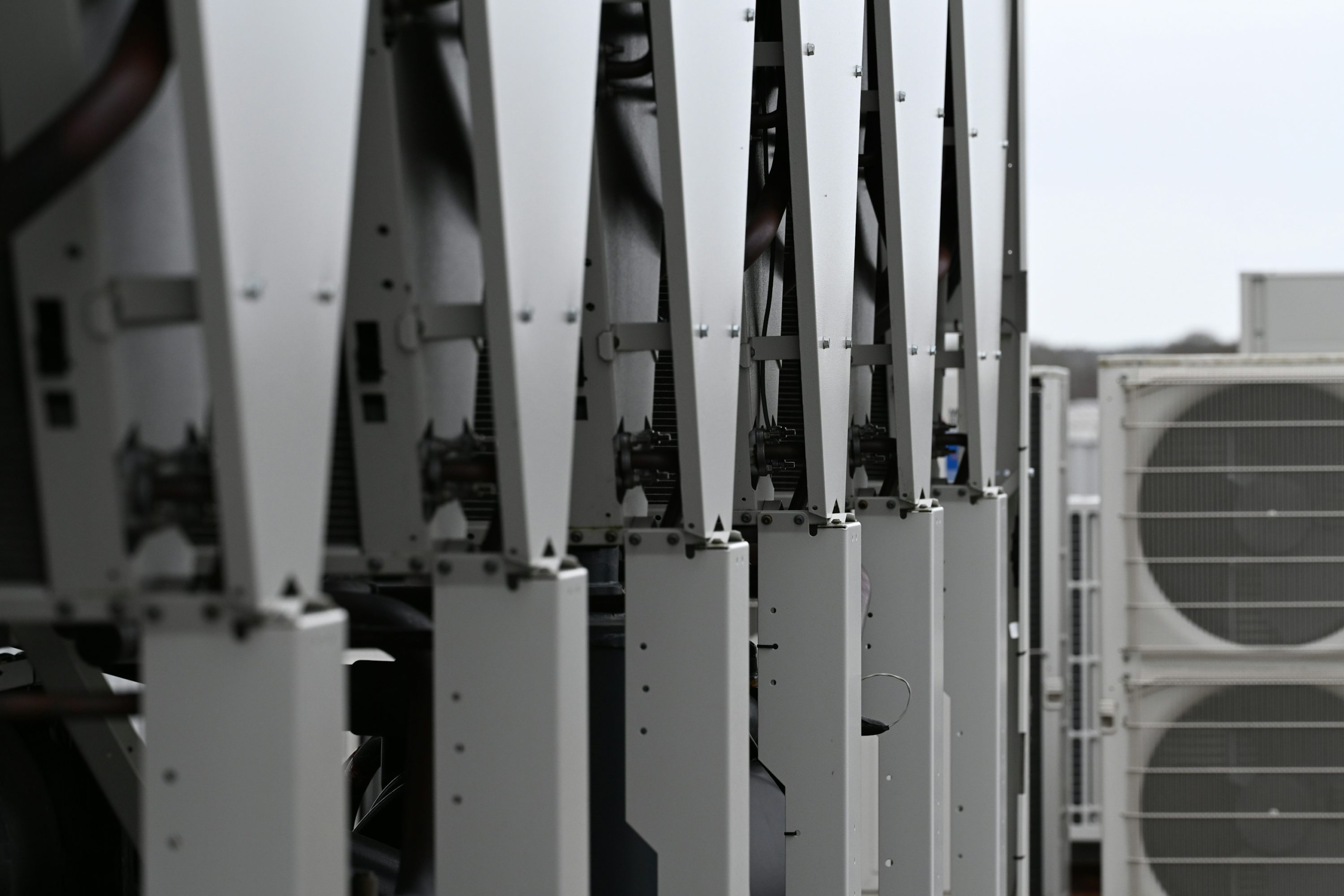
Rooftop cooling infrastructure can create particular difficulties in established residential areas because sound can travel directly towards neighbouring buildings without the attenuation provided by an enclosed plant room. Fans, compressors, and pumps may also produce tonal noise that remains noticeable against the surrounding acoustic environment.
Residents’ reports of persistent humming have prompted questions about the equipment operating above the Via Isonzo building. Establishing its actual effect requires measurements under representative operating conditions, including periods when background noise from traffic and other urban activities is comparatively low.
Potential mitigation measures include acoustic screens, equipment isolation, fan speed adjustments, and modifications to mechanical layouts. Their suitability depends on the source and characteristics of the noise, together with the physical space available around the installation.
Mechanical modifications must also maintain sufficient airflow through cooling equipment. Restricting the intake or discharge of air through acoustic barriers can reduce cooling performance or increase the electricity consumed by fans if the installation is not designed to accommodate the additional resistance.
The municipality’s questions about thermal effects address a related characteristic of mechanical cooling. Heat removed from computing equipment must ultimately be transferred elsewhere, whether to the surrounding atmosphere, an external liquid circuit, or a heat recovery system.
Where equipment rejects heat into the atmosphere, discharge temperatures and airflow patterns influence how that heat disperses around the building. The proximity and elevation of neighbouring properties can therefore become relevant to the engineering assessment.
Emergency generators introduce separate environmental considerations because fuel combustion can produce local emissions alongside mechanical and exhaust noise. Generator thermal input, exhaust characteristics, testing schedules, and dispersion conditions are among the information needed to assess potential effects.
The municipality’s request for those details does not establish that the facility exceeds permissible environmental thresholds. No completed technical assessment demonstrating non-compliance was identified in the council proceedings.
Municipal planning expertise
Genoa has also established a technical and scientific committee to assist the administration in developing its approach to data centre planning. Coppola said the initiative would help address the absence of specific regional rules comparable to those available in some other Italian territories.
The committee’s work will extend beyond the individual Via Isonzo development. Data centre projects can involve overlapping responsibilities for urban planning, electricity connections, environmental protection, and building services, making coordinated technical assessment particularly important.
Existing urban facilities present a distinct planning consideration because modifications to computing capacity and mechanical equipment may occur without the development of an entirely new building. Assessing such changes requires information about the proposed installation rather than reliance on the property’s previous use alone.
Quadrivium’s responses to the municipality’s enquiries will inform the remaining assessment of GEN01. Genoa must establish the applicable environmental procedures and determine whether additional information or mitigation is required before the administrative process concludes.

