
Summary
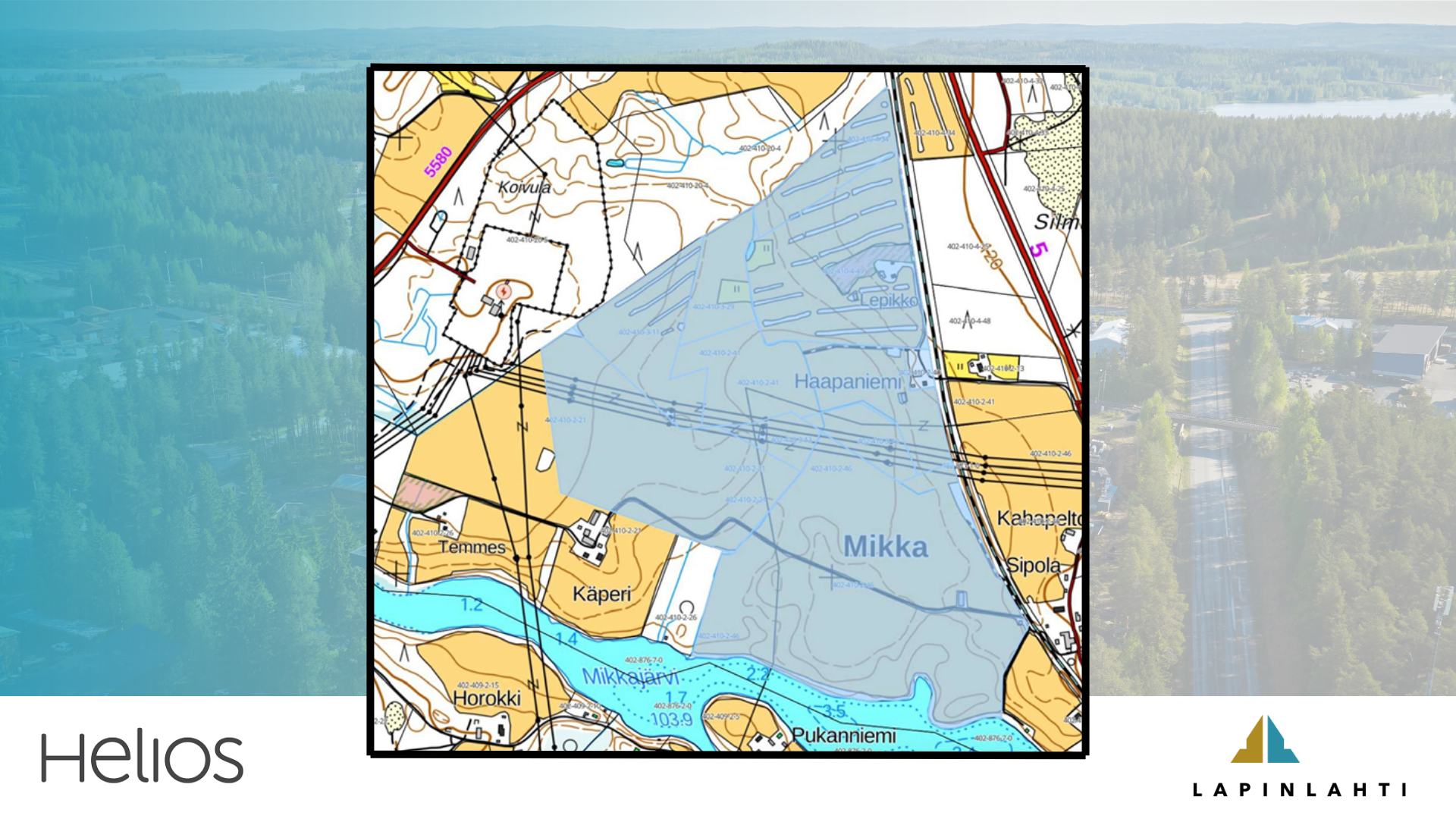
- Helios has submitted a zoning initiative covering more than 80 hectares beside Fingrid’s Alapitkä substation.
- The development target is around 500MW, substantially larger than an earlier 80–100MW proposal for the area.
- Grid adjacency strengthens the site proposition, although zoning, connection studies, construction phasing, and customer demand still separate the headline capacity from operation.
Helios Nordic Energy is seeking zoning for a data centre development of around 500MW in Lapinlahti, eastern Finland, on more than 80 hectares beside Fingrid’s Alapitkä substation.
The developer has submitted a zoning initiative to Lapinlahti municipality for the Alapitkä site, substantially expanding the scale previously considered for the area. An earlier exception decision covered a data centre of around 80–100MW, while the new development target is approximately 500MW.
The municipal board is due to consider the zoning initiative on 17 August. Helios is also developing solar generation nearby, and the municipality says both projects are intended to connect through Fingrid’s Alapitkä substation, with some of the local solar output potentially supplying the data centre through the wider electrical arrangement.
The substation sits at the centre of the site
The municipality’s project material places proximity to the Alapitkä transmission node among the development’s defining features. Across Europe, that relationship is increasingly determining where large campuses can be proposed, because a suitable land parcel has limited value if there is no credible route to deliver hundreds of megawatts.
A 500MW target remains far removed from an operating 500MW campus. Zoning, environmental work, detailed design, grid studies, power reservations, construction, customers, and investment decisions will all influence how much of the site can be built and on what programme.
Connection infrastructure becomes progressively more demanding as the load rises. A campus approaching the upper end of Helios’s target could require multiple high voltage feeds, substantial transformation capacity, internal substations, protection equipment, standby systems, and a phased electrical architecture capable of growing without taking existing halls offline.
Fingrid’s presence next door removes distance from one part of the connection equation, but it does not create unused transmission capacity automatically. The system operator still has to assess what the network can carry, whether reinforcement is required, how quickly new load can be introduced, and how the project interacts with other generators and consumers seeking access to the same system.
The earlier 80–100MW proposal provides some planning history for data centre use on the site, yet a potential fivefold increase changes the scale of infrastructure that needs to be assessed. Roads, construction traffic, transformers, generators, cooling plant, noise, water, and the physical footprint all expand as the campus grows.
Finland is attracting larger compute proposals
Finland’s cool climate, relatively low carbon electricity system, available land, and political stability have supported a growing data centre market, while the expansion of AI infrastructure is pushing proposed campuses well beyond the scale associated with earlier enterprise and colocation developments.
Lower ambient temperatures can reduce cooling energy across much of the year, particularly where facilities can use free cooling or operate liquid loops at elevated temperatures. The climate advantage does not remove the electrical load created by the compute itself, however, and a very large campus still changes the regional power balance.
That interaction is becoming more pronounced across the Nordics. Data centres are competing with industrial electrification, battery manufacturing, hydrogen, transport, and other new demand, while renewable generation and transmission reinforcement progress on separate schedules.
Helios’s proposed solar project could add generation close to the site, but an always-on data centre cannot be supported by intermittent solar output alone. The grid remains the underlying balancing mechanism, carrying power when local generation is unavailable and absorbing surplus production when solar output exceeds local use.
The commercial value of nearby generation will depend on the eventual procurement structure, storage, market prices, and how the data centre’s load develops through each construction phase. A 500MW headline campus would also require a much broader energy portfolio than a single local renewable asset.
Zoning will decide whether the concept advances
The project is still at a stage where land use, rather than construction, is the immediate decision. If Lapinlahti advances the zoning initiative, more detailed studies can begin to establish the site layout, environmental effects, connection requirements, and infrastructure programme.
The municipality estimates that a completed development could support hundreds of construction jobs and more than 100 permanent roles. Those figures depend on the eventual scale and remain development estimates rather than committed employment.
Helios became part of VINCI in 2024 after building its business around renewable energy development across the Nordic region. Data centres give that site development model another outlet because power access, land assembly, and grid relationships have become among the most valuable elements of the digital infrastructure supply chain.
Lapinlahti now has to determine whether an area previously considered for an 80–100MW facility should accommodate a much larger campus. If zoning proceeds, the power study and development phasing will show how much of the 500MW ambition can move from a land plan into buildable capacity.

