
Summary
- Legrand recorded nine-month sales of €8.33bn, with organic growth of 12.7% and adjusted operating margin of 20.8%.
- Data centre revenue grew organically by close to 40%, representing approximately one-third of group turnover.
- Full-year sales growth guidance excluding currency effects has increased to 20–22%, supported by organic growth and acquisitions.
Legrand has raised its full-year sales forecast after reporting sustained growth in data centre electrical and mechanical infrastructure, with organic revenue from the sector increasing by close to 40% during the first nine months of 2026.
The French electrical equipment group recorded consolidated sales of €8.33bn for the period, an increase of 19.5% on a reported basis. Organic sales growth reached 12.7%, while growth excluding currency effects was approximately 22%.
Legrand now expects full-year sales growth of 20–22% excluding currency effects, compared with its previous guidance of 16–19%. Its organic growth forecast has increased from 8–10% to 11–13%, while acquisitions are expected to contribute approximately eight percentage points.
The company’s adjusted operating profit reached €1.73bn, representing a margin of 20.8% after acquisitions. Net profit attributable to the group increased by 19.6% to approximately €1.07bn.
Data centres now account for around one-third of Legrand’s turnover, according to chief executive Benoît Coquart. Demand has been particularly strong among major technology companies investing in computing infrastructure, although the group reports increasing interest across multiple regions.
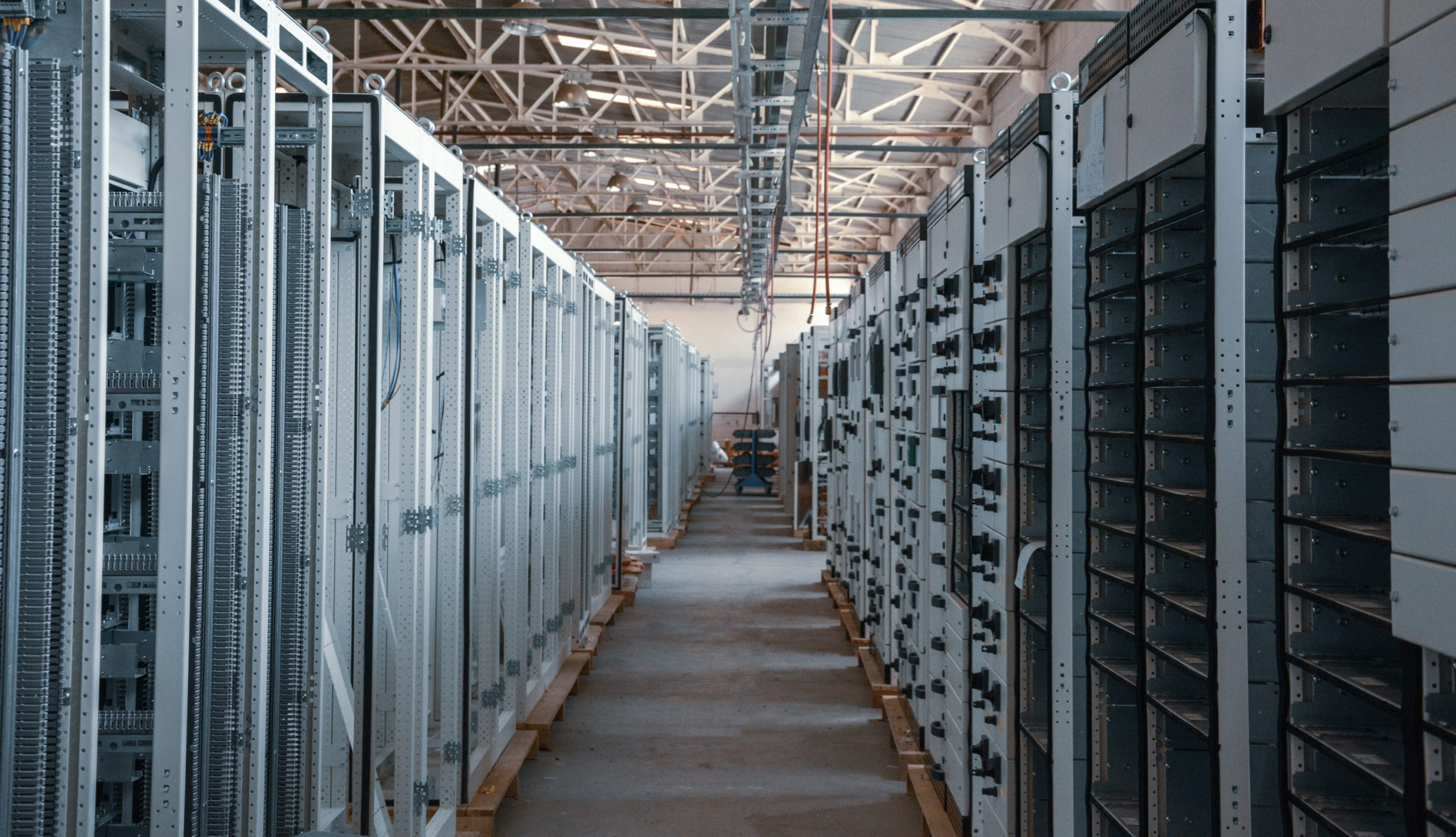
Legrand supplies equipment used throughout data centre electrical and mechanical systems, including power distribution, busways, uninterruptible power supplies, cooling infrastructure, racks, and related products.
These systems support the electricity delivery, thermal management, and resilience requirements of computing facilities. As processing loads increase, the capacity and configuration of supporting infrastructure can become as important to the development programme as the installation of servers.
Demand from large US technology companies has been a major driver of the group’s data centre business. Management has also identified opportunities in markets seeking greater domestic computing capacity, creating demand outside the established hyperscale development clusters.
Legrand has announced seven acquisitions since the beginning of 2026, expanding its presence in energy and digital infrastructure. The company’s financial performance therefore reflects both growth within existing operations and additional revenue from businesses brought into the group.
Higher computing loads reshape electrical systems
Increasing rack power density places greater demands on electrical distribution architecture. Power must be transformed, protected, monitored, and delivered to equipment within defined operating limits, while failures or maintenance activities must be managed without unnecessary service interruption.
Traditional distribution arrangements can become more difficult to expand as loads rise. Higher-capacity busways and associated equipment offer different approaches to transferring electricity across data halls, particularly where operators anticipate changing rack configurations.
Legrand has already introduced products targeting these requirements, including higher-capacity busway infrastructure for dense computing environments.
Those products address one part of a wider electrical system. A data centre also requires upstream transformation, protection, backup power, and the necessary coordination between equipment operating at different voltage levels.
The required architecture depends on the facility’s design and the computing hardware being installed. Changes in equipment density or distribution technology can affect floor layouts, cabling requirements, installation procedures, and maintenance access.
Cooling infrastructure faces related pressure. Most of the electricity consumed by computing equipment ultimately becomes heat, which must be transferred away from processors, memory, power supplies, and other components to maintain acceptable operating temperatures.
Higher-density installations may require liquid cooling, different heat rejection equipment, or modifications to mechanical plant. These changes can increase demand for specialised products even when the number of cabinets installed does not rise at the same rate as computing power.
The resulting investment reaches beyond the initial data hall fit-out. Electrical and mechanical infrastructure can require upgrades during a facility’s operating life as customers adopt more demanding computing equipment.
Legrand’s sales performance provides an indication of supplier demand, but it does not establish the quantity of new computing capacity commissioned during the period. Equipment orders and deliveries can precede operational availability by months, depending on the wider construction and grid connection programme.
Acquisitions reinforce infrastructure exposure
Legrand’s acquisition programme is increasing its exposure to energy and digital infrastructure markets alongside organic demand. The company reported an 8.3% contribution to nine-month growth from changes in its business perimeter, separate from its 12.7% organic increase.
The group has also reported free cash flow of approximately €1.01bn for the first nine months, compared with €871m in the equivalent period of 2025. Net financial debt increased during the period, reflecting a balance sheet undergoing continued investment and acquisition activity.
Although data centres are the fastest-growing part of the business, Legrand’s wider operations remain significant. Electrification products account for approximately one-fifth of sales, while conventional building products make up around half of group turnover and have recorded slower growth.
The revised annual guidance consequently reflects a combination of data centre equipment demand, performance in other electrical markets, and acquisitions. It should not be attributed entirely to the computing infrastructure sector.
European development conditions also remain uneven. Even where operators intend to invest in additional computing capacity, grid connection schedules, planning requirements, and the availability of suitable sites can affect when electrical and mechanical equipment is required.
Legrand’s performance indicates that spending on supporting infrastructure is continuing to grow rapidly. Whether that rate is sustained will depend on customer investment programmes, the timing of equipment procurement, and the progression of planned facilities into construction and operation.

