
Summary
- Turley identifies 56 active schemes representing approximately 3.17 million sq m of gross external area.
- London accounts for 43.3% of proposed floorspace; the remainder is distributed across 18 South East planning authorities.
- The draft London Plan introduces proposed location tests involving grid and water capacity, land availability, clustering and heat recovery.
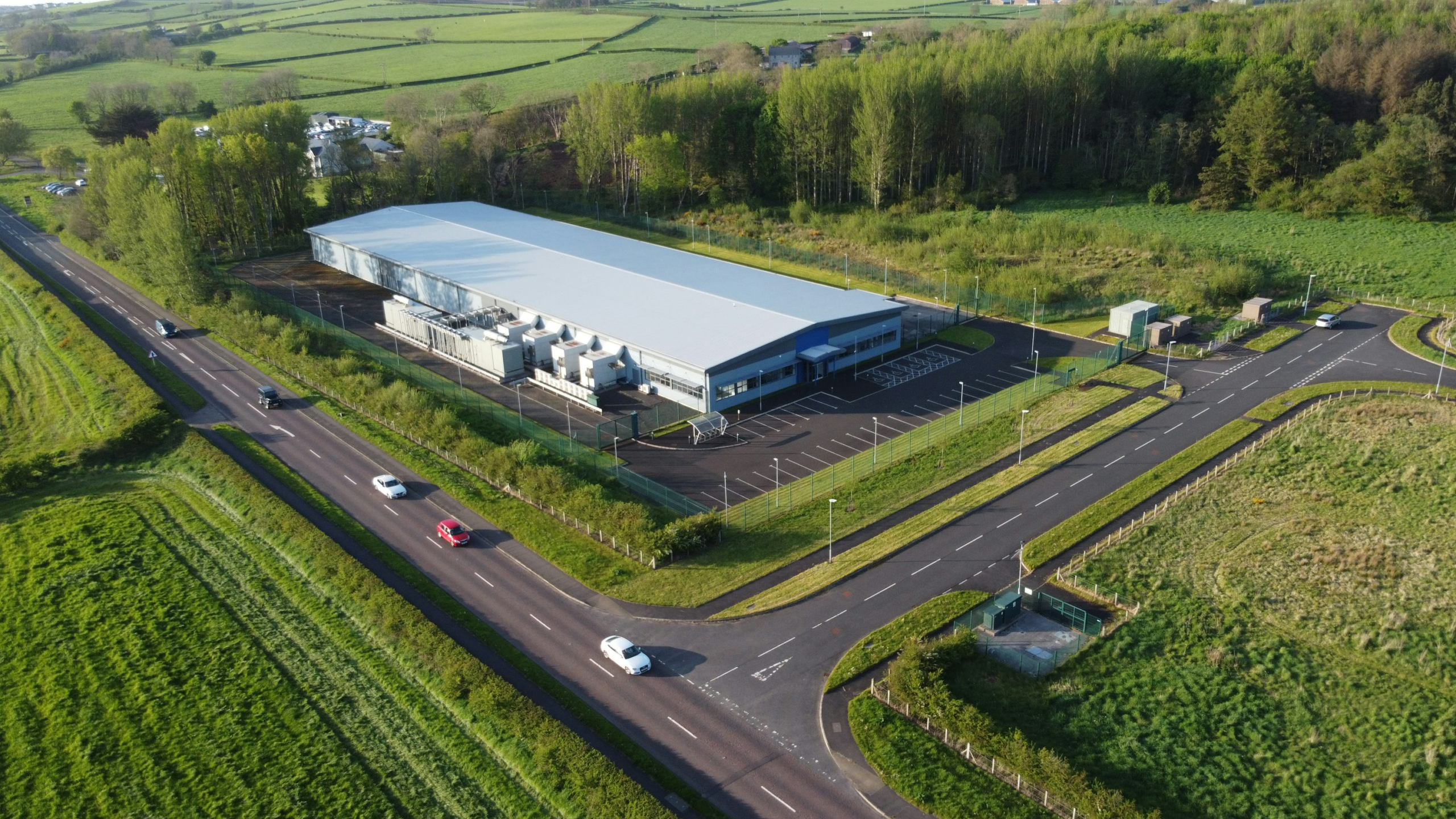
Turley has identified 56 active data centre planning schemes across London and the South East, totalling approximately 3.17 million square metres of gross external area, in research published on 8 October.
The planning consultancy examined full, hybrid and outline applications submitted over the preceding five years. London accounts for 43.3% of the floorspace across eight boroughs, while the remaining 56.7% lies across 18 local planning authorities elsewhere in the South East. The regional spread captures applications at different stages of planning and delivery rather than a single wave of completed construction.
Gross external area measures the scale of proposed buildings, not their available IT load. The report does not convert the 3.17 million square metres into commissioned megawatts, nor does inclusion in the active pipeline confirm that a scheme is consented, financed, connected to the grid or occupied by customers.
Where developers are seeking capacity
The London and South East market has grown around established connectivity and customer concentrations, particularly in West London and Slough. Turley’s findings show that a significant share of proposed floorspace now sits outside London borough boundaries, although those surrounding schemes are spread between numerous planning authorities with different site and infrastructure conditions.
One-third of the South East pipeline’s floorspace is within established availability zones, according to the research. This is a measure of the South East subset, not a statement about all 56 schemes. Facilities beyond established clusters may offer alternative development land, but their suitability still depends on dependable power, fibre connectivity and the requirements of potential occupiers.
Turley additionally identifies 53% of schemes with available power information as colocation facilities. The denominator is explicitly the group for which power data was available. It would be inaccurate to conclude that 53% of all the region’s proposed floorspace or all 56 schemes has been confirmed as colocation.
Colocation developments generally provide shared building and technical infrastructure for customers, whereas single-operator campuses can be designed around a narrower set of requirements. The type of proposed facility can affect land take, equipment halls, resilience design and the order in which planned phases become commercially available.
Even where the broad use is known, floorspace does not determine electricity consumption. The density of computing equipment, the extent of supporting plant and the treatment of future expansion can produce substantially different electrical demands for similarly sized buildings. Connection agreements and project-level power disclosures therefore remain essential to assessing delivery.
London’s proposed planning framework
Turley links the findings to the draft London Plan, which gives data centres a dedicated planning policy for the first time. The proposed approach seeks to identify suitable locations strategically rather than judging each new application without reference to the infrastructure needed across the wider area.
Under draft Policy GLE3, boroughs would be asked to identify suitable sites in light of current and projected electricity network and water capacity, while considering competing requirements from homes, other employment uses and infrastructure. The policy also considers opportunities for clustering and heat recovery, together with the amount of land needed for housing, logistics and related activity.
In locations where air quality from standby generators could affect the Epping Forest Special Area of Conservation, the draft framework also calls for attention to the Habitats Regulations. Backup electricity plant therefore enters the planning assessment as a potential environmental constraint as well as a resilience provision.
Developers proposing facilities outside designated suitable locations would face additional tests under the draft policy. Turley’s separate analysis says they would need to justify the location, demonstrate mitigation of infrastructure impacts and show how effects from electricity connections would be minimised. Where relevant sites are proposed on green belt or grey belt land at the edge of broad growth locations, the draft also calls for evidence that suitable brownfield alternatives are unavailable.
These are draft policy tests, not newly enacted requirements. The draft London Plan consultation was scheduled to run until 15 October 2026, making the geographical pipeline research relevant to an ongoing debate about what development should be accommodated and where.
Infrastructure determines what gets built
Electricity connections are one constraint that cannot be resolved by granting permission for more floorspace. A data centre may require new substations and reinforcement of networks outside its site boundary, and delivery programmes must account for when those works can be completed. Water availability and fibre routes can impose separate limitations, depending on facility design and location.
The draft policy’s reference to heat recovery likewise concerns an opportunity rather than a guaranteed benefit. Useful heat export depends on suitable temperatures, nearby demand and infrastructure connecting the facility with consumers. A proposed data centre does not deliver district heating merely by providing for potential future reuse.
Turley’s dataset offers a view of the scale, geography and types of schemes now navigating planning systems. It cannot establish which schemes will proceed, how quickly new grid capacity will be provided, or what quantity of IT load will eventually be commissioned. Those questions require project-specific permissions, network agreements and construction milestones.
The immediate planning task is to coordinate proposed buildings with the infrastructure they would depend on, while accounting for land and utilities needed for other local activities. The 56 applications show where developers are seeking permission; their eventual contribution to the region’s operating data centre market remains contingent on delivery beyond the planning register.

