
Summary
- Magnora is exploring a data centre development next to Reocean's proposed salmon farming facility in Säffle.
- The companies are considering whether heat recovered from computing equipment could be used in the aquaculture operation.
- No data centre capacity, electricity connection agreement, investment decision, or construction programme has been confirmed.
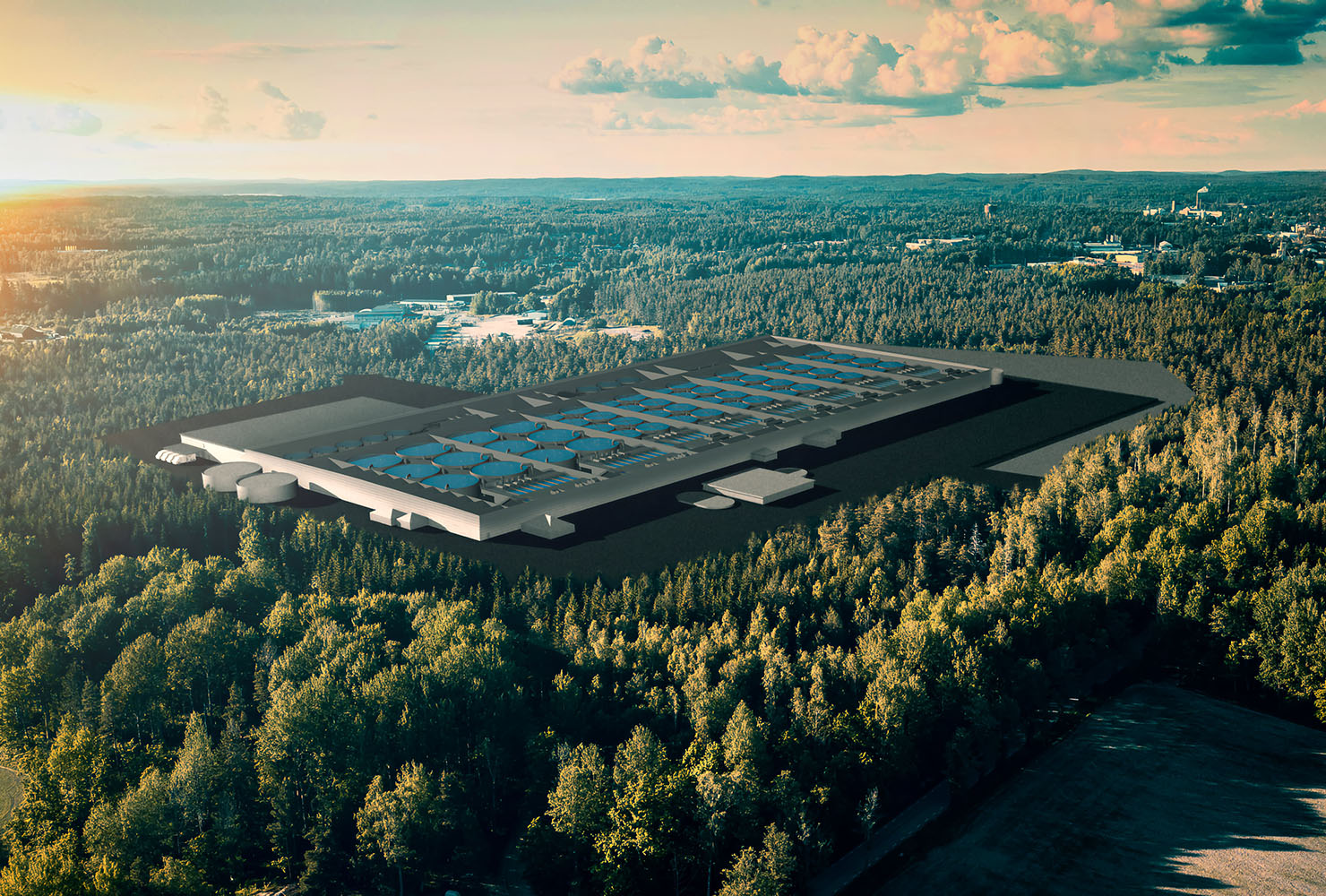
Magnora Data Center is exploring a data centre development alongside Reocean’s proposed land-based salmon farm in Säffle, Sweden, with the possibility of transferring heat from computing equipment into the aquaculture operation.
The potential collaboration was reported on 13 November by Sveriges Radio P4 Värmland. Magnora’s Swedish business is examining the opportunity, while Reocean has described the proposed cooperation as a milestone in its development plans.
Both projects remain at an early stage. No data centre capacity, electricity connection agreement, construction programme, or investment decision has been confirmed for the proposed computing facility.
Reocean has also emphasised that the prospective data centre would not change its underlying ambition to develop a land-based salmon farm. The two developments would therefore remain separate industrial activities, potentially connected through shared energy infrastructure.
The proposed data centre could generate approximately 25 to 30 permanent jobs and another 100 positions during construction, according to the local reporting. These remain preliminary estimates rather than contractual commitments.
Peter Nygren, who leads Magnora’s Swedish operations, has argued that the proposed data centre would not increase electricity prices. However, the available reporting does not identify the power capacity sought, the proposed connection arrangements, or the electricity procurement strategy necessary to assess that claim.
Magnora develops data centre projects across several European markets, concentrating on securing suitable land, power infrastructure, and permissions before facilities enter construction or operation.
The company is separately progressing a proposed 60MW facility in Hyltebruk, where the municipality granted a building permit in October. That project is distinct from Säffle, and its planned electrical and computing capacity should not be attributed to the potential aquaculture development.
Connecting computing with aquaculture
Reocean’s plans for Säffle involve a large-scale land-based salmon farming facility using recirculating aquaculture technology. The approach relies on treating and circulating water through a controlled production environment rather than continuously replacing large volumes of water from an external source.
The European Investment Bank previously backed the aquaculture project through a SEK530m financing arrangement agreed in 2022. The original development plans envisaged eventual production of approximately 10,000 tonnes of salmon annually.
Those historical plans provide context for the potential scale of the aquaculture operation but do not establish its present construction status or current delivery timetable. The farm remains described as proposed in the latest local reporting.
Recirculating aquaculture systems require pumps, filtration equipment, oxygen management, water treatment, and temperature control. Water conditions must be maintained within ranges appropriate to the species and production stage.
Temperature management can create demand for useful thermal energy. That requirement provides a possible connection with a data centre, where electricity consumed by servers and supporting computing equipment ultimately becomes heat.
The practical arrangement would depend on the operating temperatures of both systems. A data centre cooling circuit must remove heat from electronic equipment, while the aquaculture installation requires water temperatures suitable for maintaining fish health and controlling biological processes.
Transferring energy between the two would require an engineered connection, likely involving heat exchangers that keep the cooling fluid used by the computing equipment separate from water circulated through the fish production system.
If the recovered heat is below the required aquaculture temperature, heat pumps could raise its temperature. Such an arrangement would consume additional electricity and introduce further mechanical plant, controls, and maintenance requirements.
Neither Magnora nor Reocean has disclosed a proposed heat transfer capacity, cooling technology, supply temperature, or expected annual quantity of useful heat.
The potential energy benefit therefore cannot yet be quantified. A suitable heat customer has been identified in principle, but the design has not progressed far enough to establish whether a substantial proportion of the data centre’s heat could be absorbed throughout the year.
Power requirements and project dependencies
The proposed pairing would also require the two projects’ development programmes to be coordinated. An aquaculture installation cannot rely on recovered data centre heat until the computing facility has been built, connected to electricity, and brought into operation.
Similarly, a data centre designed around an external heat customer needs to accommodate periods when that customer cannot use the available thermal energy. Alternative heat rejection arrangements may be necessary to maintain reliable computing operations.
Those requirements would influence the mechanical design and capital cost of the project. Pipework routes, heat exchangers, pumping systems, control equipment, backup arrangements, and responsibility for maintaining the connection would all have to be established.
The electricity requirement also remains unresolved. Recovering useful heat would improve the utilisation of energy already consumed by the computing equipment, but it would not eliminate the electricity needed to operate the facility.
The eventual grid connection would have to accommodate the data centre’s computing load and supporting systems, including cooling, electrical losses, and auxiliary equipment. Additional electricity could also be required if heat pumps were used to supply the aquaculture operation.
While Magnora has progressed land and permitting activities at other Nordic sites, the Säffle proposal has not yet reached a publicly confirmed equivalent development milestone.
Its possible contribution to the salmon farm would depend on technical feasibility, commercial agreements, the status of Reocean’s investment, and the availability of electricity infrastructure.
The collaboration adds another potential industrial use for recovered computing heat in Sweden, where relatively cool operating conditions and existing energy infrastructure can support heat recovery projects. Whether Säffle develops into a functioning integrated site will depend on the two businesses establishing a viable engineering and commercial arrangement.

