
Summary
- Microsoft is progressing a proposed data centre on the former Langley Business Centre site in Slough.
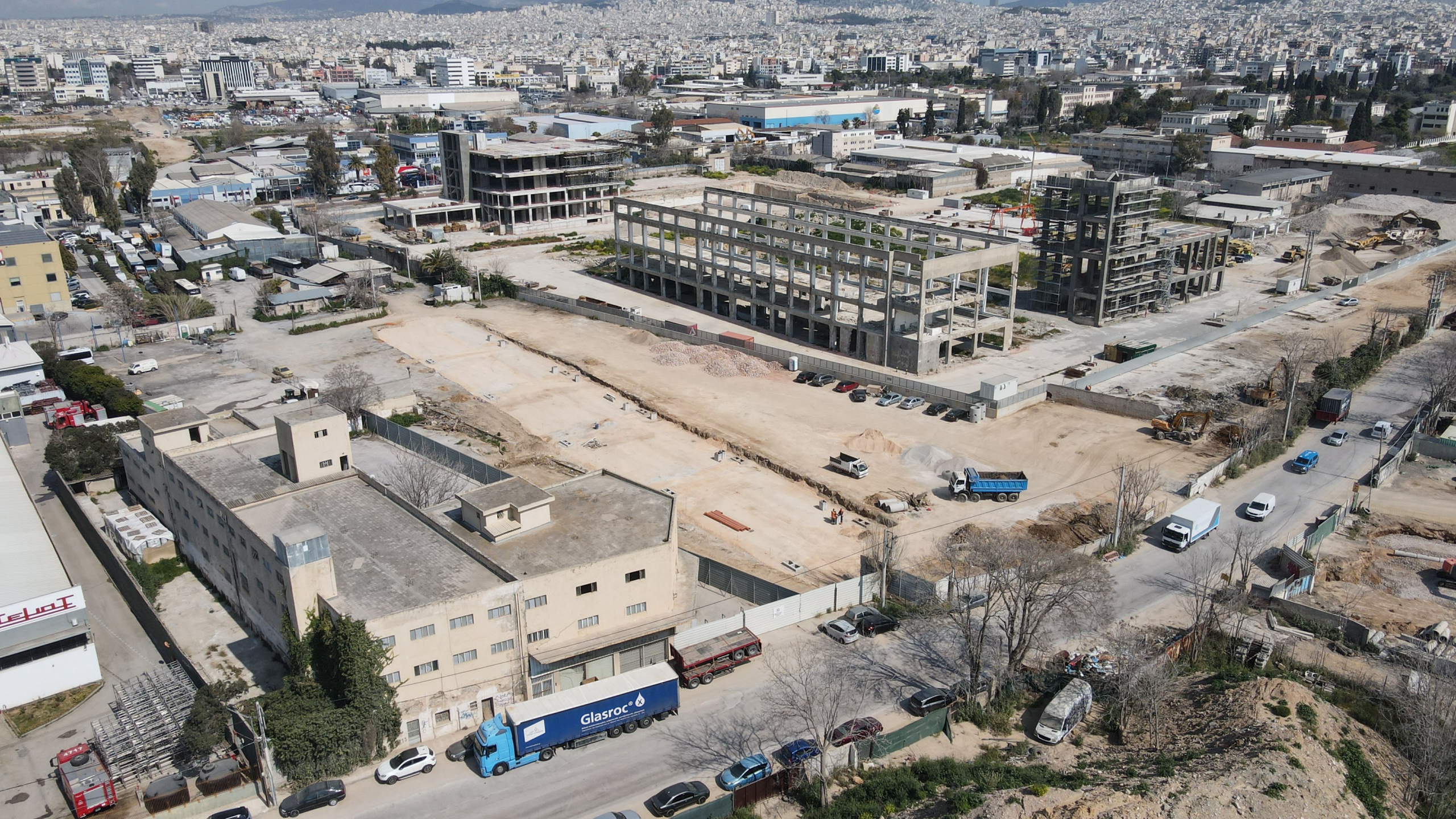
- The site already received outline permission for data centre use in 2020 and is undergoing clearance work.
- Noise, air quality, visual effects, traffic, and local opposition will form part of the planning process.
Microsoft is preparing planning applications for a data centre on the former Langley Business Centre site in Slough after completing another round of local consultation.
The company expects applications to be lodged this autumn for the Station Road site, extending a development process that has already included community sessions in July and September.
Microsoft’s own project information says the land received outline planning permission for a data centre in 2020 and is currently being cleared ahead of potential development. Contractor Coleman’s is carrying out the clearance work.
The next planning stage is expected to include assessments covering noise, air quality, visual effects, traffic, and other environmental issues associated with the proposed facility.
Local opposition has also developed around the project. A petition calling for a pause on new data centre development in the area pending further review has attracted more than 600 signatures, according to local reporting.
Slough is already one of the UK’s most established data centre locations. Its concentration of facilities reflects proximity to London, strong fibre connectivity, an established industrial base, and existing electricity infrastructure, but that history also means new developments enter a market where grid capacity and local planning effects are closely scrutinised.
The Langley site illustrates one way hyperscale operators are trying to expand within mature markets: reuse land that already carries a history of data centre consent rather than start with an entirely new planning case.
Outline permission does not remove the need to resolve detailed design and environmental questions. Modern hyperscale and AI-oriented facilities can have different power densities, cooling arrangements, generator requirements, building massing, and operating profiles from schemes envisaged several years earlier.
Noise is one of the most persistent local design issues. Cooling plant, transformers, generators, and other mechanical and electrical equipment have to operate within planning limits while providing enough redundancy for continuous service.
Air-quality assessment can also become significant where diesel generators are installed for standby power. Although they may operate mainly for testing and emergencies, the aggregate capacity of generator fleets at large campuses can require detailed modelling.
The Slough proposal also sits within Microsoft’s wider UK infrastructure expansion. Cloud and AI demand are increasing the company’s requirement for computing capacity, but each additional region or campus depends on planning approval, electricity availability, network connections, and construction delivery.
That combination is producing more public scrutiny of data centre development across the UK. Large facilities have historically been treated as specialist industrial or commercial buildings, whereas their scale and electricity requirements are increasingly pulling them into wider debates over planning, power infrastructure, water, and land use.
Microsoft has continued to argue that data centres support everyday digital services and the wider UK economy. The planning process in Langley will have to translate that broad case into a site-specific assessment of the building, infrastructure, and local effects.
The former business-centre site therefore has an advantage in its existing planning history, but the material milestones are still ahead: submission of the detailed applications, determination by the planning authority, and confirmation that the necessary utility capacity can support the final design.

