
Summary
- Microsoft reportedly paid €44 million for 37.5 hectares beside its existing Middenmeer data centre estate.
- The agricultural plot lies near planned TenneT substation and 380kV infrastructure but has no approval for data centre development.
- The purchase provides long-term expansion options, although zoning, grid delivery, and local consent remain unresolved.
Microsoft has acquired 37.5 hectares of agricultural land beside its data centre estate at Middenmeer in the Netherlands, adding another large plot close to proposed high-voltage infrastructure in one of Europe’s most constrained digital infrastructure markets.
Dutch land-registry records indicate that the company paid €44 million for the site, which lies near an area where TenneT is planning substation infrastructure associated with a proposed 380kV transmission route. Microsoft has reportedly applied for a grid connection, although that application remains within the connection queue.
The purchase does not amount to an approved data centre development. Microsoft has said it has no current construction plan for the land, while the municipality of Hollands Kroon has confirmed that the plot remains designated for agriculture and greenhouse horticulture. No application to change its use has been submitted.
Land ownership secures an option, not capacity
Although the plot sits close to an established data centre campus and prospective transmission assets, several stages separate land acquisition from an operational facility. Rezoning, environmental assessment, connection studies, network reinforcement, planning consent, equipment procurement, and community engagement could all alter the scale or programme of any future development.
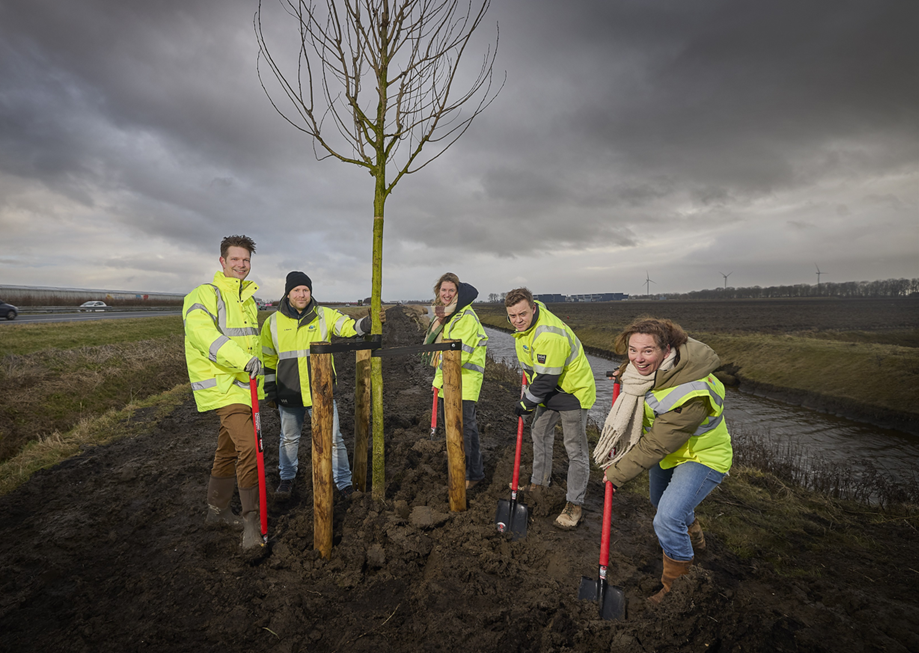
Microsoft already operates at the Agriport business estate and is progressing a separate expansion of its established Middenmeer campus. Landscaping began on part of that programme in February 2026, when trees were planted before the start of the main construction works, following an information event held for local residents in December.
The newly acquired plot appears to sit outside the development currently described by the company. It follows Microsoft’s purchase of another parcel of around 50 hectares in the area during 2025, extending its land position around an operating campus and infrastructure that could support later phases.
A large campus requires more than space for data halls. Substations, transformers, generators, cooling plant, drainage systems, security setbacks, construction compounds, service roads, and possible heat-recovery infrastructure can occupy a substantial proportion of the site, while additional land allows capacity to be delivered in stages as customers and network connections become available.
The reported purchase price reflects the value attached to land with a plausible route to high-voltage electricity, even before planning certainty has been secured. Proximity to TenneT infrastructure strengthens the site’s development potential, but it does not guarantee a connection offer, sufficient firm capacity, or an energisation date.
Dutch expansion remains tied to network delivery
The Netherlands remains one of Europe’s largest data centre markets, yet electricity congestion now governs where new capacity can be delivered and how quickly it can enter service. North Holland’s network must accommodate housing, industrial electrification, renewable generation, transport, and other large loads alongside further data centre demand.
A hyperscale campus can require hundreds of megawatts across its final build-out, which means connection studies must account for both the first operating phase and later halls. Early land assembly can preserve a developer’s options, although a portfolio of uncommitted projects can also make it harder for network planners to distinguish probable demand from capacity that may never be used.
Planning authorities face a related problem. Until a detailed proposal enters the formal process, they cannot assess traffic, noise, visual impact, water requirements, generator emissions, biodiversity measures, drainage, or the number and quality of permanent jobs attached to the development.
Microsoft’s current campus programme has placed visible emphasis on landscape design and engagement with nearby communities. The company began planting before construction and has said that new buildings will be integrated with the open polder landscape, but those measures apply to the existing expansion rather than the newly purchased agricultural plot.
TenneT’s planned infrastructure has its own design, permitting, land-rights, procurement, and construction sequence. Large transformers, high-voltage switchgear, overhead-line equipment, and protection systems carry long manufacturing periods, while transmission projects can encounter route and environmental delays independently of the customer development.
Microsoft has therefore secured strategic land rather than immediately deliverable capacity. A future project would still need a viable planning route, sufficient network capacity, detailed infrastructure proposals, and an agreed development programme before the site could move beyond long-term optionality.

