
Summary
- Nebius will deploy 22MW of AI infrastructure at Kao Data’s Harlow campus under a 10-year agreement.
- The deployment will host Nebius AI Cloud and its Token Factory managed inference service.
- Kao Data says the campus uses renewable power, HVO-supported backup, and direct-to-chip liquid cooling.
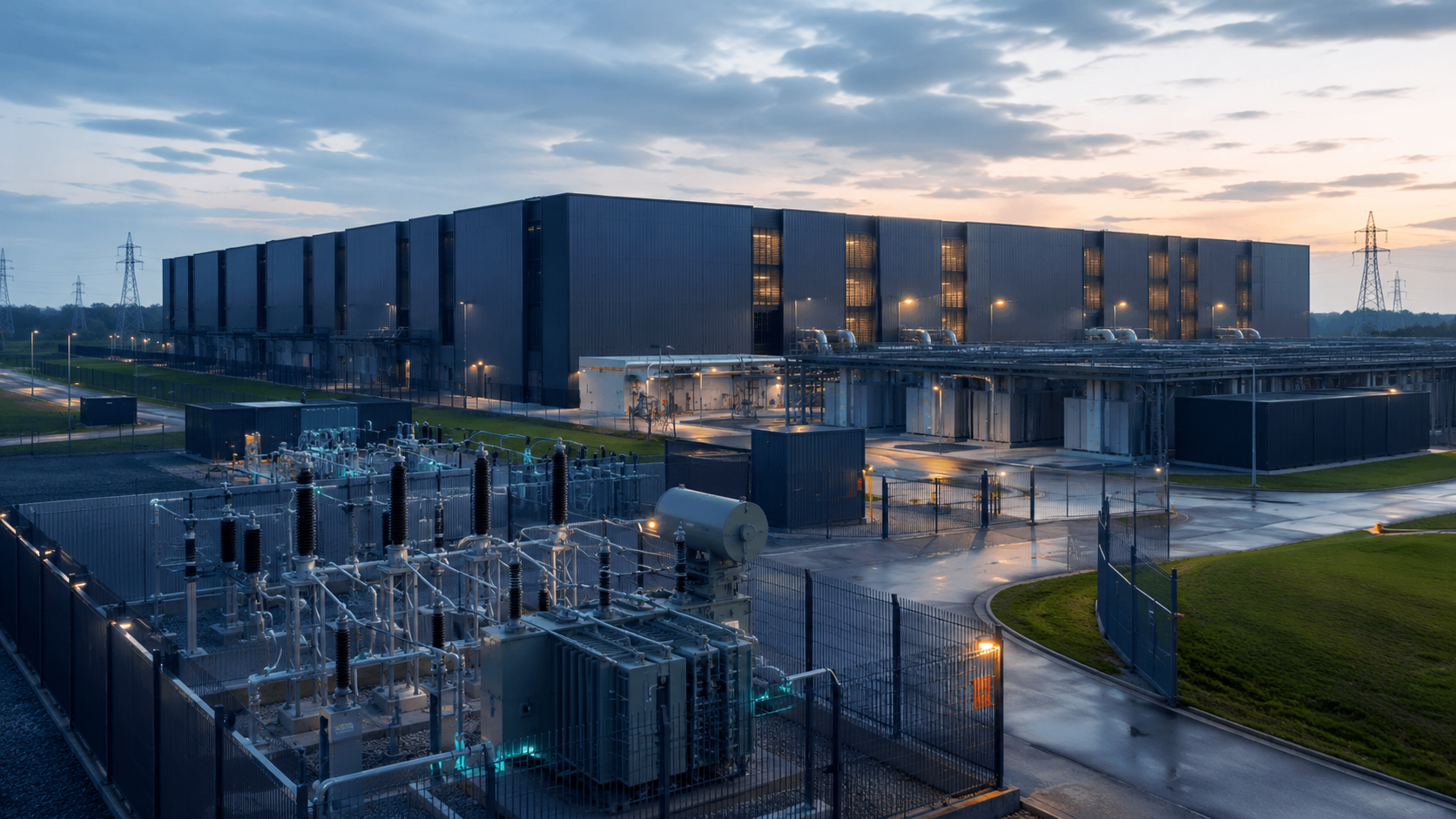
Nebius has signed a 10-year agreement for 22MW of AI infrastructure capacity at Kao Data’s Harlow campus in Essex.
The deployment will host Nebius AI Cloud and Nebius Token Factory, its managed inference service for production-scale AI model deployment. The agreement forms part of Nebius’s wider £1.7bn UK investment plan, which includes three Nvidia infrastructure deployments expected to reach 65MW when fully ramped in 2027.
Kao Data says the Harlow campus is engineered for AI, high-performance computing, academic research, enterprise workloads, and GPU-accelerated systems. The company says the campus is powered by 100% renewable energy, supported by HVO-powered generators, and that its KLON-03 facility uses direct-to-chip liquid cooling to reduce water use.
The deal adds another large AI customer to the UK colocation market and reinforces Harlow’s role as a specialist compute location rather than a conventional enterprise data centre cluster.
Inference brings persistent demand
AI infrastructure demand is often discussed through model training, but inference is becoming a major capacity driver. Once models move into production, they require persistent, scalable, and reliable compute. That creates a different operating profile from experimental workloads or traditional enterprise IT.
Nebius Token Factory is designed for production inference, which gives the Kao deployment a sharper operational profile. Inference economics depend on serving large volumes of requests at predictable cost, so power density, hardware utilisation, cooling efficiency, and network performance all feed into the commercial model.
The cooling details are therefore central to the deal. GPU-heavy deployments can push rack densities beyond the range that conventional air-cooled halls handle comfortably. Direct-to-chip liquid cooling removes heat closer to the source, allowing higher densities and reducing the burden on air systems. It also requires tighter operational control around fluid systems, maintenance, leak detection, commissioning, and hardware compatibility.
Kao’s renewable power and HVO-supported backup add a sustainability layer, but the harder test is operational. Dense AI infrastructure needs cooling systems that can support the load without excessive water use, unstable thermal performance, or lengthy commissioning delays.
UK AI capacity becomes physical
The UK government’s AI Opportunities Action Plan has pushed domestic compute capacity up the policy agenda. Commercial agreements such as Nebius and Kao Data show how that ambition is being translated into demand for megawatts, data halls, liquid cooling, and resilient operations.
Policy goals will not build AI capacity without sites that can be powered and cooled. A 22MW deployment needs grid capacity, electrical distribution, standby power, fibre, security, building management systems, and experienced operations teams. It also relies on supply chains for transformers, switchgear, generators, cooling plant, racks, and network equipment.
Harlow has advantages because it is an established specialist campus. That reduces some delivery risk compared with a new-build site, although it does not remove the pressure created by accelerated AI demand. Large customers are increasingly seeking long-term capacity blocks, liquid-cooling readiness, and expansion options before other buyers can absorb them.
For colocation providers, the Nebius agreement defines the competitive requirement more clearly. AI customers are not leasing generic white space. They are buying a platform: power density, cooling architecture, sustainability credentials, low-latency connectivity, operational reliability, and a route to scale.
The UK’s compute ambitions will depend on how many sites can meet that specification. Harlow’s 22MW commitment is one part of the build-out. The wider market still has to overcome grid access, planning, equipment lead times, and local resilience constraints before enough similar capacity can be delivered.

