
Summary
- NexGen Cloud has launched EU2 in Oulu with Nordic infrastructure operator GleSYS, following its existing region in Sweden.
- The company intends to deploy thousands of liquid-cooled Nvidia Blackwell GPUs across 8MW of initial capacity by Q2 2027.
- NexGen also plans more than 20,000 GPUs across Europe during 2027, but that target does not represent currently operating hardware.
NexGen Cloud has launched its second European AI cloud region in Oulu, Finland, beginning a phased deployment expected to bring thousands of liquid-cooled Nvidia Blackwell GPUs online across 8MW of initial infrastructure capacity by the second quarter of 2027.
The EU2 region has been developed with Nordic cloud and data centre operator GleSYS. Its launch provides NexGen with a second European service location alongside its existing EU1 region in Falkenberg, Sweden, which reached full capacity during its first year of operation.
NexGen says the initial Finnish allocation was largely reserved before launch, with capacity also being retained for customers using its Hyperstack On-Demand service. The company intends to support dedicated enterprise deployments alongside customers requiring shorter commitments for accelerator access.
The 8MW figure describes the planned initial capacity associated with the Finnish expansion. NexGen has not provided a separate breakdown establishing how much electrical load has already been commissioned, how many GPUs are currently installed or the amount of computing capacity available for immediate production use.
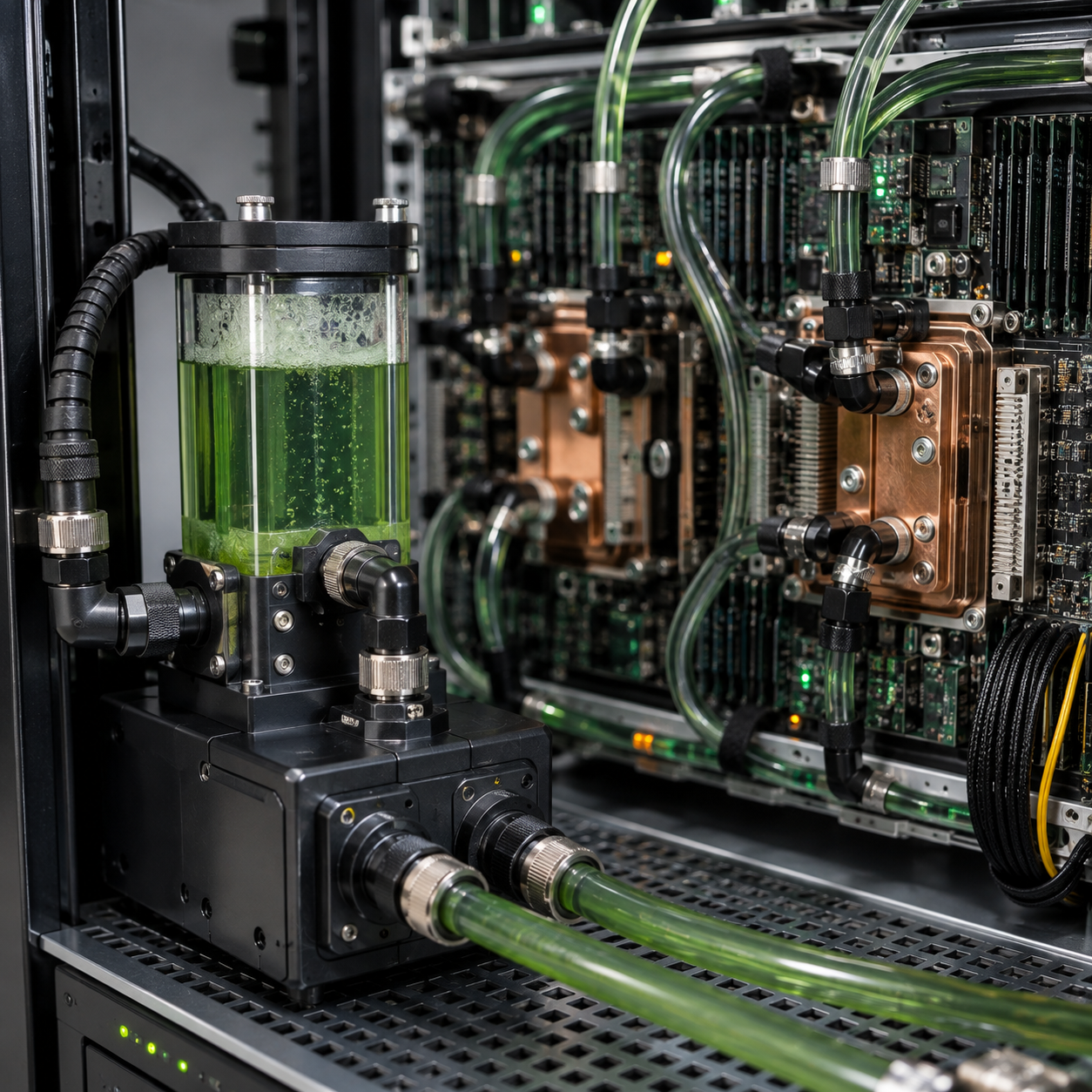
Hardware for the new region is being supplied by Supermicro and configured around Nvidia reference architectures. The planned installation will use liquid cooling, reflecting the thermal requirements of densely configured accelerator systems.
The company has also appointed Dan Thomas, formerly vice-president of AI infrastructure and operations at Nscale, as chief infrastructure officer. He will oversee infrastructure development, GPU deployments, networking, storage and operating reliability across NexGen’s expanding estate.
Cooling and networking determine deployment capacity
Large accelerator installations require electrical and mechanical systems capable of supporting sustained computing loads. The power consumed by processors, memory, networking equipment and storage ultimately becomes heat that must be removed to maintain acceptable operating temperatures.
Direct liquid cooling transfers heat from selected computing components into circulating coolant, allowing thermal energy to be moved towards the facility’s heat rejection infrastructure. The design depends on compatible equipment, suitable temperatures and sufficient flow through the cooling circuits.
Liquid cooling can accommodate heat loads that would be difficult to manage using conventional room airflow alone. It also introduces additional equipment, including coolant distribution units, pumps, heat exchangers, valves, monitoring systems and pipework.
These components need to function together. A server configuration requiring particular coolant temperatures or pressures may not be compatible with a facility cooling circuit unless the necessary distribution and control equipment is installed.
Commissioning must therefore establish how the cooling system behaves under different computing loads and credible failure conditions. The availability of electrical power and rack space does not necessarily mean the installation is ready to accommodate its planned accelerator population.
Networking creates another constraint. AI clusters can exchange substantial volumes of information between accelerators, and performance may depend on the available bandwidth and latency between computing nodes.
A cluster with sufficient processing capacity can deliver disappointing performance if communication between components becomes a bottleneck. The supporting switches, network interfaces, optical connections and software therefore need to be designed around the workloads being deployed.
Storage systems must also accommodate data movement associated with training and inference. Large training jobs may require repeated access to datasets and periodic checkpointing, while inference services need dependable access to model data and supporting information.
Bringing these systems online involves staged equipment installation, network configuration, cooling verification and acceptance testing. NexGen’s planned completion date of Q2 2027 allows for those activities as the region expands.
European deployment extends beyond hardware supply
NexGen offers Secure Private Cloud environments for dedicated customers and on-demand GPU access through Hyperstack. Both services depend on the same underlying physical infrastructure, but their commercial arrangements and resource allocation requirements differ.
Dedicated environments can provide customers with reserved hardware and greater control over how their computing resources are configured. On-demand services allow smaller organisations to obtain accelerator access without committing to an entire cluster over an extended period.
Operating both models requires capacity planning. Equipment reserved for a dedicated customer cannot necessarily be reassigned to another workload, while on-demand services need enough available resources to accommodate demand without undermining contractual commitments.
The Finnish region will use renewable electricity, according to NexGen. That procurement arrangement does not establish the facility’s annual power usage effectiveness, hourly carbon intensity or water consumption, which depend on the operating conditions and the associated energy supply.
The company is targeting more than 20,000 deployed GPUs across Europe during 2027. The ambition extends beyond EU2, but it remains a future deployment target rather than a confirmed inventory of operational equipment.
Earlier in November, NexGen secured $106m in financing for GPU infrastructure intended for Finland. That agreement covered specified hardware purchases backed by contracted customer demand, rather than establishing that the equipment had completed installation.
Financing, hardware delivery and operational commissioning are separate stages. A customer commitment can support investment, but the computing service still requires electricity, cooling, networking, software configuration and acceptance testing before contracted workloads can operate.
Dan Thomas’s appointment adds responsibility for coordinating those functions across the business. NexGen’s UK network operations centre is intended to support the running of its infrastructure, although faults involving physical equipment may still require intervention at the relevant data centre.
EU2’s launch establishes a new Finnish service region and a programme for further installations. The next measurable milestones will be the number of GPUs commissioned, the amount of available customer capacity and completion of the initial 8MW deployment planned for Q2 2027.

