
Summary
- Nscale has brought its first Nvidia Vera Rubin NVL72 systems online, using Dell PowerEdge XE9812 servers with 72 Rubin GPUs and 36 Vera CPUs per compute rack.
- Dell’s integrated networking rack incorporates eight Spectrum-6 switches, power distribution, controls and direct liquid cooling.
- The companies have not disclosed the installation location, number of operating racks or electrical capacity; further deployment is planned over the coming months.
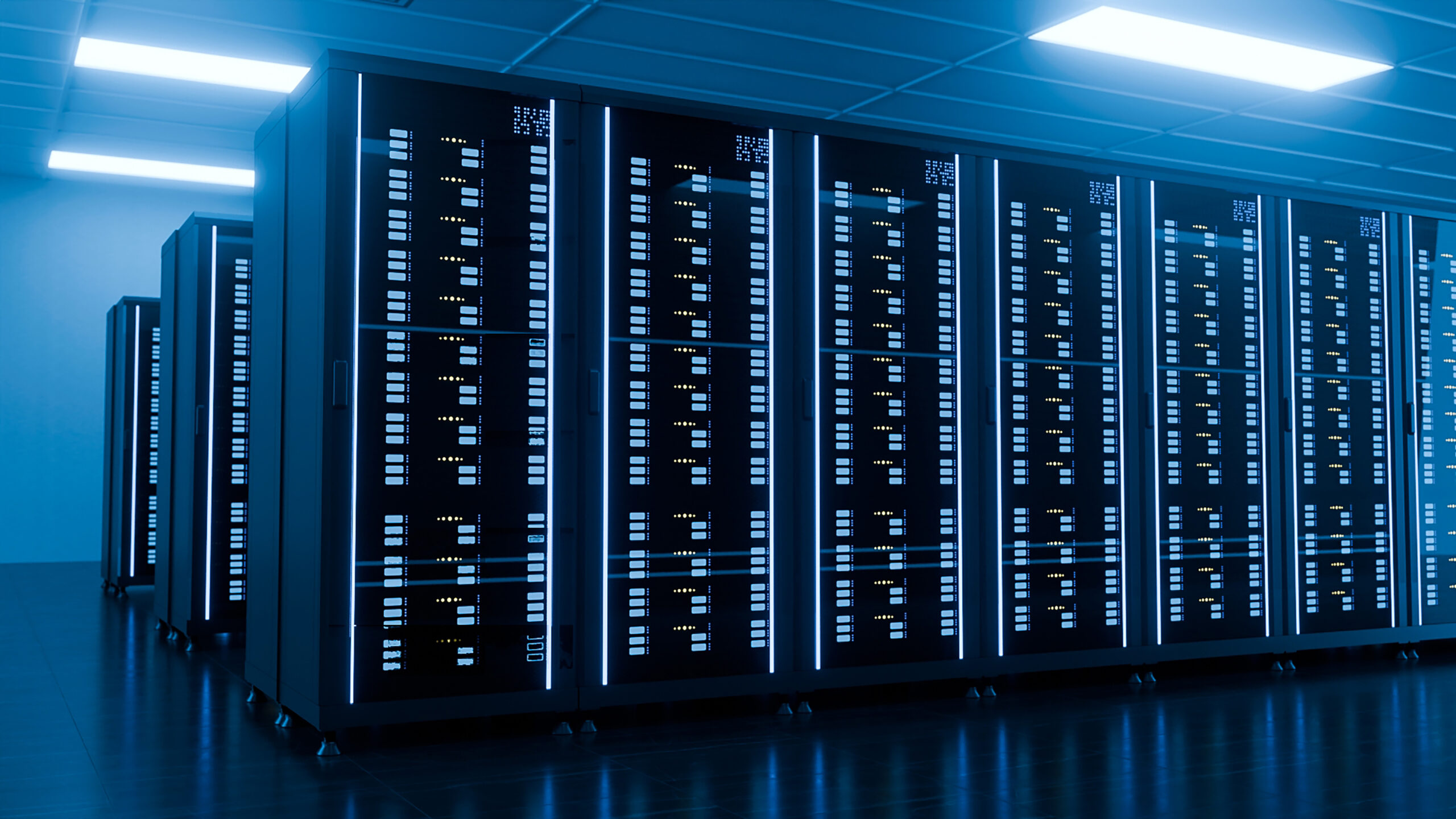
Nscale has brought its first Nvidia Vera Rubin NVL72 computing systems online, combining rack-scale AI hardware with factory-integrated networking equipment supplied by Dell Technologies.
The UK-headquartered AI infrastructure company confirmed the milestone on 18 November, marking the beginning of a wider rollout of the new computing architecture. The installation uses Dell PowerEdge XE9812 servers based on Nvidia’s Vera Rubin NVL72 design.
Each NVL72 computing rack incorporates 72 Nvidia Rubin graphics processing units and 36 Vera central processing units, with high-speed interconnections intended to allow the components to operate together on demanding computing tasks.
Nscale has also introduced Dell PowerRack for Networking equipment with integrated liquid cooling, switching, power distribution and management components. The networking racks are assembled and validated at the factory before shipment to the customer environment.
The companies have not identified the location of the first operating systems, disclosed the total number of racks installed or provided an electrical capacity figure for the deployment. The announcement therefore cannot be treated as confirmation of additional commissioned megawatts at a particular UK or European data centre.
Further systems are expected to enter operation over the coming months. Nscale intends to manage the resulting infrastructure through a common operating platform covering its wider computing fleet.
Processor performance depends on the network
Rack-scale AI systems bring substantial processing capacity into a closely integrated hardware configuration. Their performance depends not only on the number of accelerators installed but also on how effectively information can move between them.
Distributed workloads can require processors to exchange intermediate results repeatedly. Delays in transferring that information can reduce the amount of useful calculation completed, even when individual accelerators remain powered and operational.
Nvidia’s architecture uses NVLink for high-speed communication inside the computing rack and Ethernet-based networking between racks. The two layers have different functions and must be coordinated when multiple systems operate as part of a larger cluster.
Connections within a rack support exchanges between its components, while the external network connects additional computing racks, storage infrastructure and other services required by the workload.
Dell’s networking equipment is intended to support that inter-rack traffic. The IR9148 configuration contains eight PowerSwitch SN6600-LD switches based on Nvidia Spectrum-6 technology, with associated fabric connections and controls.
Dell specifies more than 819 terabits per second of aggregate switching capacity for the eight-switch networking rack. This is a manufacturer-rated aggregate figure, not a measurement of data transfer achieved by an Nscale customer application.
The throughput available to a particular workload depends on network configuration, the number and characteristics of connected systems, traffic patterns and software behaviour.
Switching capacity can also differ from usable bandwidth across external network connections. A system with a high internal forwarding capability may still encounter constraints elsewhere in the computing or storage environment.
Deploying a complete network fabric therefore requires attention to both the switching hardware and the optical or electrical connections linking the equipment.
Factory integration reduces on-site assembly
Dell’s PowerRack combines switches, cabling, power distribution, cooling and management components within a factory-assembled configuration. Its intended advantage is the reduction of equipment assembly and integration work after delivery.
Factory validation can confirm selected aspects of component compatibility and system operation before the rack reaches the data centre. The supplier can test equipment and cabling within a controlled environment rather than relying entirely on installation activities at the final site.
This does not remove the need for site commissioning. The delivered rack must be connected to the facility’s power supply, network fabric and cooling infrastructure, with appropriate checks before customer workloads are introduced.
Direct liquid cooling moves heat from components into a circulating coolant. The rack’s thermal system must then transfer that energy into the facility cooling arrangement, which is responsible for rejecting the heat.
In-rack coolant distribution equipment, connections and controls must operate within the temperatures, pressures and flow rates required by the installed hardware.
Compatibility with the wider cooling system becomes particularly important when equipment is added to an existing data hall. A facility may have sufficient floor space and electricity capacity while lacking the liquid cooling infrastructure needed by a new rack configuration.
Cooling arrangements also affect maintenance. Equipment must be accessible for repair, and the system requires procedures for isolating components, managing coolant and responding to changes in operating conditions.
Power distribution must similarly accommodate the installed load and the facility’s resilience requirements. Manufacturer specifications provide inputs for that assessment, but the electrical capacity of Nscale’s initial deployment has not been disclosed.
Fleet management supports further deployments
Nscale intends to manage the new computing systems through its Fleet Operations platform. The software covers configuration, testing, monitoring, repairs and equipment retirement across the company’s infrastructure.
Fleet-level visibility can help an operator distinguish available computing resources from equipment undergoing maintenance or investigation. Such information is important when customer workloads depend on clusters distributed across multiple installations.
The platform also supports monitoring during initial hardware testing, when systems must be checked before entering normal production service. Equipment may be physically installed without being available to customers until these procedures have been completed.
Automation can assist with configuration and observability, but it does not eliminate physical maintenance or the need to verify faults affecting cooling, electrical equipment or networking.
Nscale’s 18 November announcement establishes that its first Vera Rubin systems are running and that Dell’s integrated networking design has entered production use. The scale and geographical distribution of the rollout will become clearer when the company provides confirmed installation locations, operating rack counts and associated infrastructure capacity.

