
Summary
- NVIDIA's DSX POD architecture moves rack integration, cabling, liquid cooling connections, and functional validation into factory-built containers.
- NVIDIA claims installation at a prepared site can fall from six months to as little as 14 days, excluding wider site development and electricity connection works.
- Manufacturing partners are targeting deliveries from early 2027; customer deployments and independently measured construction savings remain unconfirmed.
NVIDIA has introduced a factory-built data centre architecture designed to reduce the time required to install and commission large AI computing systems, moving substantial electrical, mechanical, and network integration work away from construction sites.
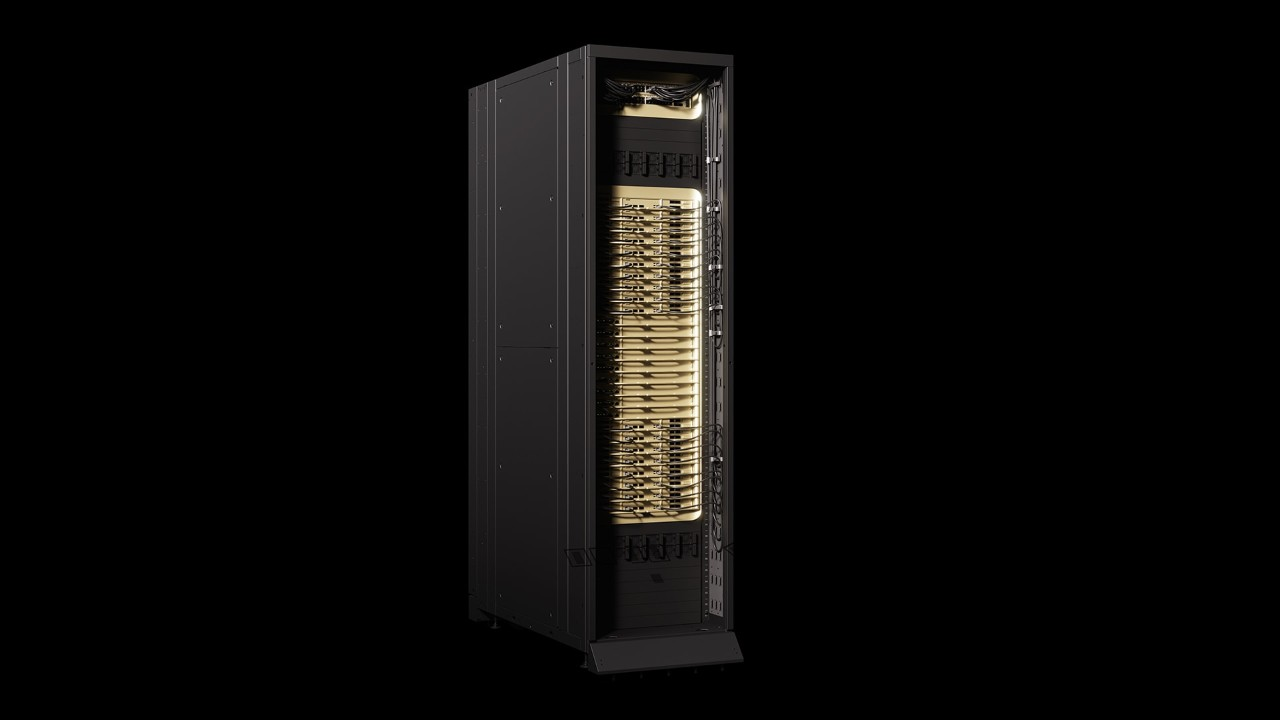
The DSX POD reference design, announced at GTC Berlin on 21 October, combines NVIDIA Vera Rubin computing equipment with associated power, cooling, and networking infrastructure in modular containers assembled and tested before delivery.
NVIDIA claims the approach can shorten deployment at a prepared site from approximately six months to as little as 14 days. Its partners are targeting deliveries from early 2027, although the company has not identified a completed commercial installation demonstrating that timetable.
The comparison applies to a site where the necessary external infrastructure is already available. It does not mean that land acquisition, planning, electrical connections, building preparation, and complete data centre commissioning can all be accomplished in two weeks.
DSX POD builds on NVIDIA’s wider DSX infrastructure framework, defining how rack-scale computing systems can be integrated with the engineering equipment needed to operate them.
Traditional deployment approaches can involve transporting racks and individual components to a data centre, where technicians complete network cabling, power connections, cooling installation, controls, and much of the systems testing.
NVIDIA’s proposed architecture shifts a substantial part of this work into manufacturing facilities. Partners can install computing equipment, assemble internal pipework and wiring, configure supporting systems, and conduct functional tests before the completed units leave the factory.
The resulting containers are intended to arrive with a defined set of interfaces for electricity, cooling, networking, and supporting infrastructure. Site teams then connect them to the prepared external systems and complete the testing required for operation.
Each container must accommodate the physical requirements of Vera Rubin rack-scale hardware, including rack dimensions, weight distribution, service access, equipment restraint, cooling connections, and network cabling.
Transport creates additional engineering requirements because expensive computing systems remain installed inside the enclosures. Structural design, lifting points, mechanical restraints, and handling procedures must protect the equipment between factory validation and site delivery.
NVIDIA’s technical specification therefore includes inspection and quality checks before shipment, followed by verification after the containers arrive. These measures are intended to identify changes or faults introduced during transportation.
Electrical integration is based on a standard 800V DC input design at the boundary of the core computing containers. The architecture defines requirements for internal protection, distribution, grounding, rack connections, monitoring, and controls.
That standard interface does not prescribe how every facility must generate, procure, or deliver electricity to the site. External substations, grid connections, conversion equipment, and distribution networks must still be engineered for local requirements.
Regional electrical standards, utility arrangements, and equipment availability will influence those external systems. A factory-tested computing container cannot enter operation until the electrical infrastructure supplying it has been installed, tested, and approved for the intended load.
Liquid cooling is integrated through internal circuits connecting the installed racks to the container’s cooling interface. NVIDIA’s design covers pipe routing, manifolds, isolation equipment, instrumentation, leak detection, and maintenance access.
Manufacturing partners can assemble, flush, and pressure-test those circuits before shipment. This can reduce the number of cooling connections that must be completed in the field and provide an opportunity to identify faults before the equipment reaches the customer.
However, the cooling system still requires external infrastructure. The container must connect to prepared facility cooling equipment and heat rejection systems capable of removing the energy generated by its computing hardware.
Commissioning will be necessary to establish that the complete liquid circuit operates at the required temperatures, pressures, and flow rates. Factory testing of internal components does not replace those checks under the conditions found at the destination.
The reference design also covers network cabling and controls. Rack-to-rack connections, monitoring equipment, and selected configuration checks can be completed during manufacturing, while site teams must still establish connections to external networks and supporting services.
Preconfigured systems may reduce the number of specialist installation activities required after delivery. The commercial benefit depends on whether the factory-built units can arrive when the site infrastructure is ready and whether the final integration proceeds as planned.
Manufacturing and construction can take place in parallel. While containers are assembled and validated, a developer may prepare foundations, utility interfaces, network connections, and external cooling infrastructure.
This creates opportunities to shorten the overall project sequence, but the approach cannot eliminate delays caused by unavailable electricity connections, incomplete civil works, missing permits, or external equipment that has not been delivered.
NVIDIA has identified a global group of partners supporting the architecture, including Bull, Dell Technologies, HPE, Lenovo, Schneider Electric, Vertiv, Eaton, Crusoe, and several original equipment manufacturers and infrastructure specialists.
These organisations contribute different combinations of computing equipment, manufacturing, power systems, cooling, integration, and project delivery. The reference design establishes a shared architecture, while the final installation remains subject to the requirements of individual customers and sites.
The product is distinct from NVIDIA’s separate DSX announcements concerning dry cooling, power allocation, and grid-responsive computing. Those developments address facility energy management, whereas DSX POD concentrates on how integrated computing infrastructure can be manufactured, transported, and installed.
It also differs from Vertiv’s specific deployment programme at Polar Data Centers’ Herøya project in Norway. That initiative involves defined supplier equipment and a particular development, while DSX POD is a broader reference architecture intended for adoption by multiple partners.
NVIDIA has not published independently audited evidence establishing that the 14-day deployment target can be achieved across different climates, facility designs, and computing configurations. The timing is a supplier estimate and will depend on the project scope and readiness of the external infrastructure.
Partner deliveries are targeted for early 2027. The first customer installations will provide stronger evidence of the approach’s performance, including factory integration quality, transport reliability, installation duration, and the time required to bring computing systems into productive operation.

