
Summary
- Nscale is challenging NVE's enforcement order concerning surplus heat assessment.
- Its appeal centres on construction beginning in 2022, before the regulations took effect in April 2025.
- NVE has received the completed assessment and is reviewing both the document and the appeal.
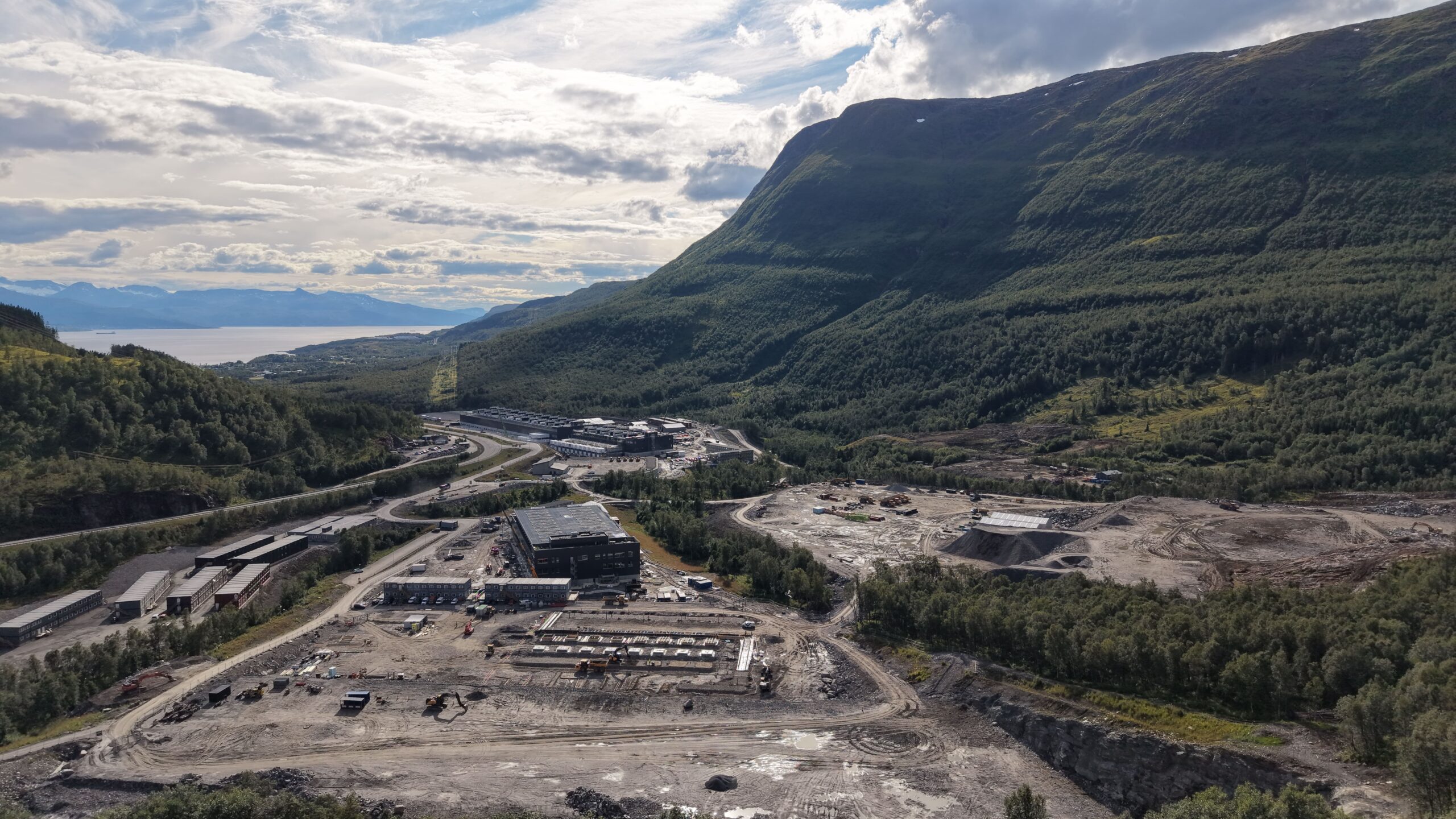
Nscale has appealed an enforcement order issued by Norway’s energy regulator over waste heat assessment at its Kvandal data centre in Narvik, arguing that construction began before the relevant legal requirements came into force.
The dispute concerns a requirement imposed by the Norwegian Water Resources and Energy Directorate (NVE) for a cost-benefit assessment examining whether surplus heat from the facility could be recovered and used elsewhere.
NVE issued a corrective order in September and warned that financial penalties could follow if the required analysis was not delivered by 15 November. Nscale has subsequently commissioned engineering consultancy Sweco to complete an assessment, which the regulator confirmed receiving before the deadline.
Despite providing the analysis, Nscale maintains that the enforcement order should be withdrawn. The company argues that physical construction activities began in 2022, before the current legal provisions entered into force on 1 April 2025.
The appeal therefore concerns whether the statutory requirement applies to the development in its present form, rather than simply whether the developer is willing to investigate heat recovery.
Norwegian reporting on 9 November also described Nscale’s objections to the regulator’s public handling of the case, including the language used when announcing the enforcement action.
NVE’s position is that developers of qualifying facilities must evaluate opportunities to use surplus heat before construction begins. The regulator regards that assessment as necessary to establish whether suitable recovery infrastructure can be incorporated into the original facility design.
Under section 7-2 of Norway’s Energy Act, data centres exceeding 2MW are subject to requirements for cost-benefit assessments of surplus heat utilisation. The regime also applies to certain other energy-intensive facilities and major upgrades.
NVE has identified 230MW of allocated network capacity for the Kvandal development, with a possible further expansion of 290MW. Those figures concern potential electrical supply and should not be interpreted as commissioned computing capacity or immediately available recoverable heat.
Heat recovery depends on more than electrical capacity
Data centre equipment converts most of the electricity it consumes into heat, which must be removed to maintain acceptable equipment operating conditions.
That energy can potentially be transferred into district heating systems, industrial processes, or other nearby uses, but its commercial value depends on several technical conditions.
The temperature of the available heat determines whether it can be used directly or requires additional equipment, such as heat pumps. Distance between the facility and potential customers also affects the capital and operating cost of distribution pipework.
Demand must be available when the data centre produces heat. A customer requiring seasonal heating will have a different demand profile from an industrial process operating throughout the year.
Cooling architecture introduces further differences. Liquid cooling can make it easier to collect heat from high-density computing equipment, although the temperature and quality of the recovered energy will depend on the system design.
For a large campus delivered in phases, an assessment may also need to account for changing operating loads as additional data halls enter service.
Nscale has expressed support for identifying potential heat reuse applications at Kvandal. However, completing a technical assessment does not establish that a district heating connection, commercial offtake agreement, or operational recovery system has been secured.
The early assessment requirement is intended to establish those opportunities before the physical layout and supporting infrastructure become difficult or expensive to alter.
Major changes to cooling plant, pipework, and building services after construction may introduce additional disruption and capital expenditure.
NVE has confirmed receiving an earlier draft assessment on 1 September and the completed material during the week preceding the latest reporting. The authority is now considering the submitted document alongside Nscale’s October appeal.
No final appeal determination has been reported. The outstanding decision will clarify how the regulator applies the waste heat assessment obligation to a development where construction began before the current rules but substantial computing infrastructure remains under development.

