
Summary
- NVIDIA Vera Rubin NVL72 systems and Vera CPUs are generally available through Oracle Cloud Infrastructure.
- Oracle identifies an initial availability programme involving 150,000 Vera CPUs.
- The companies intend to expand their infrastructure collaboration to multigigawatt scale, while HGX Rubin NVL8 remains a planned offering.
Oracle and NVIDIA have expanded their computing infrastructure collaboration, making Vera Rubin NVL72 systems and Vera CPUs generally available through Oracle Cloud Infrastructure while planning a substantial increase in future deployment capacity.
The companies intend to scale OCI Superclusters using Vera Rubin technology towards multigigawatt infrastructure deployments. That expansion remains a development programme rather than evidence that the full proposed electrical or computing capacity has been commissioned.
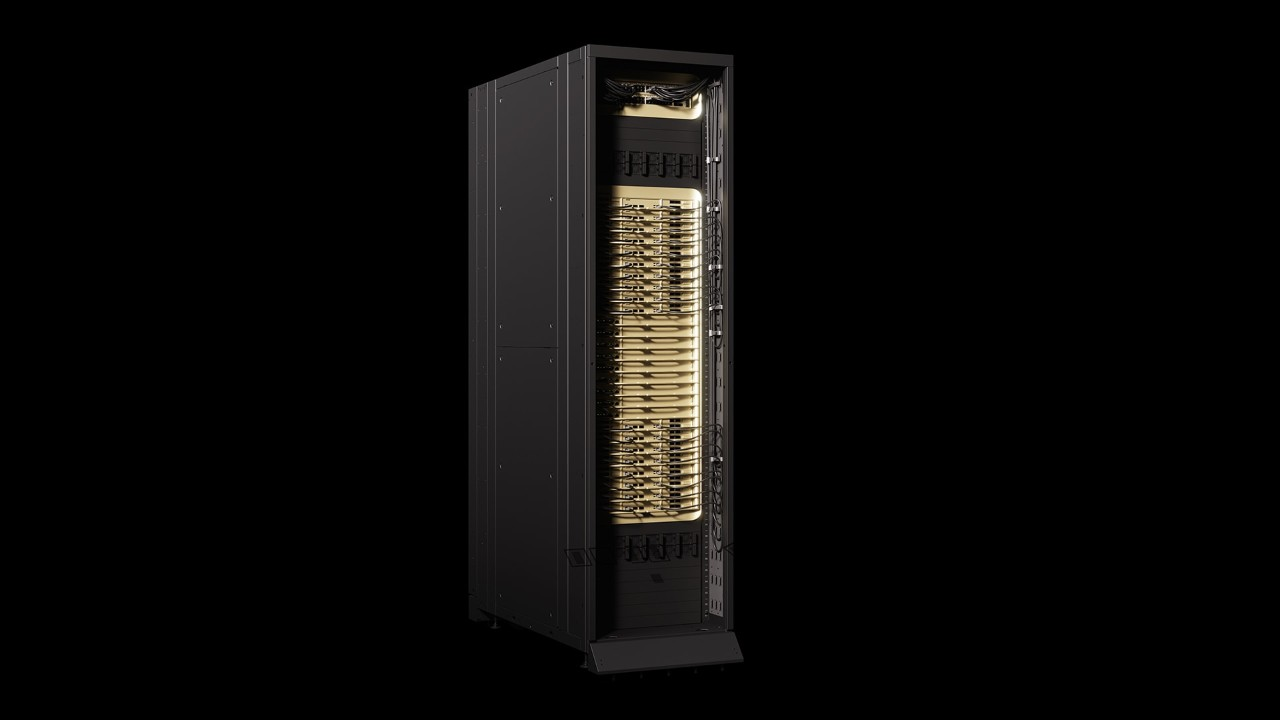
Vera Rubin NVL72 combines 72 GPUs connected through NVIDIA’s NVLink architecture within a rack-scale computing system. The arrangement is designed to provide substantial communication bandwidth between processors participating in large training and inference workloads.
Oracle’s infrastructure uses Acceleron networking alongside NVIDIA Spectrum-X Ethernet technologies, Spectrum-6 switches, and BlueField-4 data processing units to support connections between computing systems.
The combination of rack-level communication and larger network fabrics is intended to allow computing clusters to operate across substantial numbers of processors without allowing data movement to become an excessive constraint on utilisation.
Oracle is also making NVIDIA Vera CPUs available as a separate computing resource. The processors target work associated with AI applications that relies heavily on general-purpose computing rather than accelerator arithmetic.
These tasks include executing software tools, retrieving data, coordinating applications, and managing processing operations between model calls.
Oracle identifies an initial programme involving 150,000 Vera CPUs across its infrastructure regions. That figure describes the planned scale of the initial offering, rather than confirming that every processor has already entered service at a particular data centre.
Vera CPUs use NVIDIA’s Olympus cores and a high-bandwidth memory architecture designed to support concurrent workloads. Each processor incorporates 88 cores and 176 threads, with a high-bandwidth memory subsystem designed for these workloads.
These characteristics are intended to support applications in which individual software operations and access to data contribute significantly to the time required to complete a larger AI task.
Separating CPU and GPU resource allocation can also improve the balance of infrastructure assigned to a workload. Some operations require substantial accelerator capacity, while others may leave those accelerators underused if insufficient CPU resources are available.
The ability to scale the two processor types independently can reduce some of that imbalance, although the benefit depends on how workloads are organised and scheduled.
Oracle also intends to introduce NVIDIA HGX Rubin NVL8 systems. These will provide an eight-GPU configuration using x86 host processors, creating a smaller deployment option than the NVL72 rack-scale design.
The HGX system is a planned product and should be distinguished from the Vera Rubin NVL72 and Vera CPU offerings already identified as generally available.
The electrical and cooling requirements of these systems remain substantial. Rack-scale accelerated computing involves concentrated loads, high-capacity networking, and thermal infrastructure designed to remove heat from processors and supporting components.
Large deployments require coordinated installation of computing racks, power distribution, coolant systems, network equipment, and monitoring infrastructure.
The systems must also be integrated with suitable facility power supplies and redundancy arrangements. The availability of computing hardware does not establish that every site identified for future expansion has the necessary grid capacity or completed mechanical infrastructure.
Oracle and NVIDIA describe their longer-term collaboration in multigigawatt terms, but geographical deployment details and the proportion of that capacity available in Europe have not been established.
Oracle identifies the Vera CPU architecture as a way to run processing tasks between accelerator-heavy model calls. In such applications, compute systems may use GPUs for model execution while separate CPUs handle data retrieval, orchestration and tools, so the infrastructure must provision both forms of processing.
NVIDIA’s Olympus CPU design is accompanied by a high-bandwidth memory subsystem and integrated network capabilities, with published performance specifications relating to different memory and interconnect functions. The exact rated bandwidth should be taken from the relevant system configuration rather than conflating capacity and transfer rate.
The planned NVL8 option uses a smaller accelerator group than the NVL72 rack design. That may give customers another configuration choice, but its power, cooling and pricing requirements must be established when OCI releases the detailed offering.
Vera Rubin system availability means customers can obtain supported OCI configurations; it does not mean every future campus outlined under the multigigawatt ambition has been constructed or connected.
The immediate development is the availability of a new generation of processors through OCI. Further expansion will depend on the construction, electrical, cooling, networking, and equipment deployment milestones required to support computing capacity at the planned scale.

