
Summary
- GLIL will take a majority interest in two operating hyperscale buildings in Slough.
- Yondr will remain invested and continue managing the campus.
- The structure releases development capital while retaining specialist operational responsibility.
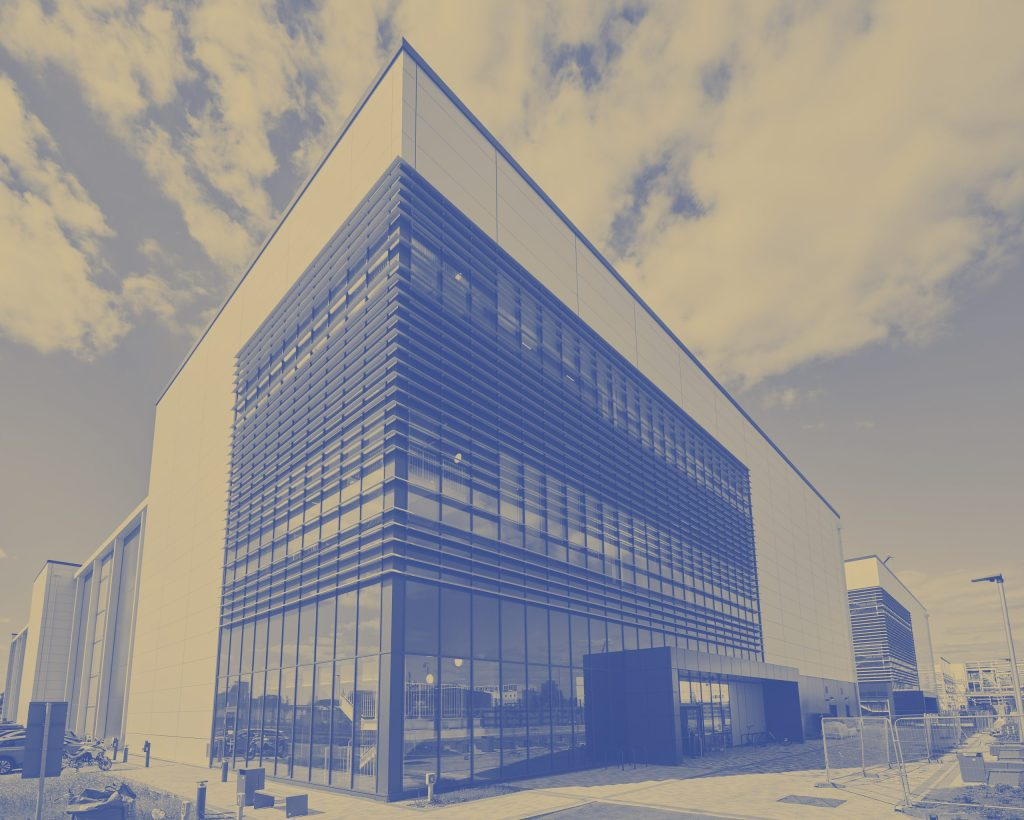
Yondr has agreed to sell a majority interest in its Slough hyperscale data centre campus to pension-backed GLIL Infrastructure, while retaining a minority holding and responsibility for operating the site.
The asset comprises two fully operational buildings serving a large technology customer. Completion is expected in the coming months, subject to customary approvals and closing conditions.
Financial terms, ownership percentages, debt arrangements, and the identity of the customer have not been disclosed. The structure places investment control with GLIL while keeping the developer and operator responsible for the facility and customer relationship.
Stabilised capacity draws long-term capital
GLIL Infrastructure invests on behalf of UK pension funds and local-government retirement schemes. Its existing portfolio spans utilities, energy, transport, and other assets intended to produce long-duration returns.
An operational hyperscale campus can fit that profile once construction and leasing risk have reduced. Contracted income and a strong customer may provide predictable cash flow, although the asset still requires continuous expenditure on maintenance, resilience, efficiency, and future technical upgrades.
Yondr’s transaction statement confirms that it will remain invested and continue operational management. The retained interest aligns Yondr with the campus’s future performance after the sale closes.
Keeping the operator in place also avoids a technical handover to a financial owner without the same site knowledge. GLIL gains exposure to digital infrastructure while relying on an established platform for staffing, maintenance, customer management, and resilience.
For Yondr and its owner DigitalBridge, the transaction releases part of the capital tied up in a stabilised asset. That capital can support new construction, other developments, or balance-sheet requirements without selling the entire economic interest.
Capital recycling has become a central part of hyperscale development. Land, planning, utility works, substations, generators, cooling systems, building structure, and customer fit-out require substantial expenditure before a facility begins producing revenue.
Ownership changes, plant obligations do not
Slough remains one of the UK’s largest data centre clusters, supported by dense fibre routes, proximity to London, and an established engineering base. The market also faces constrained power availability and competition for network capacity across west London and the Thames Valley.
Institutional ownership does not alter those physical constraints. Expansion still depends on grid capacity, equipment lead times, planning, contractor resources, and the ability to build around operating customer environments.
The campus will also face changing rack densities over its holding period. Facilities designed around conventional cloud workloads may need additional liquid cooling, different electrical distribution, or changes to controls and floor layouts as customers deploy more concentrated AI hardware.
The allocation of future capital expenditure will influence returns. Investor, operator, and customer agreements need to define who funds upgrades, how additional capacity is reserved, and whether efficiency improvements change operating charges.
Maintenance cannot be deferred simply because the equity owner has changed. Generators, UPS equipment, cooling plant, switchgear, controls, and fire systems follow replacement cycles that may not align with lease terms or refinancing dates.
Customer concentration deserves equal attention. A hyperscale tenant can provide strong credit support, but a campus serving one large customer is exposed to renewal terms, technology strategy, and future capacity decisions made outside the operator’s control.
GLIL’s investment expands the role of pension capital in UK digital infrastructure. Long-term investors are attracted by contracted cash flows and essential-service characteristics, yet data centres change more quickly than many conventional infrastructure assets.
The land and grid connection may remain valuable for decades, while the equipment inside the buildings can require significant adaptation over much shorter periods. Ownership structures must accommodate both time horizons.
The deal also places operational performance at the centre of investment value. A stabilised building remains valuable only if it continues to deliver uptime, energy efficiency, maintainability, and enough technical flexibility to support the customer’s next hardware cycle.
Further detail may emerge through completion filings or financing disclosures. Until then, the transaction confirms that established UK hyperscale capacity is attracting institutional capital while specialist developers retain responsibility for turning electrical, mechanical, and building systems into reliable customer service.

