
Summary
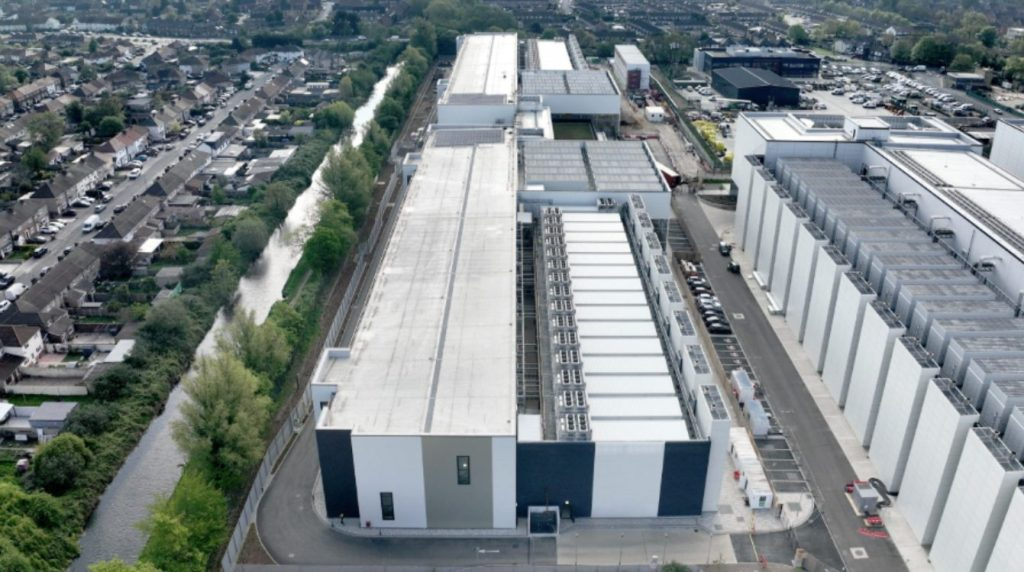
- Yondr has achieved first ready-for-service on the third data centre at its 100MW London campus in Slough.
- The 40MW asset reached the milestone 15 months after groundbreaking and follows earlier 30MW capacity on the same campus.
- The project adds live capacity in one of Europe’s most established but power- and land-constrained data centre hubs.
Yondr has achieved first ready-for-service for the third data centre on its 100MW London campus in Slough.
The milestone covers a 40MW asset and comes 15 months after Yondr broke ground on the building in early 2025. The company said it follows ready-for-service on a 30MW data centre at the same campus last year, extending its live capacity in one of the UK’s most important data centre clusters.
Yondr’s project update says the third facility is designed to BREEAM “Very Good” standards and forms part of sustained capacity delivery across Europe and North America. The company describes the London campus as the largest in Slough.
The campus sits in a market where powered land, grid availability, planning conditions, and customer demand are tightly linked. Slough remains one of Europe’s most established data centre locations, while its maturity also brings constraints around electricity infrastructure, land reuse, local impact, and construction logistics.
Ready-for-service is the useful milestone
Data centre announcements often focus on land acquisitions, planning approvals, or capacity pipelines. Ready-for-service is more concrete. It indicates that a facility or phase is ready to support customer deployment after construction, commissioning, testing, and integration of power, cooling, security, and operational systems.
For customers, RFS capacity reduces uncertainty. For developers, it turns a capital project into an operational platform. For the local market, it shows that a planned megawatt pipeline is becoming usable capacity rather than remaining a development figure.
Yondr’s 40MW building adds a substantial block of hyperscale-ready capacity in a mature cluster rather than a new frontier market. Slough offers fibre depth, cloud ecosystem proximity, established suppliers, and customer familiarity. It also faces pressure on substations, construction space, visual impact, and wider west London grid capacity.
The BREEAM target adds a sustainability benchmark, although operational performance will depend on the building’s real power usage, cooling approach, maintenance regime, and customer density over time. High-density halls can test design assumptions quickly when customer deployments push thermal loads beyond traditional enterprise patterns.
London capacity remains hard to replace
Despite rising interest in power-rich Nordic, Iberian, and French locations, London-adjacent capacity remains strategically valuable. Cloud, financial services, content, connectivity, and enterprise demand still support data centre capacity close to the capital. The issue is no longer whether demand exists, but whether sites can be delivered at the pace and resilience level customers require.
Slough’s long-standing role as a data centre hub gives operators access to a deep supply chain and network ecosystem. The same cluster effect concentrates power demand. New buildings have to compete not only with other data centres, but also with housing, transport, electrification, and other industrial loads for grid reinforcement and planning attention.
Yondr’s RFS milestone shows that delivery is still possible in the corridor when land, power, and construction are lined up early. A 15-month route from groundbreaking to first RFS also favours developers with repeatable designs and supplier relationships over speculative entrants still assembling a delivery model.
The next test is utilisation. Capacity that reaches RFS must still be fitted out, loaded, cooled, maintained, and operated safely at customer density. As AI and high-performance workloads change power profiles, the operational discipline behind the building will carry as much weight as the campus headline. Slough’s advantage is ecosystem depth; its constraint is that every new megawatt has to earn its place on a busy grid.

