
Summary
- RWE has identified data centre potential at ten of 30 sites with substantial existing electricity infrastructure.
- Agreements with data centre operators are nearing completion at two locations, although neither the sites nor proposed capacities have been disclosed.
- Utility-owned industrial land is gaining value as developers struggle to secure large grid connections on conventional greenfield sites.
RWE is close to agreements with data centre operators at two German sites as the utility looks to turn land with established electricity infrastructure into a new source of development value.
Chief executive Markus Krebber said RWE owns 30 locations with substantial electrical infrastructure and has identified ten that could support data centres. Discussions at two of those sites are now approaching agreement, although the company has not disclosed their locations, proposed power requirements, customers, or development schedules.
The projects sit alongside a much larger RWE capital programme. The group plans €42bn of net investment through 2031 across generation, renewables, storage, and networks, while its existing estate includes former and operating generation locations whose electrical infrastructure was built for industrial-scale power flows.
The connection starts to define the site
That estate gives RWE an advantage which conventional property developers increasingly struggle to reproduce. A large parcel of land may be physically suitable for data halls, but without a credible high-voltage connection it can remain commercially sterile for years.
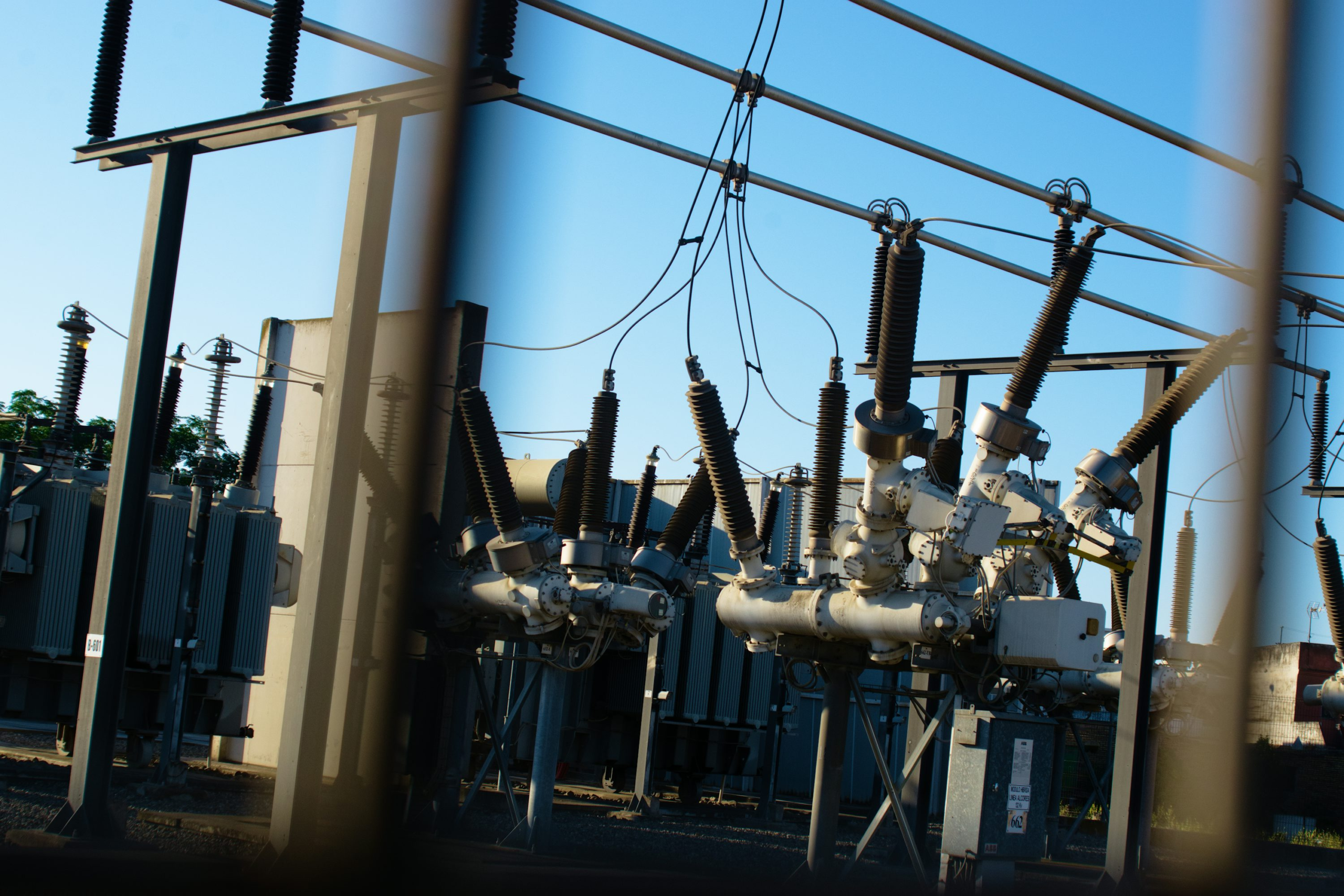
Former power sites often begin with several of the harder pieces already present: substations, transmission or distribution interfaces, industrial access, established utility corridors, and planning histories built around major energy infrastructure. None guarantees that a new load can be energised immediately, but they can materially reduce the number of unknowns attached to a site.
The distinction is becoming more pronounced as AI and hyperscale projects seek power in blocks measured in hundreds of megawatts. Network reinforcement programmes run on different timescales from land transactions and construction, and a developer that secures an attractive site before resolving the connection can end up holding an asset whose most important component arrives years later.
RWE has already shown that electrically connected land can be monetised directly. In 2025, the company recorded a €225m book gain from the sale of a UK data centre development project at a former generation location, demonstrating that the combination of land and power infrastructure can carry substantial standalone value before an operating data centre exists.
The German discussions could follow several commercial models. RWE could sell or lease land, remain involved as an infrastructure partner, supply electricity under a long-term arrangement, develop generation or storage nearby, or combine those roles. Until the agreements are disclosed, the balance between property value and recurring energy revenue remains open.
Utilities are moving upstream in data centre development
Closer links between energy companies and data centre developers alter the traditional sequence of a project. Power procurement, grid access, storage, and site selection begin to converge before the building design is fixed, rather than the utility connection being treated as a service brought to an otherwise complete development proposition.
RWE’s generation portfolio also creates opportunities beyond a basic network connection. Data centres cannot rely on variable renewable generation alone, but proximity to generation and storage can support long-term procurement structures, local balancing, and more flexible interaction with the electricity system.
Demand from digital infrastructure is already appearing elsewhere in the group’s energy business. Google has agreed to take power from a 155MW solar project developed by RWE in Oklahoma, linking new generation directly to the expansion of data centre load. The German site programme approaches the same relationship from the other direction: instead of taking renewable electricity to an existing facility, the facility can be brought to an energy asset.
Brownfield energy sites still carry their own constraints. Legacy structures may need demolition, contamination can require remediation, grid rights may not transfer cleanly from generation to consumption, and large data centre loads can require network studies even where high-voltage equipment is already present.
Planning and local acceptance also remain separate hurdles. A former power station may be accustomed to heavy infrastructure but a hyperscale campus introduces different building forms, backup generation, cooling plant, construction traffic, and employment patterns. The planning case therefore cannot rest on the existence of a substation alone.
Even so, the value hierarchy of data centre land is changing. Fibre, road access, planning policy, and labour remain important, but electricity is increasingly the condition that determines whether the rest of the development case can proceed.
RWE’s two prospective agreements will become much easier to assess once the sites, megawatts, and commercial structures are public. The broader programme is already clear enough: ten utility locations are being tested against data centre demand, and existing grid infrastructure has become part of the product being offered to developers.

