
Summary
- Leviton has added UK production of more than 100 high-fibre-count cable and trunk configurations.
- Investment at Glenrothes expands cable, cassette, and assembly capacity alongside manufacturing in the US.
- Local production can reduce lead-time exposure, although design control, installation quality, and testing remain critical.
Leviton has expanded high-fibre-count cable and connectivity production at its Glenrothes facility in Scotland, making more than 100 configurations available from the UK for data centre, cloud, colocation, and AI infrastructure projects.
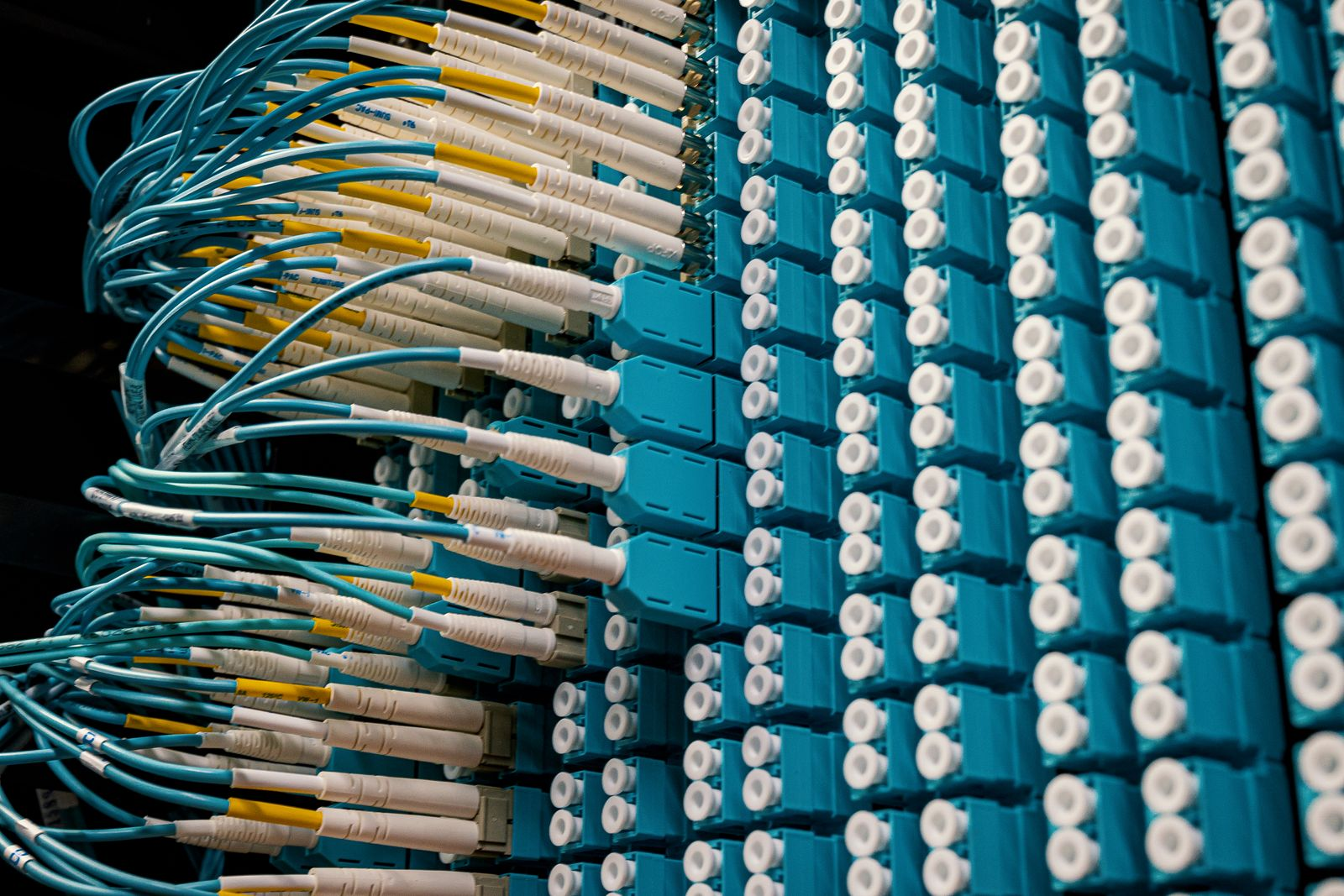
The investment covers cable, cassette, and assembly manufacturing. It adds UK production of OPT-X SJX cable types and trunks, together with OPT-X HDX fibre cassettes, alongside the company’s established manufacturing capacity in the United States.
Leviton says the dual-region arrangement will provide supply redundancy and more predictable lead times. Available constructions include low-smoke, zero-halogen products rated to CPR B2ca requirements for European installations.
Compute density is increasing fibre density
AI clusters require large numbers of high-speed connections between accelerators, switches, storage, and external networks. As the number of processors rises, optical connectivity can grow faster than the rack count, placing more cable into the same pathways and patching spaces.
Leviton’s expanded range supports Base-8, Base-12, and Base-16 configurations and uses loose-tube designs intended for high fibre counts. The company has linked the programme with network roadmaps extending through 200Gb/s, 400Gb/s, and 800Gb/s.
Pre-terminated trunks and cassettes can reduce on-site splicing and shorten installation, although they require accurate information before manufacture. Cable lengths, connector polarity, fibre type, pathway fill, bend radius, rack layout, and patching architecture must all be controlled early.
Fast-moving AI projects can place that design discipline under pressure because developers want to reserve manufacturing capacity while network architectures and customer hardware selections continue to change. A late revision can leave custom assemblies unusable or force extra connection points into the optical path.
High fibre counts also complicate physical coordination. Trunks must pass through trays, ladders, overhead containment, fire barriers, and meet-me rooms without obstructing power cables, cooling pipework, or maintenance access.
Factory termination transfers some quality risk into a controlled production environment, but installation remains sensitive to contamination, excessive bend, pulling damage, incorrect polarity, and poor identification. A fault affecting a high-count trunk can disrupt many links simultaneously.
Regional production removes only part of the supply risk
UK manufacturing can shorten transport routes and provide an alternative to products shipped from North America or Asia. Dual-region production may also allow orders to continue if one factory encounters logistics disruption or capacity pressure.
Final assembly in Scotland does not make the supply chain entirely domestic. Fibre preforms, connectors, polymers, and specialist components may still originate internationally, leaving lead times exposed to shortages or transport disruption elsewhere.
The commercial effect will depend on Glenrothes’ actual throughput, material availability, configuration complexity, and the factory’s ability to accommodate late project changes. More local production capacity is useful only when it can convert an approved design into tested assemblies within the construction programme.
Leviton describes Glenrothes as a carbon-neutral data centre factory. Assessment of that claim requires the boundary used, the treatment of purchased electricity, any offsets, and the embodied emissions of imported materials. Local manufacturing may reduce some transport impacts without determining the full product footprint.
The CPR B2ca rating is relevant to European reaction-to-fire specifications, although contractors and consultants must still confirm that the precise product and installation method meet the project’s fire strategy and national requirements.
Connectivity can become a commissioning constraint even when it represents a smaller share of capital expenditure than power or cooling. Pathways and technical rooms must be complete before installation, while optical test failures can prevent expensive IT equipment from entering service.
Higher transmission speeds reduce the available optical-loss margin. Each connector, splice, and patching point consumes part of the link budget, increasing the need for cleaning, testing, documentation, and disciplined change control.
Operational flexibility also needs to be designed into the system. Highly optimised trunks can accelerate deployment of a known architecture but become difficult to modify when rack layouts, switch positions, or customer requirements change. Spare pathways and managed patching capacity add cost, yet they can prevent more disruptive rework later.
The Glenrothes expansion gives the UK supply chain additional fibre manufacturing and assembly capacity while AI projects increase both network speed and connection density. Delivered lead times, product quality, and responsiveness to design changes will determine how much pressure the investment removes from live construction programmes.

