
Summary
- Siemens and FuelCell Energy have signed an MoU covering scalable fuel cell power solutions.
- The collaboration includes electrical balance-of-plant systems, microgrid controls, storage, and medium-voltage equipment.
- The work reflects rising interest in on-site power where grid connections cannot keep pace with data centre demand.
Siemens and FuelCell Energy have agreed to collaborate on scalable fuel cell-based power systems for data centres, industrial facilities, utilities, and distributed generation customers.
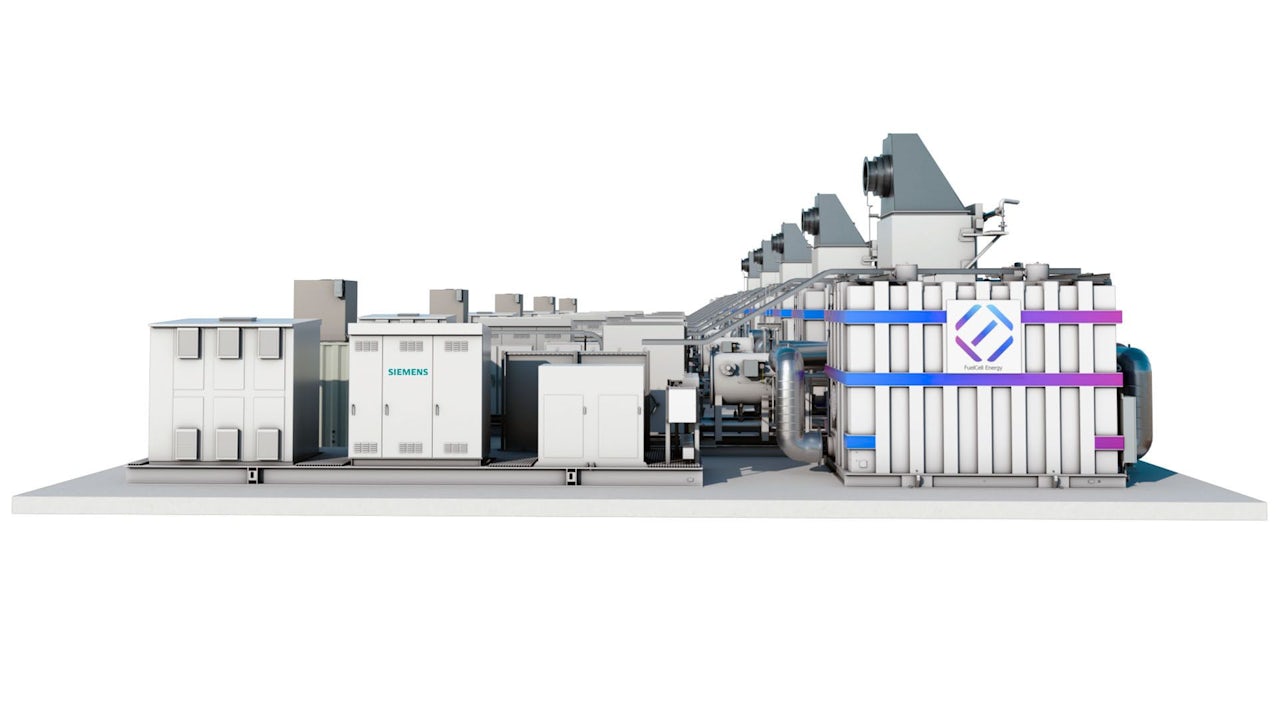
The memorandum of understanding brings Siemens’ electrical infrastructure design and supply capability together with FuelCell Energy’s fuel cell technology. Siemens will design and supply electrical balance-of-plant systems for fuel cell installations, with the collaboration intended to support commercial projects of more than 100MW.
The companies will work on distributed energy systems incorporating fuel cells, battery energy storage, microgrid controls, medium-voltage electrical equipment, and modular electrical systems. They also plan to evaluate pilot projects and medium-voltage DC power delivery applications.
On-site power moves up the agenda
Data centre power has become one of the main constraints on capacity delivery. AI and cloud growth are producing larger electrical loads, while grid operators in several markets are dealing with connection queues, reinforcement requirements, and uncertainty over when new capacity can be released.
Fuel cells are not a universal replacement for utility supply. They need fuel, permitting, site integration, maintenance, controls, and a commercial structure that supports long-term operation. Their emissions profile also depends on the fuel used and the local regulatory framework.
Their attraction sits in the possibility of reliable on-site generation that can be scaled and integrated with wider electrical systems. Data centres need firm, high-availability power, not just generation technology with an interesting efficiency profile. Switchgear, controls, protection, storage, distribution, and grid interface determine how usable the power is.
The balance-of-plant element is therefore central. A fuel cell system that cannot integrate cleanly into data centre electrical architecture will struggle to move beyond demonstration projects. A package that works with medium-voltage distribution, microgrid controls, UPS arrangements, and storage has a clearer route into critical infrastructure.
Electrical integration becomes a constraint
Siemens’ role points to a wider delivery issue. Data centre power projects are increasingly exposed to the availability of transformers, switchgear, grid equipment, generators, cables, and experienced integration teams. Repeatable electrical packages may become as valuable as individual generation technologies.
FuelCell Energy brings experience in modular fuel cell power plants for continuous baseload applications. Siemens brings electrical infrastructure, service, and integration capability. The combined offer is aimed at customers trying to deploy power faster than conventional grid reinforcement can always provide.
The inclusion of microgrid controls and battery energy storage shows how complex large data centre power systems are becoming. A modern campus is not a passive electricity customer. Its demand profile, redundancy requirements, backup architecture, and operational controls create interactions between on-site generation, utility supply, UPS systems, batteries, and switching equipment.
The European connection is clear even though the collaboration is presented through a US announcement. Siemens is a major European infrastructure supplier, and the same pressures behind US interest in on-site power are visible in UK, Irish, Dutch, German, and Nordic data centre markets.
Fuel cells will compete with grid connections, PPAs, gas generation, batteries, demand flexibility, and, in some markets, nuclear or hydrogen-linked options. Their place in the stack will depend on cost, emissions, fuel availability, operating reliability, and how quickly projects can secure permits.
Large electrical infrastructure suppliers are now treating data centres as a central market for alternative power architecture. Pilot schemes will need to prove cost, performance, emissions profile, fuel supply, and resilience integration. If they do, fuel cell systems could become one option for bridging the widening gap between digital capacity demand and grid delivery.

