
Summary
- Infineon will supply silicon carbide power modules for Siemens SENTRON 3QD2 semiconductor circuit breakers.
- The technology is designed to interrupt short circuits in the microsecond range, supporting DC grids and highly electrified facilities.
- Data centre power protection is becoming more important as AI loads, batteries, and high-density electrical systems converge.
Siemens and Infineon are partnering on semiconductor-based circuit protection for data centres, factories, and battery energy storage systems as electrical systems become faster, denser, and less tolerant of faults.
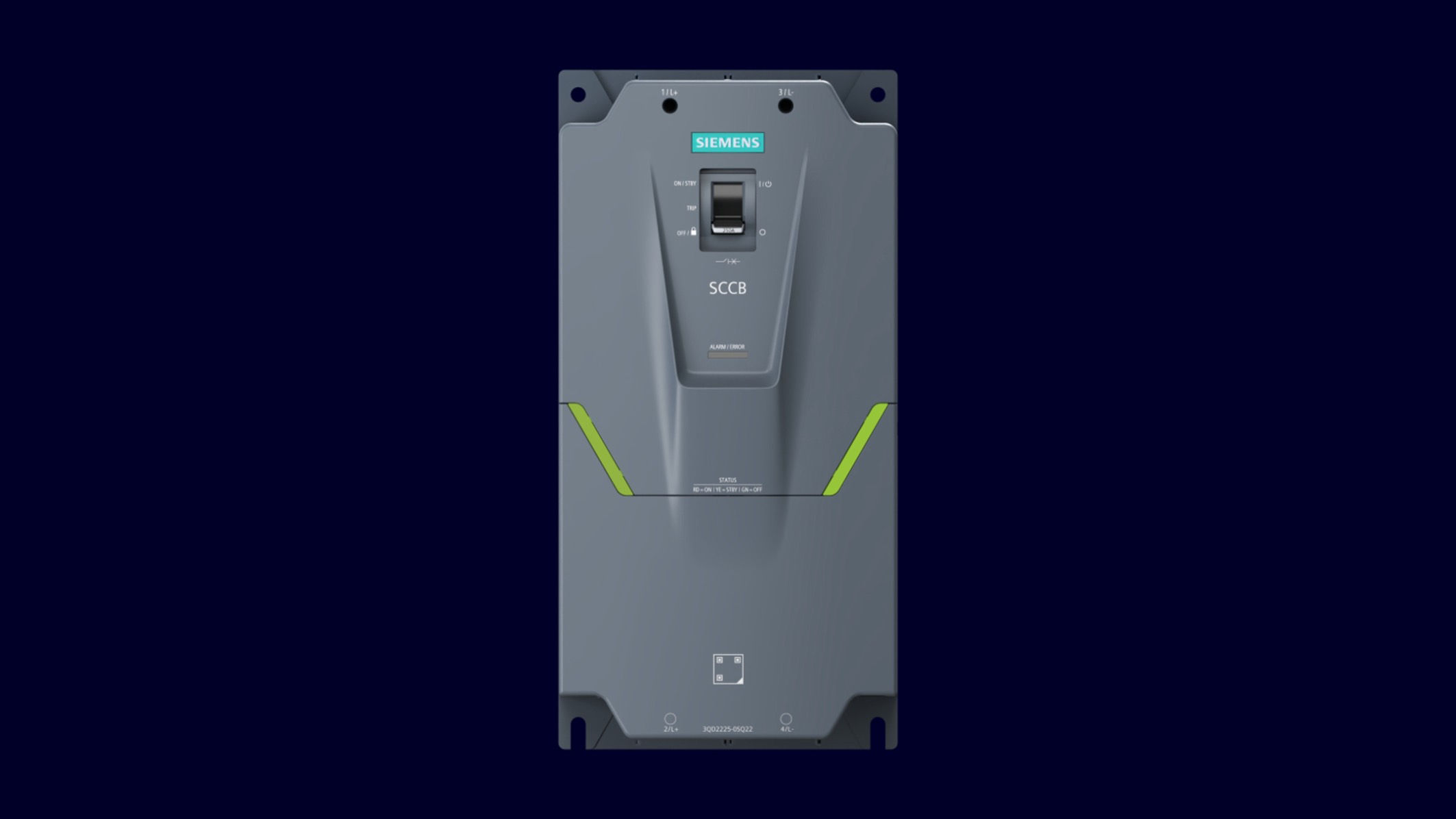
Infineon Technologies will supply silicon carbide power modules for Siemens’ SENTRON 3QD2 semiconductor circuit breakers. The companies say the modules are intended to improve efficiency, power density, and reliability in Siemens’ protection technology.
The SENTRON 3QD2 uses semiconductor components and smart protection algorithms rather than relying on conventional mechanical interruption alone. Siemens and Infineon say the device can interrupt short circuits in the microsecond range, up to 1,000 times faster than conventional systems.
Direct current applications are a central target because fast interruption is essential to protect equipment and maintain system availability. Data centres enter the frame through AI facilities, battery-backed power systems, and higher-density electrical architectures, where DC distribution and fast fault handling are becoming more commercially relevant.
Fault speed becomes a design issue
Data centre electrical resilience has traditionally been discussed through redundancy: dual feeds, UPS systems, backup generation, switchgear, and maintenance bypasses. Those layers remain essential, but fault speed is moving closer to the design discussion as facilities integrate more power electronics, batteries, dense compute, and advanced distribution systems.
AI infrastructure concentrates more electrical load into smaller physical footprints. GPU clusters, high-current busbars, dense rack power distribution, liquid-cooled cabinets, and battery systems all increase the need for fast, selective, and predictable protection. A slow or poorly coordinated response can turn a contained fault into downtime, equipment damage, or wider electrical instability.
Semiconductor circuit breakers are not new in principle, although their commercial relevance is increasing as data centre power systems change. Mechanical breakers are proven and robust, but they operate on different timescales. Semiconductor-based devices can act far faster, with their own cost, heat, control, and integration requirements.
Silicon carbide supports that shift because SiC devices can operate efficiently at higher voltages, temperatures, and switching frequencies than conventional silicon devices in many applications. In power infrastructure, that can support more compact and responsive systems. Within data centres, the potential value lies in limiting fault energy, protecting expensive IT and power electronics, and enabling architectures that are harder to protect with traditional equipment alone.
DC systems move closer to deployment
Siemens has been developing a wider direct-current protection and switching portfolio, arguing that DC systems can reduce conversion losses, support the integration of batteries and renewables, and reduce material use in some applications. Data centres are a natural candidate because IT equipment ultimately consumes DC power, while batteries and solar generation are also DC-native.
DC data centre distribution has been discussed for years, but adoption has been uneven. AC distribution remains dominant because standards, equipment ecosystems, operational practice, and maintenance skills are mature. DC has often struggled to overcome the reliability and familiarity of established designs.
AI and battery integration may reopen that debate. Higher power densities make conversion losses more visible. Batteries are becoming more strategically important for backup and, in some cases, grid-interactive operation. Operators are also under pressure to reduce copper use, improve energy efficiency, and build power systems that can scale quickly.
Adoption will be cautious. Mission-critical environments do not absorb new protection technologies quickly unless the operational case is strong. Certification, standards, maintainability, fault coordination, staff training, and lifecycle support will matter as much as switching speed. Semiconductor breakers are likely to enter first where they solve a defined constraint, such as battery integration, DC microgrids, high-density zones, or sensitive AI and industrial applications.
The Siemens-Infineon partnership is best read through that infrastructure lens. Data centres are becoming complex electrical plants, with fast-changing loads, power electronics, batteries, and grid interfaces. Protection systems that once sat quietly in the background are moving into the foreground because the cost of faults is rising, and the operating margin for electrical instability is narrowing.

