
Summary
- Infineon SEMPER NOR Flash has qualified for ASPEED’s eighth-generation AST2700 baseboard management controller.
- The memory stores firmware supporting health monitoring, power control, secure boot, remote updates, and system recovery.
- Component qualification reduces design risk, while platform security still depends on firmware governance, access control, segmentation, and tested recovery.
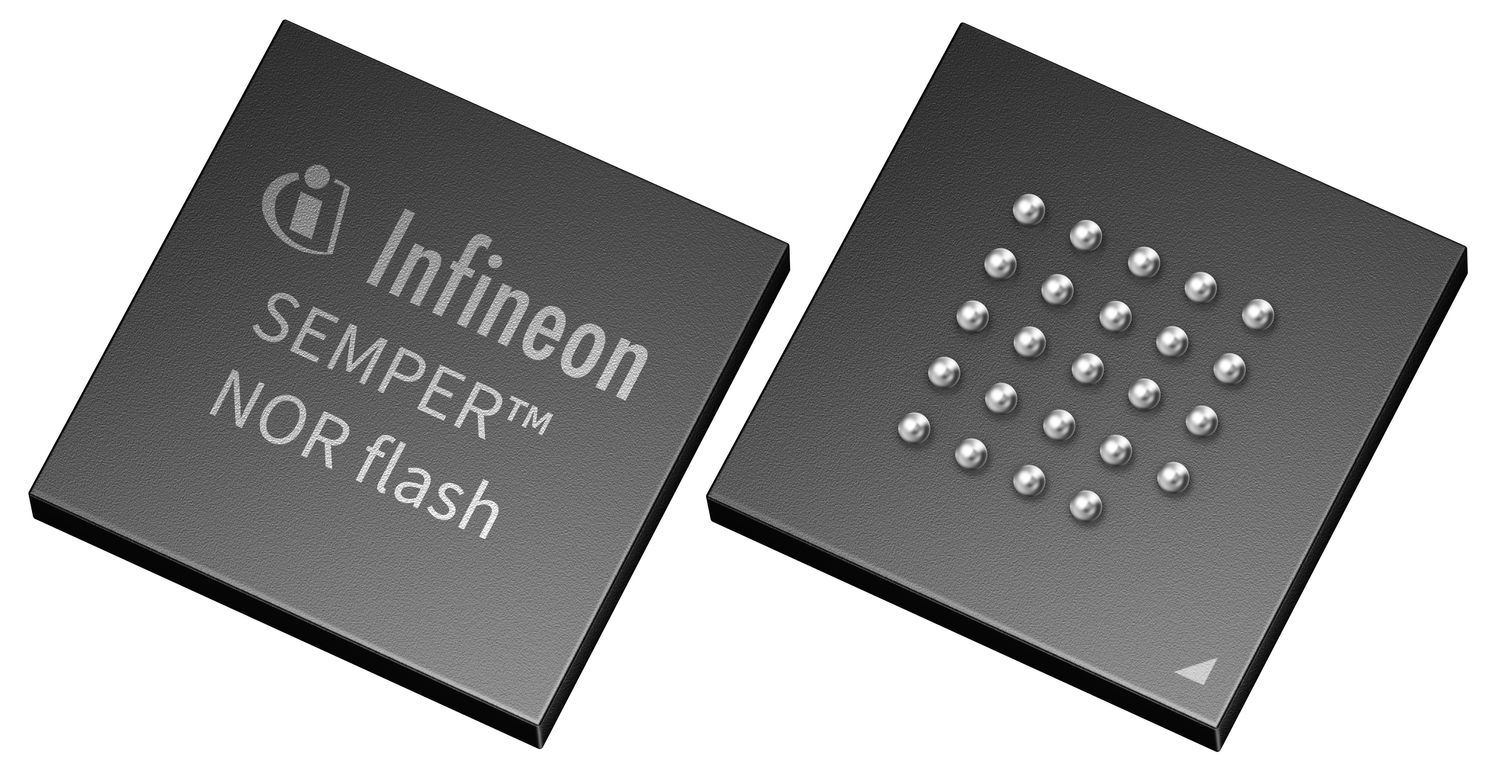
Infineon Technologies has qualified its SEMPER NOR Flash memory for ASPEED Technology’s AST2700 baseboard management controller, placing the component on the controller’s approved-vendor list for next-generation server designs.
The memory stores firmware used by the BMC, a management processor that operates independently of the server’s principal CPU and operating system. It monitors hardware condition, controls power states, supports secure boot and remote administration, and remains available when the host system is switched off or has failed.
Approved-vendor status gives server manufacturers and hyperscale hardware teams a validated memory option when designing AST2700 platforms. It reduces compatibility and component-selection work, but does not certify the security or resilience of the complete server.
The recovery path sits outside the host
BMCs provide the out-of-band control plane used to manage large server estates. Through those controllers, operations teams can inspect sensor data, power-cycle hardware, alter configurations, update firmware, and investigate systems that cannot be reached through their normal network or operating environment.
That privileged position makes the stored firmware operationally sensitive. Corruption can prevent remote recovery, a defective update can affect large numbers of machines, and malicious modification can create access below the host operating system.
Infineon’s SEMPER NOR Flash provides cyclic redundancy checking, error-correcting code, high-endurance operation, and fast reads over standard Serial Peripheral Interface connections.
CRC helps detect defined transmission or storage errors, while ECC can identify and correct particular classes of bit failure. Those mechanisms improve the integrity of firmware storage, although they do not replace cryptographic signing, authenticated updates, secure key handling, rollback protection, or access controls.
The BMC loads and verifies its management firmware during the boot process. Resilient designs commonly maintain a trusted recovery image or protected route for restoring operation after an interrupted or rejected update. Flash reliability and endurance influence whether that path remains dependable over the service life of the server.
Repeated writes from firmware updates, configuration changes, or local data can age memory cells. Health monitoring, write management, protected regions, and recovery testing all contribute to the platform’s ability to remain manageable after years of operation.
Qualification resolves one link in the chain
ASPEED’s AST2700 is its eighth-generation BMC and is produced on a 12-nanometre process. It is intended to offer greater processing capacity, integration, and security capability as servers add accelerators, high-speed networking, storage, sensors, and more complex power controls.
Inclusion on the approved-vendor list indicates that ASPEED has assessed the memory’s electrical behaviour, timing, and support within the platform. Server OEMs can select it without beginning qualification from an untested component pairing.
Supply continuity carries commercial weight alongside compatibility. Server programmes need components to remain available through design, certification, manufacturing, and field support, while hyperscale buyers often require second sources or pre-qualified alternatives before shortages occur.
Infineon describes its supply chain as diversified and supplies NOR Flash across automotive, industrial, and computing applications. It has not disclosed the AST2700 design wins, server manufacturers, shipment volumes, prices, or long-term supply commitments associated with the new qualification.
BMC security has grown more prominent as data centres automate management across larger fleets. A compromised controller can retain privileged access to firmware, power, sensors, consoles, and management networks even after the host operating system has been reinstalled.
Operators need firmware inventories, vulnerability monitoring, authenticated update infrastructure, network segmentation, credential controls, logging, and tested recovery procedures around the hardware. Remote update capability reduces the cost of maintaining thousands of machines, while increasing the number of systems affected by a defective or compromised image.
Supply-chain assurance extends beyond the flash package and controller silicon. Boot code, firmware build systems, signing infrastructure, update servers, manufacturing processes, and management interfaces can each introduce risk.
The qualification resolves a defined component-level issue by providing a validated firmware-storage option for AST2700 designs. Its operational significance will become clearer as server OEMs announce platforms, hyperscalers deploy the controller, and firmware implementations demonstrate how secure boot, recovery, and update protection operate in production.

