
Summary
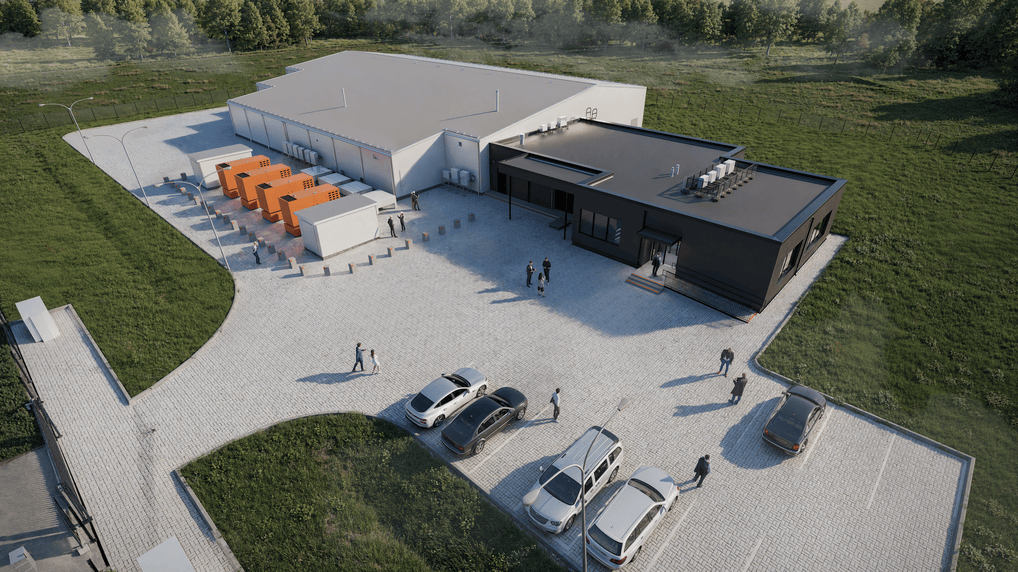
- Tet has launched the first phase of DC7 in Salaspils, near Riga.
- The full project is planned around a phased rack build-out running to 2028.
- Waste heat from the liquid-cooled facility is planned for transfer to local utility Salaspils Siltums.
Tet has completed the first phase of DC7, a new data centre in Salaspils, outside Riga, expanding Latvia’s small but increasingly sophisticated digital infrastructure base.
The project is being delivered in phases. Project information from Citrus Solutions, the design-and-build contractor, states that the first phase is planned to deliver 112 racks, with a second phase adding a further 112 racks by the end of 2028. The site is located at Krasta 2/1 in Salaspils.
The facility is designed to meet Uptime Institute Tier III standards, with a stated availability level of 99.982%. Citrus Solutions said DC7 will be suitable for critical IT systems for government and business clients, while its engineering systems will support powerful AI equipment.
Heat reuse is built into the project. Waste heat from the facility is due to be transferred to Salaspils Siltums, the local utility, for use by local residents. Project materials say the heat will be used for water heating in summer and for space heating in winter.
A regional facility with wider signals
DC7 is modest compared with the very large AI campuses being proposed in France, Germany, the Nordics, and the UK, but it carries a different type of infrastructure value. Smaller European markets are trying to build secure, higher-performance capacity locally rather than relying only on large western hubs.
Latvia’s data centre market is concentrated around Riga, where connectivity, public-sector demand, enterprise workloads, and national digital infrastructure are strongest. A facility in Salaspils can serve domestic customers while positioning Latvia within the wider Baltic and Central and Eastern European market. That regional role is becoming more important as governments and businesses pay closer attention to data location, resilience, and sovereignty.
The use of liquid cooling and heat reuse gives the project a stronger engineering profile than a conventional colocation expansion. Liquid cooling supports higher rack densities and can make waste heat more useful by producing a more concentrated thermal stream. Successful heat reuse still depends on temperature, pipework distance, offtake agreements, and district heating demand, but pairing the facility with a local utility gives Tet a clearer route than schemes that only describe heat recovery as a future option.
For Salaspils, the planned transfer of waste heat could turn the data centre from an isolated power load into part of the local heat system. That integration is increasingly important in Europe, where data centres are being judged not only on PUE, but on their interaction with energy systems beyond the site boundary.
The project also reflects the state’s continuing role in Latvia’s telecoms and digital infrastructure. Tet is majority-owned by the Latvian state, with Telia holding the remainder, and its facilities sit within Latvia’s broader capacity, security, and digital sovereignty strategy. As AI workloads and resilience concerns push more compute into regional markets, DC7 offers a practical example of phased delivery, higher-density cooling, and heat integration at Baltic scale.

