
Summary
- Cobra IS has secured a €165 million contract to build cooling infrastructure for an unnamed data centre campus on the Iberian Peninsula.
- The mechanical, electrical and plumbing scope covers 126 dry coolers intended to serve the equivalent of 200MW of computing capacity.
- VINCI is bidding for additional campus phases, but their award, final scope and delivery timetable remain unconfirmed.
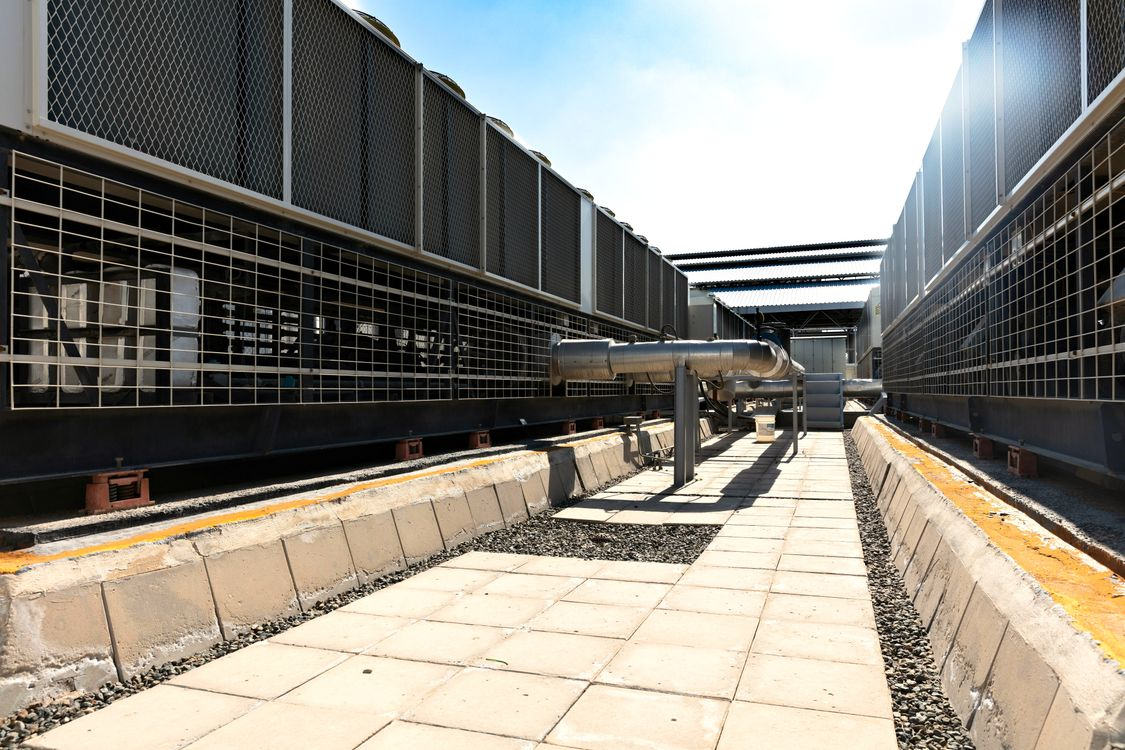
VINCI has secured a €165 million contract to build cooling infrastructure for a major data centre campus on the Iberian Peninsula, with its Cobra IS subsidiary responsible for mechanical, electrical and plumbing installations involving 126 dry coolers.
The cooling equipment is intended to support the equivalent of 200MW of computing capacity. The figure describes the scale of the computing demand addressed by the cooling installation, rather than confirming that 200MW of IT equipment has been installed or commissioned.
VINCI has not identified the customer, the exact location of the campus or the construction timetable. It has also not disclosed the individual capacity of the dry coolers or the wider mechanical system in which they will operate.
The contract establishes a substantial engineering and construction commitment within the development. Cobra IS is also bidding for additional phases of the campus, which VINCI describes as a project worth several billion euros in total. Those potential future awards are separate from the confirmed €165 million contract.
Dry coolers form the heat rejection system
Dry coolers transfer heat from a circulating fluid to the surrounding air through heat exchanger surfaces, generally using fans to move ambient air across the equipment. Their operation differs from cooling towers that depend on evaporation to reject heat.
In a data centre, heat generated by computing equipment must be collected and transferred through a suitable cooling system before it can be rejected outside the building. Dry coolers can provide the external heat rejection stage, although their arrangement depends on the rest of the facility’s thermal design.
The 126 units covered by Cobra IS’s contract indicate a substantial installation, but the count alone does not establish its total rated thermal output. Individual units may differ in size and configuration, and the required performance depends on the design temperatures and operating conditions.
Outdoor temperature is an important variable. As the difference between the circulating fluid temperature and ambient air temperature decreases, the ability of a dry cooler to reject heat can also decline unless sufficient heat exchanger area, airflow or supplementary cooling capability is available.
The developer has not published the design temperatures, expected operating profile or whether additional cooling stages will be used during warmer conditions. The disclosed equipment therefore cannot be used to calculate annual cooling electricity consumption or a facility efficiency rating.
Dry cooling can reduce water consumption associated with evaporative heat rejection, but that characteristic does not prove that the complete facility will operate without water. Internal cooling circuits, fluid treatment and other mechanical systems depend on the selected architecture.
VINCI has not specified whether the computing equipment will use direct liquid cooling, air cooling or a combination of technologies. The contract confirms the external dry cooler installation without identifying the heat collection method used at individual racks.
Mechanical and electrical work must operate together
Cobra IS’s scope extends beyond supplying individual cooling units. Mechanical, electrical and plumbing installations must work together so that heat can be transferred through the plant under the operating conditions required by the customer.
The mechanical work may involve coolant circulation, pipework and connections between different parts of the cooling infrastructure. Electrical installations are needed to power and control equipment such as fans, pumps and instrumentation, with the final requirements determined by the selected design.
Reliable operation also depends on the way cooling equipment is controlled. Variable computing loads change the amount of heat requiring removal, while outdoor conditions influence the capability of external heat rejection equipment.
Controls must maintain appropriate operating conditions across those variations. The specific control strategy, equipment redundancy and response to component failures have not been disclosed for this project.
Commissioning the cooling plant will require the installed systems to be checked and tested against their design requirements. Equipment performance, flow conditions, electrical operation and integration with other infrastructure are among the characteristics that normally need verification before a facility enters service.
The source does not identify the testing programme or completion criteria included in Cobra IS’s contract. Nor does it say whether the cooling plant will be commissioned as a single installation or brought into use alongside successive phases of computing infrastructure.
Contract sits within a larger campus programme
The proposed computing requirement gives an indication of the development’s intended scale, but it does not establish the campus’s contracted grid capacity or the amount of electricity currently available at the site.
Computing equipment, cooling systems, electrical conversion and other supporting infrastructure contribute to total facility demand. A figure describing computing capacity should therefore be kept separate from the facility’s overall electrical requirement unless the developer supplies the necessary technical definition.
The arrangement of the dry coolers also remains undisclosed. Their installation will require physical space, connections to the wider cooling system and suitable access for inspection and maintenance, but no site layout has been released.
VINCI says it is pursuing additional work on the wider campus. Whether Cobra IS obtains those contracts will depend on subsequent procurement decisions, and the company has not assigned a confirmed value or delivery commitment to the outstanding bids.
The contract strengthens an existing digital infrastructure business for VINCI, which reported approximately €7 billion of revenue from that market during 2025. This figure covers the group’s broader activities and is not revenue generated by the Iberian cooling contract.
Further project disclosures will be needed to identify the customer, facility location, installed cooling specifications and construction programme. The confirmed development is a €165 million engineering award for 126 dry coolers and their supporting installations, serving a planned computing requirement equivalent to 200MW.

