
Summary
- VIRTUS has installed two 185MVA super-grid transformers at its Wustermark campus in Berlin-Brandenburg.
- The infrastructure supports an initial 300MW capacity and a direct 380kV connection to the 50Hertz transmission network.
- The project shows how European data centre delivery is increasingly defined by substations, transformers, and transmission access.
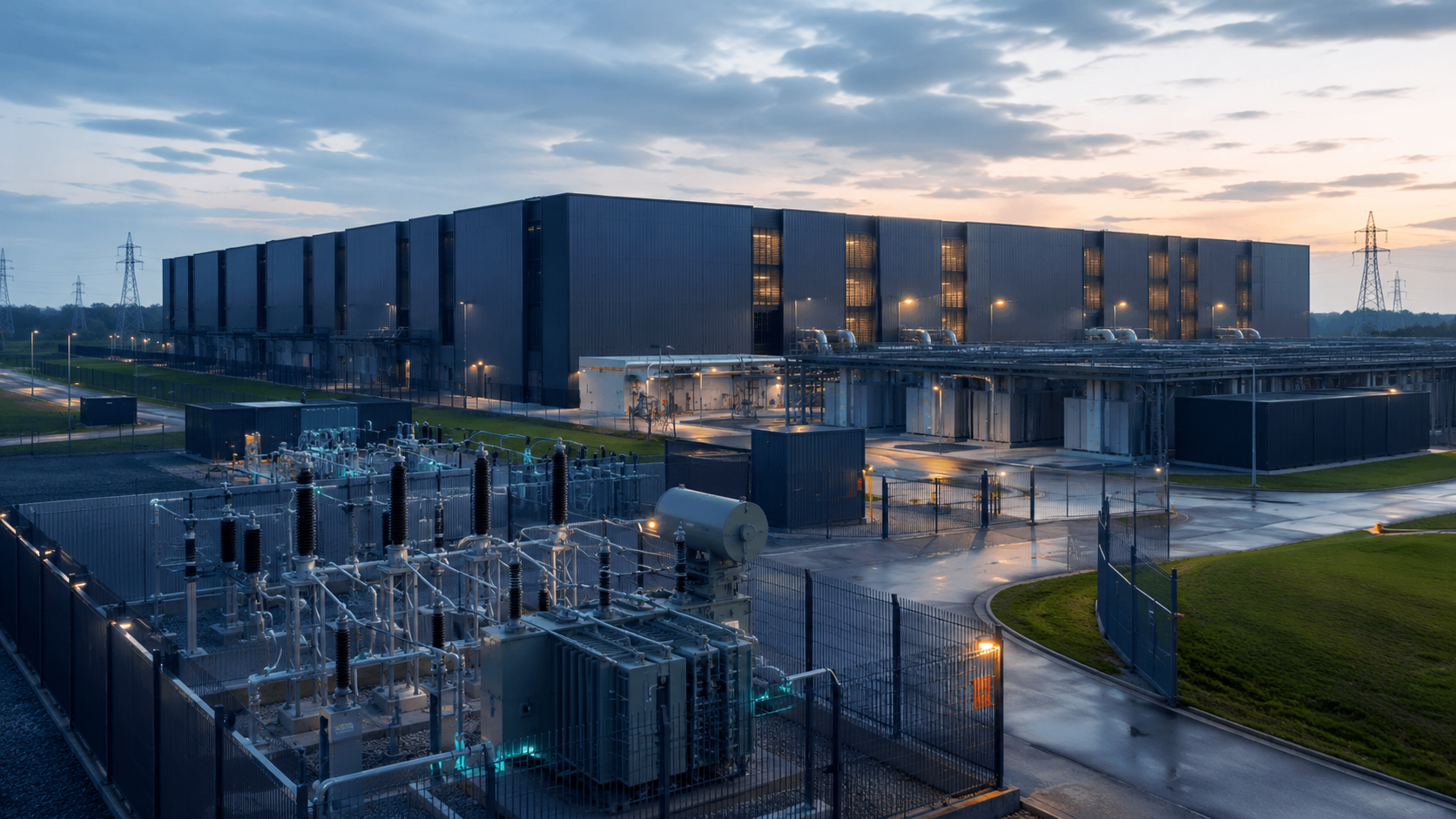
VIRTUS Data Centres has installed two 185MVA super-grid transformers at its Wustermark campus in Berlin-Brandenburg, advancing the power infrastructure for one of Germany’s largest planned data centre developments.
The transformers form part of the campus’s initial 300MW capacity and are intended to support a direct 380kV connection into the 50Hertz transmission network. The development includes a dedicated 500MW substation and dual direct connections, giving the site a power architecture closer to heavy industrial infrastructure than a conventional colocation estate.
VIRTUS has described the transformers as among the largest deployed at a European data centre. The company is also presenting the Wustermark design as capable of supporting a potential zero-generator operating model, while allowing customers to use conventional backup generation where resilience requirements demand it.
The campus sits west of Berlin, away from Germany’s dominant Frankfurt data centre market. Berlin-Brandenburg has been building its profile as a data centre region, but the scale of Wustermark places it in a different class from smaller metro-edge or enterprise facilities.
The substation becomes the campus
Large AI and hyperscale campuses now begin well beyond the white space. Grid studies, transmission connection agreements, transformer procurement, substation construction, protection systems, civil works, and commissioning windows often decide whether capacity can be delivered on time.
That shift has changed development risk. Fibre, customer demand, and location still matter, but the defining question for major campuses is whether a site can be energised at the required scale and within the required timeframe. A 300MW project cannot be treated as a larger version of a 20MW building. Its electrical interface with the grid becomes part of regional infrastructure planning.
The 380kV connection is particularly important. Transmission-level access can provide large blocks of power and reduce dependence on constrained distribution networks. It also raises the technical expectations placed on the data centre as a grid-connected load. Voltage support, fault levels, harmonics, redundancy, protection schemes, and operational coordination with the transmission system operator all become part of the facility model.
Germany’s data centre geography is already being reshaped by these constraints. Frankfurt remains one of Europe’s core hubs, but power availability, permitting, and local political pressure have pushed attention towards secondary and emerging markets. Berlin-Brandenburg offers land and a different grid position, although large connection projects still depend on long-lead equipment and close coordination with network operators.
Generator strategy comes under pressure
VIRTUS’s reference to a possible zero-generator model sits within a wider industry debate about standby power. Diesel generation remains embedded in most mission-critical designs, yet operators face pressure over emissions, air quality, fuel logistics, testing regimes, and local planning conditions.
A grid architecture with high-voltage access, dual connections, and substantial substation infrastructure can change the resilience discussion. It cannot remove the need to prove fault tolerance under credible utility failures, switching events, maintenance periods, and cascading grid disturbances. Zero-generator strategies will be judged on operating evidence, not design claims alone.
The transformer installation also exposes a supply-chain issue that now affects data centres, renewable energy, electrification, and grid reinforcement at the same time. Large transformers have long procurement lead times, and demand is rising from multiple sectors. Securing transformer slots has become part of data centre development strategy, because missing them can delay energisation even when planning consent and customer demand are in place.
Wustermark’s progress points to the way European data centre campuses are changing. The electrical infrastructure is no longer a supporting package behind the building. In power-constrained markets, substations, transformers, transmission agreements, and commissioning discipline increasingly separate credible capacity from speculative land.

