
Summary
- Volta Data Centres has appointed Jason Liggins as chief executive.
- The company operates a 6MW central London colocation and interconnection facility with more than 40 carriers.
- The move puts Volta’s post-acquisition growth plan under scrutiny in a London market constrained by power, space, and development cost.
Volta Data Centres has appointed Jason Liggins as chief executive as the London operator enters its next phase under Arcus Infrastructure Partners ownership.
Liggins takes charge after Volta’s separation from Verne and its acquisition by Arcus. He previously led Crown Hosting, the government-focused hosting joint venture between Ark Data Centres and the UK Government, and spent several years with Ark before that role.
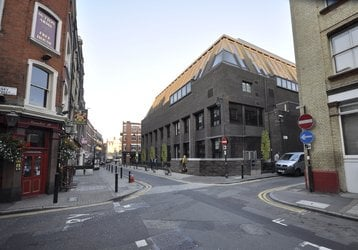
Volta operates a 6MW, 91,000 sq ft carrier-neutral colocation and interconnection facility on Great Sutton Street in central London. The site hosts more than 40 carriers and serves financial services, telecoms, IT, and enterprise customers from a building originally used by Reuters and later refurbished for data centre use.
A city-centre asset in a constrained market
London remains one of Europe’s most important data centre and connectivity locations, yet new capacity is hard to add. Power availability, land scarcity, planning constraints, construction cost, and competition for suitable buildings all shape the market. Central London has an even narrower development envelope than the wider metropolitan region.
That gives Volta a distinctive position. Its facility cannot compete with large suburban or regional campuses on raw megawatts, but it can support customers that value connectivity, proximity, and interconnection density. In a market where latency-sensitive, network-heavy, and enterprise workloads still need central locations, a well-run urban colocation asset can retain strategic value.
The operating challenge is different from a greenfield campus. Capacity expansion may depend on electrical upgrades, cooling optimisation, space management, resilience works, interconnection services, and customer mix rather than major new buildings. Maintenance access, energy procurement, monitoring, and plant replacement all carry heavier weight in an older urban facility.
Volta’s post-acquisition strategy is expected to include growth through additional sites. That raises the question of what kind of platform the company can become. A multi-site London or UK colocation business could target connectivity-rich assets, edge requirements, specialist enterprise demand, or facilities that need capital and operational discipline after ownership change.
Investment follows operating control
Infrastructure investors have been reshaping European data centre platforms as demand grows and older ownership structures unwind. Once an asset changes hands, attention usually turns to capital expenditure, energy strategy, service mix, and expansion options. The appointment of a new chief executive is only the first visible step in that process.
London’s constraints make asset selection critical. Buying or developing additional sites will require confidence on power, fibre, planning, cooling, and customer demand. A site with weak electrical headroom or poor mechanical flexibility can become costly quickly, especially as customers ask more questions about high-density capability and sustainability reporting.
AI workloads will not automatically suit central London colocation halls. Dense accelerator clusters can demand power and cooling levels that older buildings struggle to provide without major retrofit. Volta may instead find a stronger position in connectivity-led services, hybrid infrastructure, private environments, and workloads that need proximity to networks or customers rather than very large AI training capacity.
The company’s next phase will therefore be judged by capital allocation and operational execution. Additional sites could give Volta more scale, but the platform will need a clear technical profile: where it can add power, which workloads it wants, how it handles cooling upgrades, and how it keeps a central London asset competitive as the market moves towards larger and denser facilities elsewhere.

