
Summary
- Vertiv has completed its acquisition of ThermoKey, an Italian heat rejection and heat exchange technology provider.
- The deal strengthens Vertiv’s thermal management portfolio and EMEA manufacturing capacity.
- The acquisition reflects rising pressure on the full cooling system as AI data centres move towards higher rack densities and liquid cooling.
Vertiv has completed its acquisition of ThermoKey, adding Italian heat rejection and heat exchange manufacturing capacity to its thermal management portfolio.
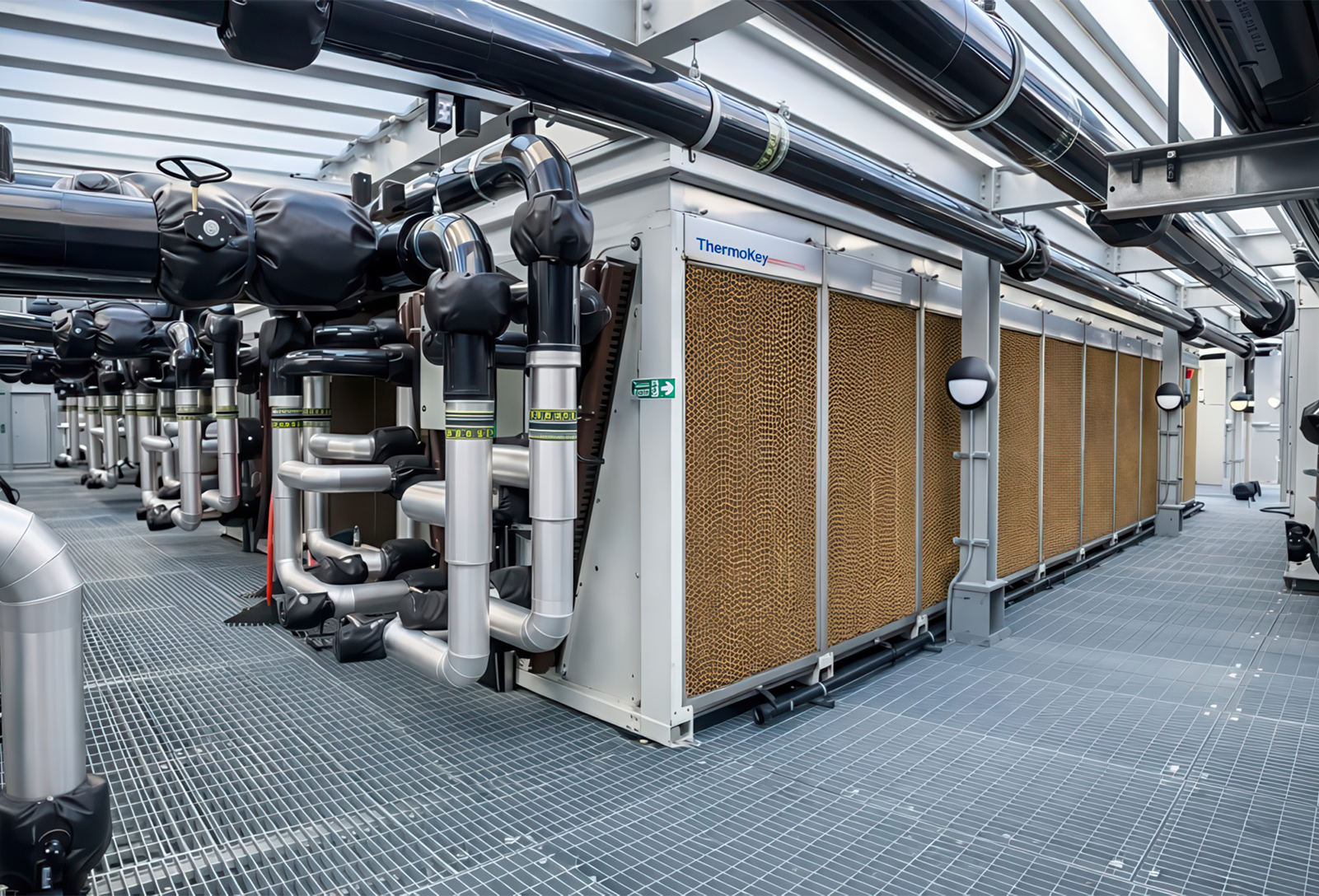
ThermoKey supplies heat exchange technologies, dry coolers, and systems compatible with low GWP and natural refrigerants.
Vertiv says the acquisition expands its manufacturing capability in Europe, the Middle East, and Africa, while strengthening its ability to deliver system level thermal architectures for AI factories and high density data centres.
The Rivarotta operations in Italy will remain a hub for manufacturing, engineering, and support, with Giuseppe Visentini, ThermoKey’s chief executive, continuing to lead the business.
Founded in 1991, ThermoKey brings more than 30 years of engineering, in house design, and production capability.
Vertiv already uses ThermoKey technology in selected thermal solutions, giving the acquisition an existing technical relationship rather than a move into an unfamiliar product area.
As AI and accelerated computing raise rack densities, heat rejection is becoming a more central part of data centre design.
Liquid cooling receives much of the market attention, but captured heat still has to be transferred, rejected, reused, or moved into another thermal system.
Thermal design moves beyond the rack
AI data centres are changing the thermal requirements of the facility, because direct to chip systems, rear door heat exchangers, coolant distribution units, and higher density racks all depend on reliable upstream heat rejection.
If the heat rejection system is undersized, poorly integrated, or difficult to maintain, the facility cannot use its designed IT capacity.
Heat rejection choices affect energy efficiency, water use, refrigerant compliance, acoustic impact, roof and plant yard space, maintenance regimes, resilience, and planning acceptability.
European sites face varied operating conditions, with water stress, refrigerant rules, climate, and local environmental scrutiny differing from market to market.
Dry coolers and heat exchange systems can help operators reduce dependence on water intensive cooling in some conditions, although performance depends on climate, design temperatures, redundancy strategy, and heat load profile.
Compatibility with low GWP and natural refrigerants also fits with the regulatory direction in Europe, where mechanical systems are being examined more closely through environmental and energy performance rules.
The acquisition gives Vertiv more control over product design, manufacturing capacity, and integration across the thermal system.
That can reduce interface risk where multiple suppliers would otherwise be responsible for different parts of a cooling package, although operators and engineers will still need to manage supplier concentration carefully.
For contractors, the value of the deal will show up in coordination, equipment availability, factory capacity, and commissioning support rather than in product breadth alone.
Vertiv’s ThermoKey acquisition reflects a data centre market buying integrated thermal performance, manufacturing certainty, refrigerant options, water use flexibility, and capacity that can support several compute generations.

