
Summary
- Vertiv has completed the acquisition of Italy-based ThermoKey, adding heat rejection and heat-exchange manufacturing capability.
- The deal strengthens Vertiv’s EMEA thermal management portfolio for AI factories and high-density data centres.
- ThermoKey’s dry coolers, heat exchangers, and low-GWP refrigerant compatibility add capacity to a constrained cooling supply chain.
Vertiv has completed its acquisition of ThermoKey, expanding its heat rejection and heat-exchange portfolio as AI data centres push thermal design beyond conventional air-cooled assumptions.
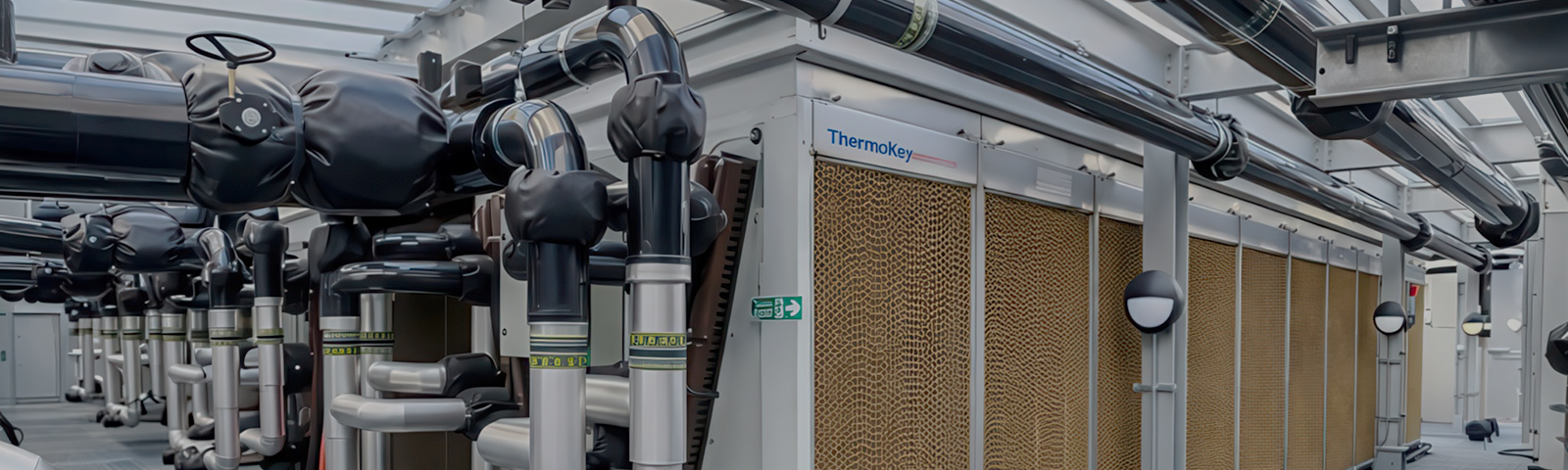
ThermoKey is based in Rivarotta, Italy, and supplies heat rejection and heat-exchange technologies to OEMs and system integrators. Vertiv said the acquisition strengthens its thermal management capabilities and manufacturing capacity in Europe, the Middle East, and Africa, with the Italian operations continuing as a manufacturing, engineering, and support hub.
The deal completion update identifies dry coolers, heat-exchange solutions, and compatibility with low-GWP and natural refrigerants as part of the technology set being added to Vertiv’s portfolio. ThermoKey was founded in 1991 and brings more than three decades of engineering and production experience.
AI training clusters and GPU-heavy deployments are raising rack densities, concentrating more heat in smaller footprints, and increasing demand for system-level thermal architectures. Heat rejection, once treated as a back-of-house engineering detail, is becoming part of the critical path for high-density capacity delivery.
Cooling moves up the capital stack
Data centre cooling procurement is changing because the thermal load is changing. Traditional enterprise halls could be designed around predictable air-cooled densities, while AI infrastructure often requires a mix of liquid cooling, rear-door heat exchangers, higher water temperatures, hybrid systems, and larger heat-rejection plant.
That shift makes the supply chain for coils, dry coolers, heat exchangers, pumps, controls, and refrigerant-compatible systems more strategically important. Vertiv already supplies both power and thermal infrastructure, giving it a broad position across the critical systems stack. Adding ThermoKey gives the group more manufacturing depth in Europe at a point where long-lead cooling equipment can influence project schedules.
The low-GWP and natural refrigerant angle also has stronger European relevance than it would have had a decade ago. Data centres are under pressure to reduce operational emissions, comply with tightening refrigerant rules, improve water performance, and still deliver higher-density halls. Cooling systems that can be adapted to site conditions, climate, customer density, and regulatory requirements will have an advantage over one-size-fits-all approaches.
ThermoKey’s portfolio does not solve the retrofit challenge facing existing facilities on its own. Many older buildings were not designed for liquid-cooled AI clusters, and their electrical and mechanical infrastructure may limit how much density can be introduced without major intervention. Heat-rejection capability is still a core part of the answer, particularly where operators are trying to reuse existing sites rather than build entirely new campuses.
Manufacturing capacity becomes a risk factor
European data centre developers are competing for the same categories of equipment across multiple regions. Demand from AI campuses, grid infrastructure, industrial electrification, and renewable energy projects has created pressure on electrical and mechanical supply chains. Vertiv’s move therefore has a defensive as well as strategic logic: control more of the thermal chain and reduce exposure to bottlenecks in third-party capacity.
The deal also reflects a wider consolidation pattern in critical infrastructure supply. As AI data centres become larger and more technically demanding, customers are likely to favour suppliers that can provide integrated, tested systems rather than isolated components. Consulting engineers and MEP contractors will still need to interrogate design choices, but the procurement landscape is moving towards fewer, larger supplier relationships.
Operational performance will determine the value of the acquisition. Shorter lead times, broader cooling options, and better whole-system performance would be visible in future AI-ready projects where thermal design, heat rejection, energy efficiency, and maintainability have to work together under compressed delivery programmes.

