
Summary
- Wärtsilä has booked a 282MW onsite data centre power order using 15 50SG gas engines.
- Equipment delivery is scheduled for 2028, with the project expected to become fully operational in 2029.
- The Finnish supplier says seven US data centre projects now account for more than 3GW of sold generation capacity.
Wärtsilä has secured an order for a 282MW onsite power plant serving a US data centre project, taking the Finnish engineering group’s reported generation sales into the American data centre market above 3GW.
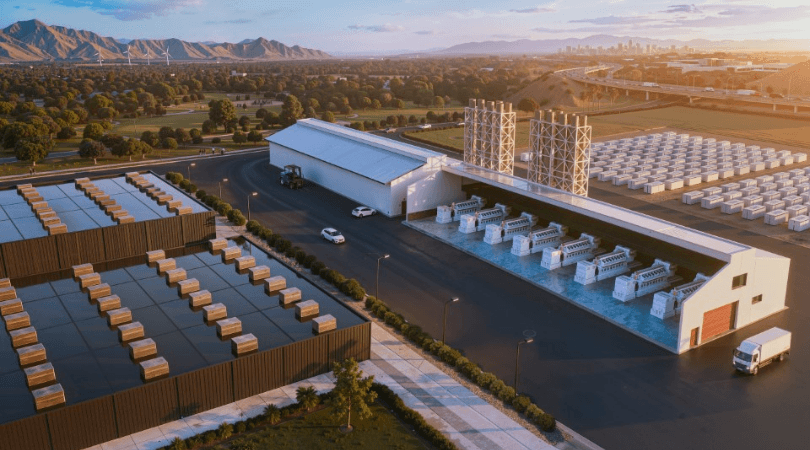
The project will use 15 Wärtsilä 50SG gas engines and is being developed by an unnamed US independent power producer. The order was booked in the third quarter of 2026, equipment delivery is scheduled for 2028 and the plant is expected to become fully operational in 2029.
Wärtsilä says this is its seventh US data centre power project. The order is geographically outside DataCentral’s core European market, so it is best treated as a comparator for the scale of onsite generation being developed where computing demand is moving faster than grid connections.
The underlying constraint is increasingly familiar in Europe even though regulation and energy markets differ. A large data centre can be ready to build before the local network can deliver hundreds of megawatts, forcing developers to choose between waiting, moving location or developing another source of power.
Fifteen engines create a modular generation block
The 50SG configuration divides the 282MW plant across 15 generating units rather than one large machine. That allows maintenance and commissioning to be organised around multiple blocks and can support staged delivery as the connected computing load grows.
Modularity does not remove every common dependency. Engines can still rely on shared gas infrastructure, controls, switchgear and other balance-of-plant systems, so resilience depends on the electrical and mechanical arrangement around the generating units as well as the number of engines installed.
Wärtsilä promotes the technology as low in water consumption and capable of supporting future fuel flexibility. The current order, however, is for a gas-engine power plant; the announcement does not describe it as a zero-carbon facility or identify a timetable for conversion to another fuel.
Onsite generation changes where project risk sits. A grid-connected facility depends heavily on the utility connection and network resilience, whereas a self-generation model gives the developer or its energy partner greater responsibility for fuel supply, plant maintenance, emissions compliance and generating availability.
Those obligations can be worthwhile if they bring computing capacity online years before a grid reinforcement. They can become less attractive where gas costs, emissions requirements or local planning conditions make long-term generation expensive or difficult to permit.
The European comparison is about timing, not replication
US developers have more examples of large gas-based power solutions being assembled around data centre projects, but the same architecture cannot simply be transferred into every European market. Gas networks, carbon costs, air-quality rules and permitting expectations vary significantly between countries and sites.
European projects are responding to connection constraints through several routes, including dedicated substations, batteries, renewable power contracts, flexible demand arrangements and, in some cases, onsite generation. The preferred solution depends on how long the network delay lasts and how much value the developer places on earlier operation.
The financial calculation extends beyond the price of electricity. An empty data centre building earns little while it waits for power, so bringing IT load online sooner can justify substantial investment in temporary or permanent energy infrastructure. Against that benefit sit fuel, capital, maintenance and emissions costs over the life of the plant.
Wärtsilä’s latest order shows the scale at which some developers are making that trade-off. A 282MW power station is major infrastructure in its own right, requiring a development programme comparable with other industrial energy projects rather than a conventional standby generator package.
The company has now sold more than 3GW of capacity across seven US data centre projects, according to its announcement. That total describes Wärtsilä orders rather than operating generation already serving live facilities, because individual projects have their own delivery and commissioning schedules.
The 2028 equipment delivery and 2029 operating target also show that onsite generation is not instant. Large engine plants still require engineering, manufacturing, site construction, fuel connections and commissioning, even when they avoid a utility transmission upgrade.
The comparison is most useful at the level of project sequencing. As power becomes one of the longest lead items in European data centre development, the electricity solution has to be designed and contracted at the same time as the computing facility rather than treated as a service that will automatically be available once the building is finished.
Wärtsilä’s 282MW order provides another example of that shift. The project is American, but the commercial pressure behind it — matching power delivery to the timetable of large compute deployments — is increasingly shaping European site selection and development strategy as well.

