
Summary
- Wärtsilä and TGES have signed an MoU covering selected Japanese data centre opportunities.
- The companies will assess gas and dual-fuel engine-based generation.
- The work addresses projects where the timing of utility power may constrain AI data centre delivery.
Wärtsilä and Tokyo Gas Engineering Solutions will assess gas and dual-fuel engine generation for selected Japanese data centre projects.
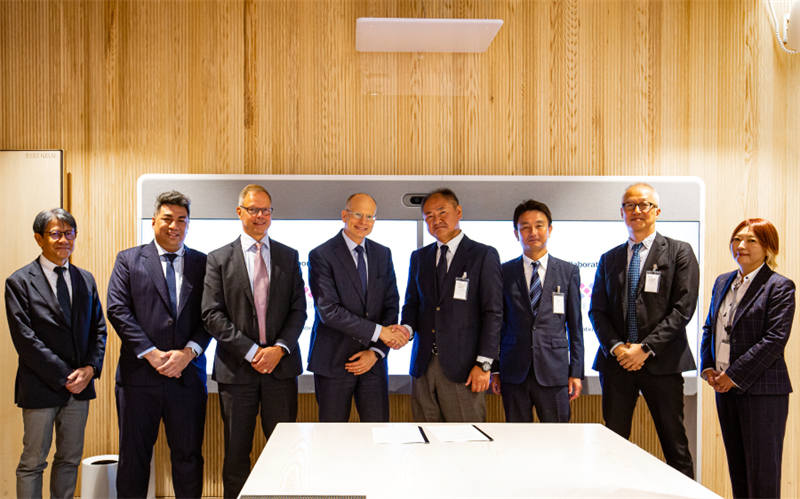
The companies have signed a memorandum of understanding covering data centre opportunities being developed by TGES as AI demand puts greater pressure on electricity infrastructure.
The arrangement is an evaluation programme rather than an announced generator order or committed data centre power project.
Its focus is the use of engine-based generation where utility electricity cannot be delivered on the timetable required by a development.
Grid timing becomes part of the data centre programme
Large data centre sites can secure land, planning progress, fibre, and customer interest while still facing lengthy waits for sufficient grid capacity.
That mismatch is increasing interest in power systems that can be installed before conventional network reinforcement is complete.
Gas engines offer dispatchable generation and can be deployed in modular configurations. Dual-fuel systems can provide additional flexibility depending on the design and available fuel infrastructure.
The trade-offs are substantial.
Using thermal generation as part of the main data centre power supply creates emissions, fuel logistics, air-quality, noise, maintenance, permitting, and long-term decarbonisation questions.
It also differs significantly from conventional emergency standby generation, where run hours are relatively limited.
A generator used as a routine supply source needs a maintenance, redundancy, fuel, and emissions strategy designed around sustained operation.
Japanese projects provide a wider grid-constrained test
The work is focused on Japan, but the underlying engineering constraint is already visible in European data centre markets.
Developers are assessing combinations of batteries, flexible demand, on-site generation, renewable energy, and private-wire arrangements where utility connections cannot be delivered quickly enough.
None provides a universal replacement for a robust grid connection.
Batteries have finite energy duration, renewable output varies, and thermal generation introduces fuel and environmental dependencies.
The most appropriate architecture therefore depends on local grid conditions, permitted emissions, fuel access, operating hours, resilience requirements, and the expected timing of network upgrades.
Wärtsilä and TGES have not disclosed the capacity, location, customer, or construction timetable for any project under the memorandum.
That makes the announcement more useful as an indicator of engineering direction than as evidence of committed new megawatts.
If the assessments move into deployment, the projects will provide another test of whether dedicated engine generation can bridge the gap between the speed at which AI compute is demanded and the slower pace at which grid infrastructure can sometimes be reinforced.

