
Summary
- The study compares flexible engine generation with combined-cycle gas turbines for 55GW of hypothetical off-grid demand.
- The model estimates €196bn in savings over 20 years, alongside reductions in cooling water and land requirements.
- Actual outcomes depend on generation technology, fuel arrangements, load profiles, and future network connections.
Finnish energy technology supplier Wärtsilä estimates that flexible engine-based generation could save €196bn over 20 years compared with combined-cycle gas turbines in a modelled scenario involving 55GW of off-grid data-centre demand.
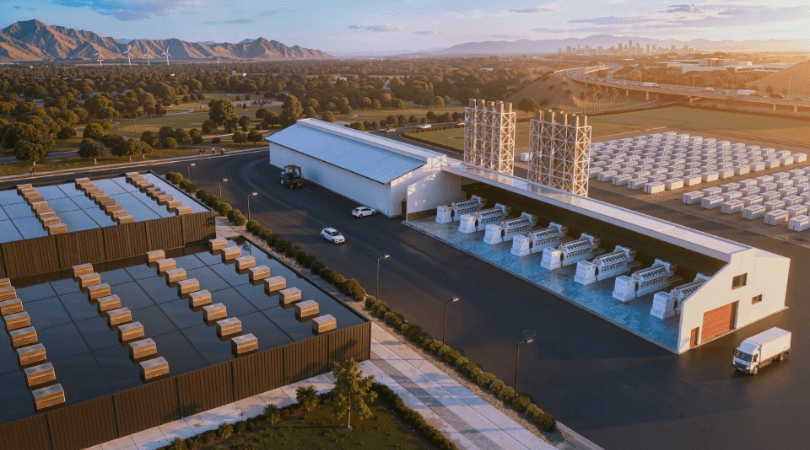
The study examines the electricity generation and storage infrastructure needed to supply large computing facilities that cannot obtain suitable grid connections within their development schedules. Its calculations compare capital and operating costs, land requirements, and water consumption under different generation arrangements.
Wärtsilä’s scenario assumes global off-grid data-centre capacity reaches 55GW by 2035. This represents the upper end of the deployment outlook assessed using third-party forecasts and information about proposed projects, rather than a prediction that the capacity will necessarily be built.
Flexible engine generation is compared with combined-cycle gas turbine installations. The company argues that modular engines capable of varying output more rapidly could reduce the equipment and storage required to accommodate changing electricity demand and renewable generation.
The model estimates water use could be 99.97% lower with the engine-based configuration, primarily because of reduced cooling requirements. It also indicates a land saving equivalent to approximately 2,200 football pitches.
Those figures describe the particular system configurations evaluated, rather than measured performance across existing data centres. Actual water consumption depends on the generation technology, cooling arrangements, ambient conditions, and operating requirements of each installation.
Large computing developments increasingly face electricity connection constraints. A campus may secure land and obtain planning consent before the transmission infrastructure required for its intended electrical load can be delivered.
Some developers are therefore considering onsite generation to support construction phases or longer-term operation. Such installations can provide electricity independently of the network, but they introduce separate requirements for fuel supply, emissions compliance, maintenance, and operational resilience.
Combined-cycle gas turbines use exhaust heat from the gas turbine to produce additional electricity through a steam cycle. This can provide high thermal efficiency under suitable operating conditions, particularly where the installation operates for sustained periods at substantial load.
Flexible engine installations can instead use multiple generating units, allowing output to be adjusted by changing the number of engines operating and their individual loads.
The relative economics depend on how the equipment is dispatched. A plant supplying a steady electricity demand may favour different characteristics from one required to respond frequently to changes in load or renewable output.
Generation beyond the initial grid constraint
Wärtsilä’s analysis also considers how onsite generation might be used after a data centre obtains a grid connection. Equipment initially installed to provide primary electricity supply could potentially support backup requirements or participate in electricity system flexibility services.
That transition would depend on the technical capabilities of the installation and the rules governing its connection to the network. Exporting electricity or providing balancing services introduces requirements relating to protection, synchronisation, dispatch, metering, and commercial participation.
A data centre’s continuity obligations would also have to remain protected. Generation capacity reserved for emergency backup cannot automatically be committed to external services without considering the facility’s resilience arrangements.
The report discusses the potential for flexible onsite systems to reduce wider electricity system balancing costs as renewable generation expands. Wärtsilä estimates that suitable arrangements could avoid up to €200bn of additional balancing capacity costs over 20 years.
That potential system-level benefit is distinct from the modelled €196bn comparison between engine and combined-cycle technology. Neither figure represents savings already delivered by operating facilities.
The environmental effects also require separate assessment. Gas-fired engines can provide dispatchable electricity, but their emissions depend on fuel, utilisation, efficiency, and the technologies used to control exhaust pollutants.
Onsite generation may improve the availability of electricity for a particular development while transferring costs and environmental obligations from the wider network to the facility owner.
In European markets, the commercial outcome will vary with local grid connection schedules, fuel prices, electricity contracts, permitting requirements, and the availability of suitable generation equipment.
Wärtsilä’s study illustrates how the choice of generation architecture can alter the economics of off-grid computing infrastructure. Individual projects will still require engineering and financial assessments based on their actual electrical demand, operating conditions, and long-term connection strategy.

