
Summary
- The Bad Lippspringe facility is operational with 2MW of initial capacity, following the earlier opening at Heiligenhaus.
- HOCHTIEF and Palladio Partners plan a 25-site European edge data centre network, with further facilities under construction.
- Mass timber construction has reportedly reduced embodied emissions by around 600 tonnes, while municipal waste heat integration remains planned.
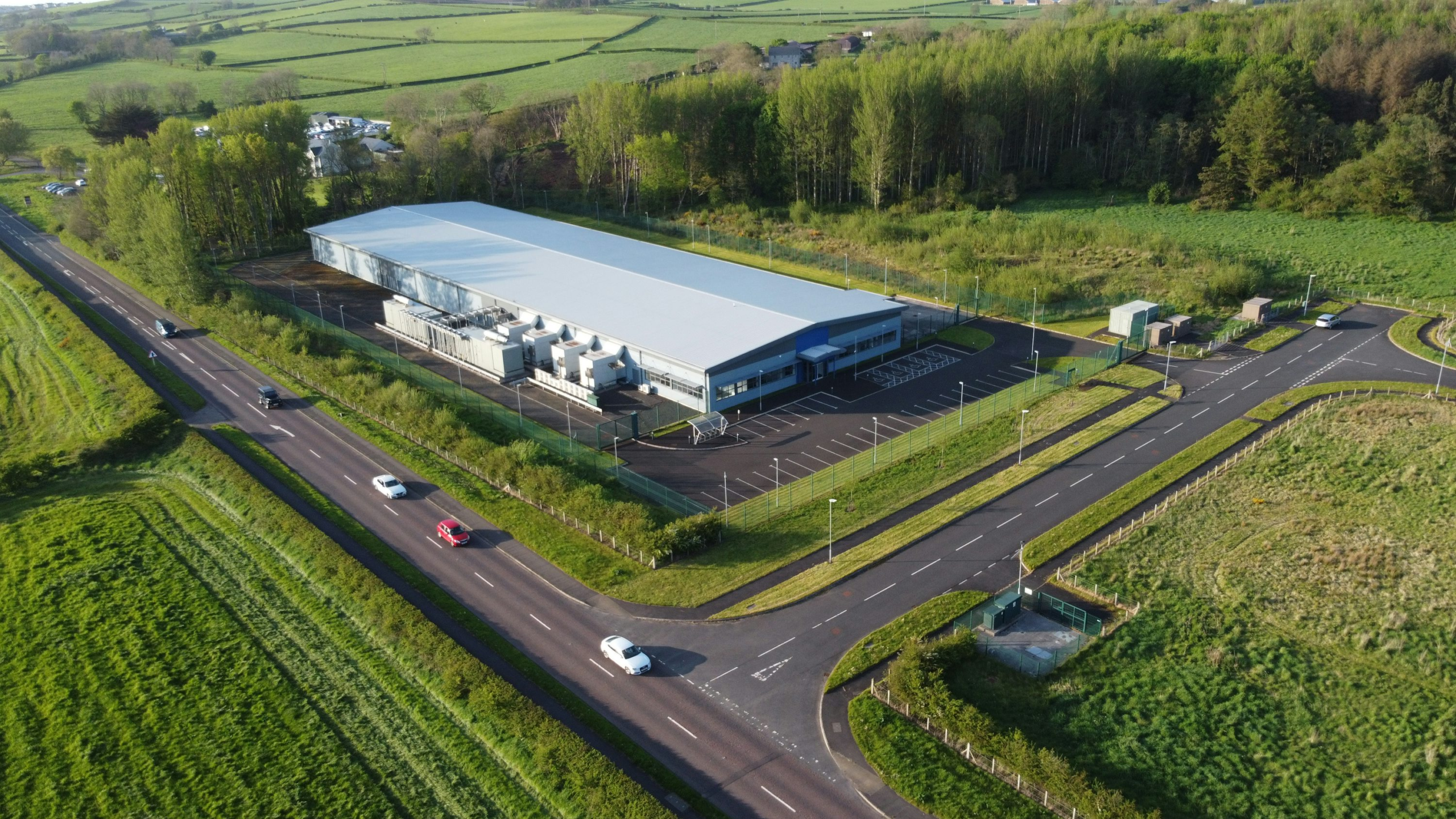
HOCHTIEF and Palladio Partners have brought their second German YEXIO edge data centre into operation in Bad Lippspringe, North Rhine-Westphalia, adding an initial 2MW of capacity to their growing regional infrastructure network.
HOCHTIEF confirmed the opening on 6 November, following an inauguration attended by North Rhine-Westphalia’s Minister-President Hendrik Wüst. The facility was developed and financed through the partnership between HOCHTIEF PPP Solutions and infrastructure investor Palladio Partners.
Located in the Paderborn district, the data centre is intended to provide computing capacity closer to regional businesses, public-sector organisations, and other users that require local infrastructure.
The company identifies an initial capacity of 2MW but does not specify in its opening disclosure whether that figure represents IT load or another electrical capacity measure. It should therefore not be treated as a confirmed IT power rating.
Bad Lippspringe follows the opening of the partnership’s first YEXIO facility at Heiligenhaus in September 2025. Further developments are under construction in North Rhine-Westphalia and Bavaria, forming part of a proposed European network of 25 edge data centres.
The latest target represents an expansion of the partners’ earlier programme, which envisaged 15 decentralised locations. HOCHTIEF reports that approximately two-thirds of YEXIO’s existing data centre capacity has been sold, rather than two-thirds of the capacity proposed across the future network.
Edge data centres place computing resources closer to the locations where information is generated or used. This can reduce the distance data must travel over communications networks, although achievable latency depends on the complete network route and the application being served.
Regional deployments can support industrial applications, distributed business systems, and services where local processing or data-location requirements influence infrastructure design.
Delivering capacity through multiple smaller sites also creates a different operating model from a single large campus. Each location requires resilient electricity distribution, cooling, network connectivity, security, and maintenance, potentially increasing the complexity of managing infrastructure across the network.
Construction and heat recovery
HOCHTIEF has incorporated mass timber into the Bad Lippspringe building structure. The developer estimates that the construction approach reduces carbon emissions by approximately 600 tonnes compared with a conventional reinforced-concrete building.
That estimate concerns the construction method and should not be interpreted as a measurement of the facility’s lifetime operational emissions. Electricity consumption, equipment utilisation, maintenance, and the eventual use of recovered heat will all influence its longer-term environmental performance.
The development has been designed to support future recovery of heat produced by computing equipment. HOCHTIEF intends for that heat to contribute to a planned municipal district heating network serving the surrounding area.
The heating connection is not yet operational. Its delivery depends on the development of suitable local distribution infrastructure and the arrangements needed to transfer usable heat from the data centre to customers.
Recovering heat from computing equipment requires a suitable thermal pathway. Depending on coolant temperatures and the requirements of the receiving network, heat exchangers, pumps, and potentially additional heat-pump equipment may be needed.
The economics depend partly on distance to potential customers, seasonal heating demand, operating temperatures, and the cost of the connecting infrastructure.
At Bad Lippspringe, the municipality has been examining how a district heating network could be developed around the facility. The project therefore combines an operating data centre with a separate, prospective energy infrastructure opportunity.
HOCHTIEF already has experience integrating computing heat into local services at Heiligenhaus. Its first YEXIO facility uses water cooling, with recovered heat supplying a municipal swimming pool.
That arrangement offers an example of an operational heat-use project within the same development programme. It does not establish that the new Bad Lippspringe facility has already achieved comparable heat recovery.
HOCHTIEF is responsible for the planning, construction, operation, and asset management of the YEXIO infrastructure. Palladio Partners contributes infrastructure investment expertise and supports the development of arrangements with locations and partners.
The partners’ programme links demand for regional computing capacity with opportunities to integrate smaller data centres into local infrastructure. Expansion will depend on securing suitable sites, electricity connections, customers, and the capital required for each development.
Bad Lippspringe is now the second completed German location. Its computing capacity has entered service, while further facilities and the proposed municipal heat connection remain separate stages of the wider investment programme.

