
Summary
- The proposed four-tower campus is reported to require 1.1bn litres of drinking water per year at full build-out.
- Planning material cited by Dutch reporting gives the project a WUE of 1.690, above the sector's voluntary benchmark of 1 in moderately water-stressed areas.
- Equinix is also examining underground heat and cold storage, leaving the final cooling configuration and resulting water demand important permitting questions.
A proposed Equinix data centre development in Amsterdam-Zuidoost could consume 1.1bn litres of drinking water a year when all four planned towers are operating, according to Dutch reporting based on project documentation.
The figure represents more than 1% of the water that utility Waternet reportedly abstracts annually and puts the cooling design of a major new data centre back into a policy debate that has increasingly moved beyond electricity and land.
iBestuur, citing reporting by NRC and project documents, said the planned campus has a Water Usage Effectiveness figure of 1.690. The Dutch data centre sector committed in 2021 that new facilities developed from 2025 in areas with moderate water scarcity should not exceed a WUE of 1, although the benchmark is voluntary rather than a statutory planning limit.
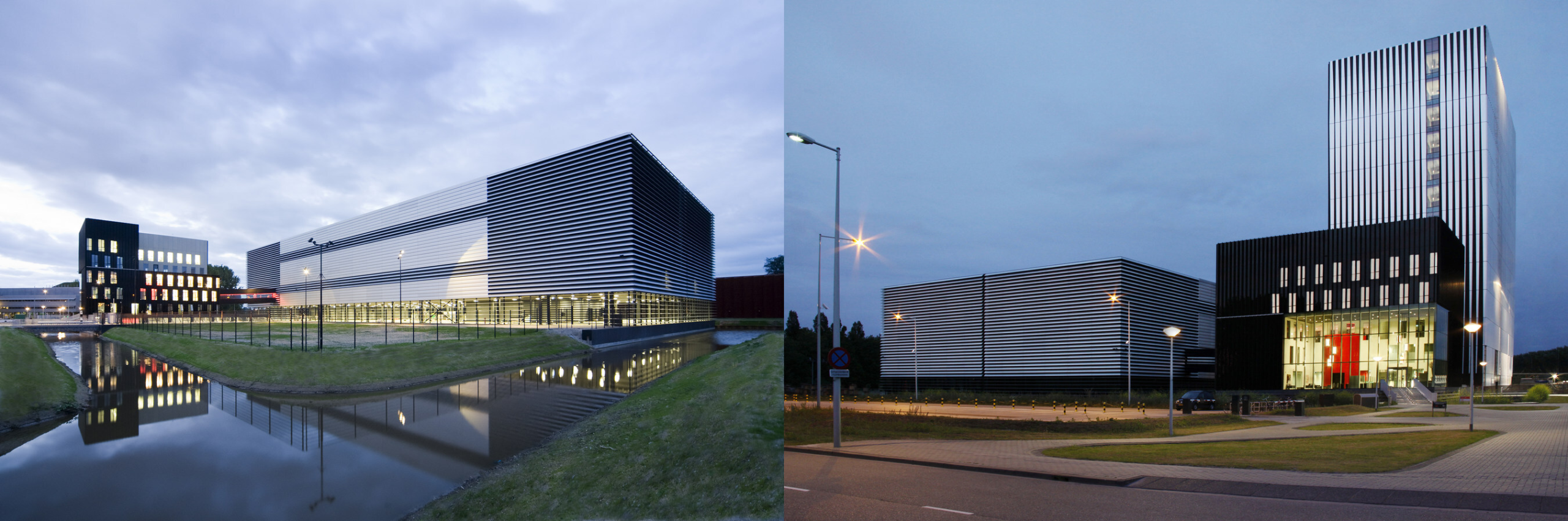
The project is reported to rely on evaporative or wet cooling towers. Equinix described the selected approach in its permit application as the only feasible option within the proposed design, according to the Dutch report. The towers themselves are planned to reach a maximum height of around 60 metres.
Waternet has included a water-saving effort obligation in its agreement with Equinix, although the utility is not the authority responsible for deciding the planning permit. Equinix is also investigating aquifer thermal energy storage, using underground heat and cold storage to reduce part of the potable-water requirement. A permit for that system has reportedly already been issued.
Cooling choices move into planning
The outstanding question is how those systems ultimately fit together and how much of the headline water requirement would be realised in normal operation. The documents described by iBestuur do not make clear whether underground thermal storage would materially replace the wet-tower operation or supplement it.
That distinction is increasingly important as European authorities demand more detailed evidence about how new capacity will interact with local utilities. A headline annual maximum can look very different from actual consumption, but developers are increasingly expected to demonstrate both peak demand and realistic operating profiles before large infrastructure commitments are made.
Amsterdam is a particularly sensitive location for the issue. The Netherlands has spent years balancing the economic value of its data centre cluster with concerns around electricity demand, spatial planning, and resource use. Water has historically attracted less attention than grid access, but high-density compute and the cooling architectures needed to support it are making the resource more prominent.
There is no single cooling design that eliminates the trade-off. Air-cooled and dry-cooler systems can reduce direct water consumption but may carry energy or footprint penalties, particularly during warmer conditions. Evaporative systems can achieve efficient heat rejection while consuming more water. Liquid cooling at rack and chip level changes where heat is moved inside the facility but does not remove the need to reject that heat somewhere outside the IT equipment.
The planning question is therefore less about whether a technology is labelled efficient and more about which local resource bears the load. In a power-constrained region, lower electricity demand may be valuable. In a water-stressed region, the same design could face a different test.
The Equinix proposal will provide an unusually visible example because the reported numbers are large enough to be compared with Waternet’s wider system. If the final operating configuration materially reduces drinking-water use, the detailed cooling design will be important evidence. If the 1.1bn-litre figure remains representative, the project will test how far a voluntary industry water benchmark influences real planning decisions when there is no equivalent statutory limit.

