
Summary
- CoreWeave has signed a colocation agreement with Conapto covering two Stockholm campuses.
- Initial capacity is already live at Stockholm 4 South, using Nvidia Blackwell and Vera Rubin platforms.
- The deployment uses renewable energy and Conapto’s heat recovery connection to Stockholm’s district heating network.
CoreWeave has signed a colocation agreement with Swedish data centre operator Conapto, adding AI cloud capacity across two campuses in Stockholm.
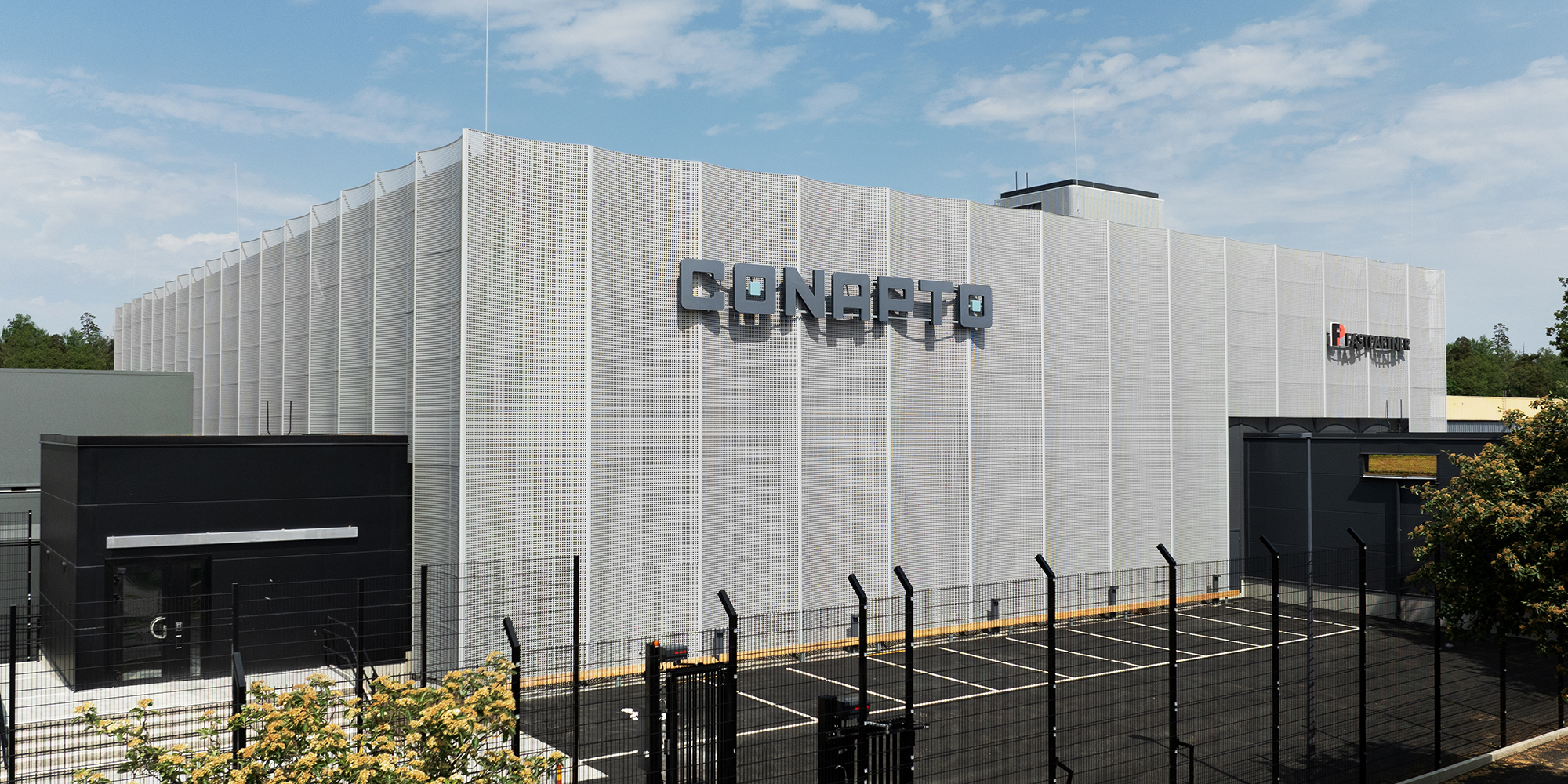
Initial capacity is already online at Conapto’s Stockholm 4 South facility. The deployment uses Nvidia Blackwell architecture and Nvidia Vera Rubin platforms, connected through Nvidia Quantum-X800 InfiniBand, giving CoreWeave additional European infrastructure for high-performance AI workloads.
The joint update says both campuses will be powered by renewable energy sources. Conapto also recovers heat from its facilities into Stockholm’s district heating network, placing the deployment within a city energy system rather than treating rejected heat as a facility-level afterthought.
CoreWeave says the agreement brings its European site count to eight. As of 31 March 2026, the company said it operated 49 data centres globally, with more than 1GW of active power and over 3.5GW of contracted power supporting AI workloads.
Live capacity is the scarce product
The Stockholm agreement stands out because it includes capacity already online. In a European market where power reservations, planning approvals, transformer supply, and construction programmes can all stretch delivery, live AI-ready capacity has become more valuable than broad pipeline claims.
AI cloud providers need contiguous power, dense electrical design, specialist networking, and thermal systems capable of supporting the latest GPU platforms. The building must be more than secure white space. It has to accept accelerated compute at densities that change cooling, maintenance, and power-distribution assumptions.
Conapto’s role is therefore not simply to lease space to a fast-growing cloud platform. The company is providing the physical infrastructure layer for equipment that is expensive, power-hungry, and operationally demanding. That places pressure on the facility to keep electrical resilience, cooling performance, security, and network availability aligned with the compute stack.
Stockholm’s energy profile gives the deployment a stronger local story than a standard colocation win. Renewable electricity supply supports the procurement narrative, while heat recovery gives the facility a route into civic infrastructure. District heating is not available or commercially viable in every market, but Stockholm’s existing network gives data centre waste heat a more credible path to use.
Nordic strengths meet AI pressure
The Nordics have long sold themselves on cool climate, renewable power, and stable operating conditions. AI capacity keeps those strengths in play, but it also raises the threshold for what a suitable site looks like. Cold air helps, yet the densest workloads now depend on liquid-ready design, electrical headroom, high-speed interconnect, and operating teams familiar with specialised AI environments.
CoreWeave’s expansion also lands in the middle of Europe’s wider compute-capacity debate. Governments want more advanced AI infrastructure on the continent, while customers want low-latency, scalable compute close enough to their data, users, and regulatory environment. US AI cloud platforms expanding in European data centres do not settle the sovereignty question, but they do increase the amount of advanced compute deployed under European site, power, and operational conditions.
The heat recovery element will also be watched. Data centres routinely produce heat, but usable heat recovery depends on customer demand, pipe networks, temperature levels, and commercial structures. A mature district heating system gives Stockholm an advantage over markets where heat reuse remains a planning phrase without a connected offtaker.
For Conapto, the agreement demonstrates that Swedish colocation can host dense AI platforms rather than only conventional enterprise or cloud workloads. For CoreWeave, it adds European capacity without waiting for a new campus to clear the full development cycle.
As AI workloads move from experimentation to production, the commercial centre of gravity is shifting from raw cloud availability to physical infrastructure availability. The Stockholm deployment shows that the next constraint is no longer only chips. It is the powered, cooled, networked room that can take them.

