
Summary
- Google has started construction on a data centre in Horndal, Avesta Municipality.
- The site will use air-cooled technology and be designed for off-site heat recovery.
- The project adds to Nordic capacity growth, where power procurement, water use, and heat reuse are central planning questions.
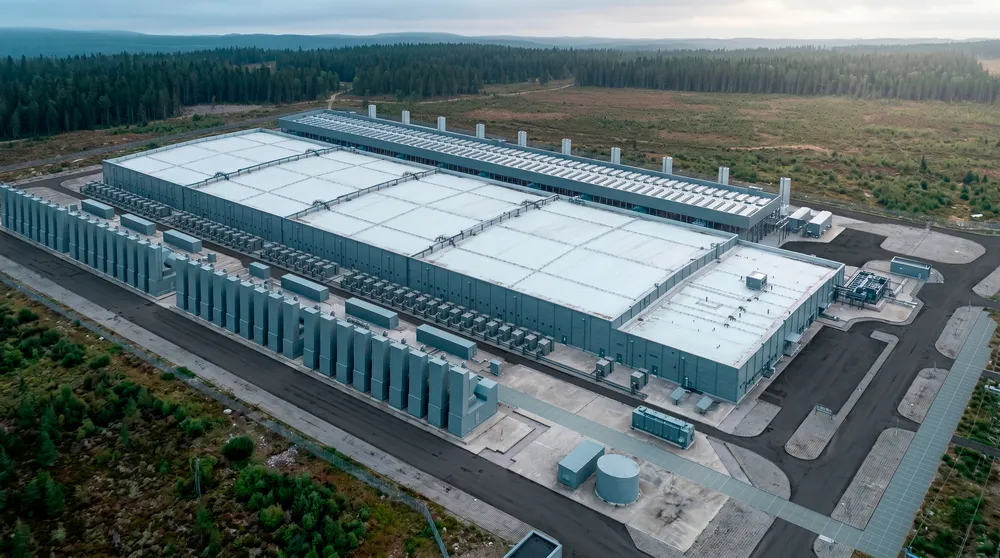
Google has broken ground on a new data centre in Horndal, Sweden, its first self-developed, owned, and operated data centre in the country.
The facility, in Avesta Municipality, is designed for off-site heat recovery and will use air-cooled technology, limiting water consumption to sanitary and domestic uses. Google said the site will help meet demand for services including Search, Cloud, Workspace, and YouTube.
The company said the project will create 100 direct full-time jobs and support thousands more through construction, suppliers, and local businesses. Google is already working with nearly 60 Swedish suppliers on the build and has announced a €5m fund for local initiatives focused on education, sustainability, economic growth, and workforce development.
Google said it has signed more than 700MW of renewable power purchase agreements in Sweden since 2013, across seven wind projects. The Horndal facility will be built against that wider Nordic power-procurement backdrop, with the company continuing to pursue 24/7 carbon-free energy across its operations.
Nordic sites face harder tests
The Nordic data centre proposition has long rested on cool climates, comparatively low-carbon electricity, political stability, and large industrial sites. AI demand is raising the threshold. Hyperscale campuses now need to show not only that they can access renewable power, but also that they can manage local grid pressure, limit water use, and fit into regional heat and industrial strategies.
Google’s use of air-cooled technology is notable because water use has become a sharper public issue for data centre projects. Liquid cooling and evaporative systems can offer efficiency advantages in some designs, but they also create the need for clear water accounting. Air cooling reduces one local environmental concern, although it does not remove the energy question or the need for robust thermal performance during warmer operating conditions.
Heat recovery readiness gives the project a stronger integration route than a conventional isolated facility. Nordic countries are better placed than many markets to use waste heat because district heating networks are more developed and public policy is more familiar with heat integration. Even so, heat reuse depends on a nearby offtaker, pipework economics, temperature levels, commercial agreements, and the ability to match data centre heat output with local demand.
Google said the Horndal site will be ready to provide heat free of charge to eligible partners. The practical value will depend on whether a heat offtaker can be found and connected. Across Europe, several data centre heat-reuse schemes have shown that the hardest work often sits outside the fence, where district heating, planning, and commercial structures have to align.
The Swedish project also shows how hyperscale development is pushing beyond the largest European data centre hubs. Stockholm and the wider Nordic region are gaining from the search for power, land, and lower-carbon operating profiles while traditional hubs face grid queues and planning bottlenecks. Horndal is part of a broader shift in which major operators are building closer to power and industrial infrastructure.

