
Summary
- Fawley Waterside has reduced the proposed commercial floorspace from about 190,000 sq m to 143,000 sq m.
- Data centres are one possible digital use within a wider energy, maritime, commercial and industrial development rather than a committed standalone campus.
- National Grid is separately preparing an Ofgem submission for an upgrade to the existing 400kV substation.
Revised plans for the former Fawley Power Station site in Hampshire would allow data centres and other digital infrastructure within a wider employment campus, bringing new commercial uses to land that once supported a 2GW oil-fired generating station.
Fawley Waterside is consulting on an employment-led masterplan containing up to 143,000 sq m of floorspace across energy, digital, maritime, commercial and start-up uses. The figure has been reduced from approximately 190,000 sq m after feedback on the earlier proposal.
Data centres are explicitly listed as one of the possible digital uses, alongside AI, advanced computing and other technology activity, but the developer has not committed the whole site to data centre development or published a specific computing capacity. The scheme should therefore be treated as a mixed-use industrial proposal with a data centre option rather than as an announced hyperscale campus.
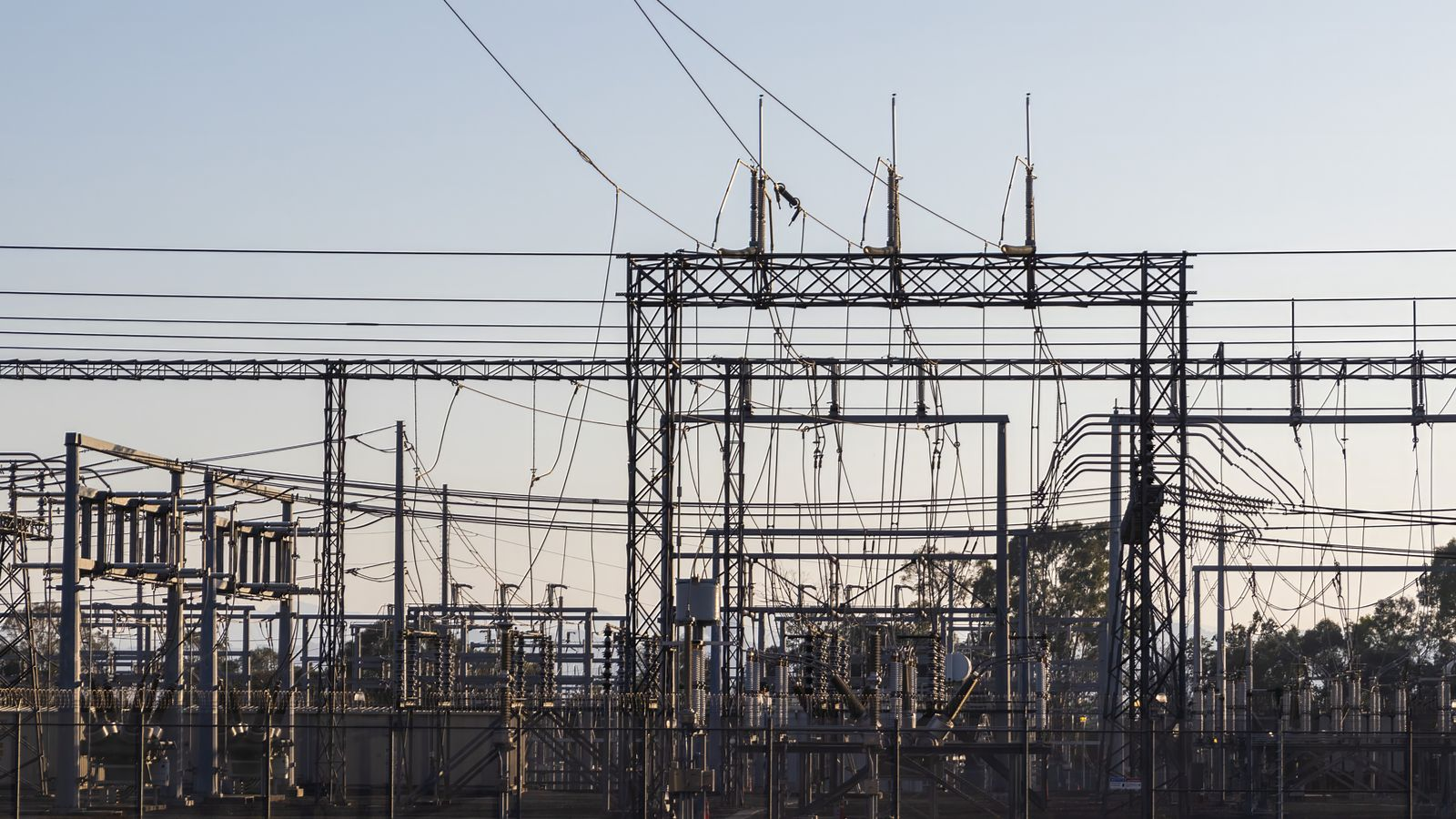
The former power station location gives the proposal an unusual infrastructure base. A 400kV National Grid substation sits on the site under a long leasehold interest and is excluded from Fawley Waterside’s planning boundary. National Grid is separately preparing a submission to Ofgem seeking approval for an upgrade of the existing substation.
Existing grid infrastructure does not equal secured power
The presence of a transmission substation can make a former generating site attractive to large electricity users, but it does not establish that a new data centre has a confirmed connection or a particular number of megawatts available. Network studies, reinforcement, connection agreements and the timing of other loads all affect what capacity can actually be delivered.
Fawley Waterside describes digital industries as benefiting from proximity to potential power availability, which accurately reflects the present status. National Grid’s Ofgem process remains separate, and the developer says the substation upgrade is at the beginning of a longer approvals programme.
Any future data centre would consequently need its own defined electrical design and connection position before its operating capacity could be quantified. The current masterplan establishes land uses and a development envelope rather than an energised digital facility.
The planning programme extends over many years. Fawley Waterside anticipates planning and consent work from autumn 2026 into spring 2027, enabling works from 2027 and the first construction phase beginning in winter 2028. Later phases run into the 2030s and early 2040s.
That timetable provides scope for power infrastructure to develop alongside the site, but it also means the eventual technology and cooling requirements of any data centre may differ from those assumed at outline planning stage. High density computing hardware is changing quickly, so detailed mechanical and electrical design would have to be resolved closer to each building phase.
Flood protection is part of the infrastructure design
The waterside location creates another constraint. Fawley Waterside proposes improvements to flood defences as part of the redevelopment, with sea defence works shown in the indicative programme between 2027 and 2031.
A data centre on a coastal industrial site has to protect more than the building floor. Substations, generators, fuel systems, cooling equipment and fibre entries can all become critical failure points if flood routes or common access corridors are not addressed in the resilience design.
The development also retains parts of the former power station infrastructure, including the turbine hall basement, while the separate Hynamics green hydrogen project sits outside the planning red line. Those neighbouring assets broaden the site’s energy and industrial context without making them part of a future data centre by default.
The redevelopment strategy has changed substantially since an earlier residential-led scheme for about 1,500 homes was withdrawn after viability problems. The new employment approach makes greater use of the site’s industrial character and reduces the need to turn a heavily engineered former power station into a conventional residential district.
Data centres fit that direction because they can occupy large buildings and require substantial power infrastructure, yet they also introduce planning questions around energy demand, noise, heat rejection and the number of permanent jobs relative to the scale of the site.
Fawley Waterside says its updated assessments indicate that the proposed development can manage noise and air-quality effects, while lighting has been designed around the dark-sky character of the surrounding area. Individual data centre buildings would still need detailed design within the eventual permitted envelope.
The current proposal therefore creates an option rather than a guaranteed data centre build. Its strongest physical advantage is the conjunction of brownfield land and an established transmission location, while its largest uncertainties remain the amount and timing of usable electrical capacity and the eventual mix of occupiers.
If data centres are selected during later reserved matters stages, those projects will need to convert Fawley’s inherited power station infrastructure into modern, resilient connections rather than simply assuming that a former generation site comes with computing capacity that is already ready to use.

