
Summary
- Energie 360° commissioned its energy centre at Green's Dielsdorf campus on 19 November.
- The wider heating network will extend across six municipalities, with more than 60 kilometres of distribution infrastructure planned.
- Green incorporated provision for exporting recovered heat into its original campus design.
Swiss data centre operator Green has begun supplying recovered heat from its Dielsdorf facilities to residential buildings, following the commissioning of a new energy centre developed by regional utility Energie 360°.
The installation, officially opened on 19 November, forms part of two interconnected district heating schemes expected eventually to serve up to 11,500 households, alongside industrial and commercial customers across six municipalities in the canton of Zurich.
Green has previously used heat recovered from its computing infrastructure within its own campus and supplied a neighbouring industrial enterprise. Residential connections extend that arrangement into the wider municipal heating network.
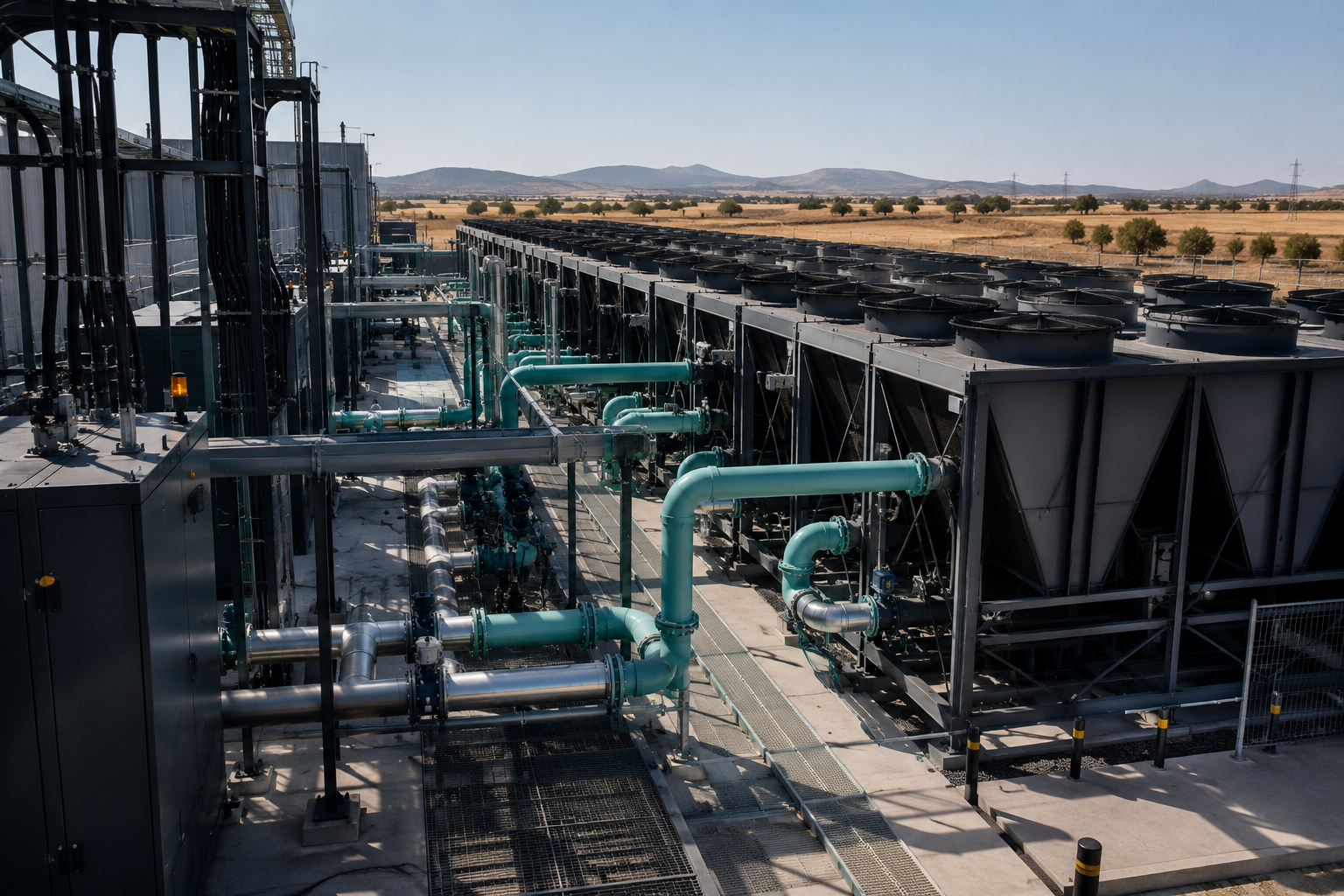
Energie 360° constructed the energy centre on Green’s campus, where recovered thermal energy is prepared for distribution to customers. The utility is responsible for the infrastructure connecting the installation with properties across the surrounding region.
The two heating schemes will extend across Dielsdorf, Niederhasli, Steinmaur, Regensdorf, Buchs, and Dällikon, with more than 60 kilometres of distribution network planned.
Construction is progressing in stages, including work on the connection between Dielsdorf and Regensdorf. A second energy centre is planned for Regensdorf, with construction expected to begin during 2027.
Recovering and distributing thermal energy
Servers and associated computing equipment convert much of the electricity they consume into heat, which must be removed continuously to maintain acceptable operating temperatures.
Green incorporated the infrastructure necessary to extract and export that thermal energy when it originally planned its Dielsdorf campus. Doing so allowed the operator to accommodate heat recovery within its cooling architecture before the facilities became operational.
Recovering heat for external use requires a means of transferring energy from the data centre’s cooling infrastructure into the systems serving the receiving utility. The available temperature depends on the equipment being cooled and the configuration of its mechanical systems.
Where recovered heat is below the temperature required for residential heating, heat pumps can increase it before distribution. Their electricity consumption forms part of the wider heating system’s operating costs and influences the environmental performance of the delivered energy.
The temperature requirements of connected buildings can vary considerably. Older properties designed around conventional boilers may require higher supply temperatures than newer buildings equipped with lower-temperature heating systems.
The utility must also manage differences between the availability of recovered heat and its customers’ demand. Residential heating requirements increase during colder periods, whereas computing facilities can generate substantial quantities of thermal energy throughout the year.
Commercial hot water demand and industrial customers may provide additional uses for recovered energy outside the main heating season. The data centre must nevertheless retain sufficient independent cooling capacity to operate when external customers cannot consume its available heat.
Green says its facilities use outdoor air to support cooling and incorporate closed cooling circuits that do not consume water. These arrangements form part of its wider approach to managing the electricity and water requirements of its computing infrastructure.
Municipal cooperation supports network expansion
The participating municipalities and Energie 360° have been developing the regional heating programme over several years, coordinating underground infrastructure construction with local development and utility works.
Connecting residential properties requires investment beyond the energy centre itself. Distribution pipes, pumping infrastructure, building connections, and heat transfer equipment must be financed and installed before individual customers can replace existing heating arrangements.
The involvement of six municipalities allows that investment to be coordinated across a larger geographic area and potential customer base than would be available through individual local schemes.
A 2024 assessment published by Energie 360° described how Regensdorf’s heating strategy had shifted from an earlier focus on wood towards recovered data centre heat, with the municipalities examining how their respective schemes could be operated over the longer term.
The availability of an established industrial heat source has consequently influenced regional infrastructure planning before the completion of the distribution network.
Green currently operates seven data centres across the greater Zurich area, with another two under construction. Its growing computing portfolio creates potential opportunities for additional integration with surrounding electricity and heating systems, although suitable external heat consumers must be available at individual locations.
The company also participates in Switzerland’s electricity balancing arrangements, using its standby generation infrastructure to provide tertiary balancing energy when required.
The Dielsdorf commissioning establishes an operational connection between computing infrastructure and residential heat consumption. The ultimate contribution of the campus to the regional heating system will depend on the continued construction of distribution infrastructure, the number of connected properties, and the quantity of useful thermal energy delivered to customers.

